
Men in Love, Masculinity and Sexuality in the Eighteenth Century Paperback – June 15, 1999
by George Haggerty
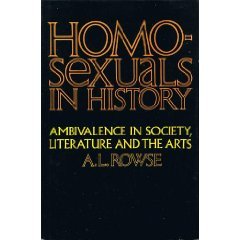
Homosexuals in History, A Study of Ambivalence in Society, Literature and the Arts, 1977
by A.L. Rowse
Queer Places:
Eton College, Windsor, Windsor and Maidenhead SL4 6DW
George Montagu (1713 – May 9, 1780) was an English politician who sat in the House of Commons. He is known for his correspondence with Horace Walpole.[1][2] W.S. Lewis mentions letters to Horace Walpole's "effeminate" friends, Horace Mann, John Chute, and George Montagu, not to mention Thomas Gray and Richard West. Like the letter to Henry Seymour Conway, and like the Countess' letters to her son, we could read these letters as a riddle and imagine a hidden truth that Walpole has disguised in near-hysterical friendliness.
According to the Walpole scholar Wilmarth Sheldon Lewis, Walpole's letters to Montagu are ".. of more general interest than are those written to any other correspondent ...".[2] George Montagu was the eldest son of Brigadier Edward Montagu. George became a friend of Horace Walpole when they attended Eton and their friendship lasted until about 1770. According to Walpole, their friendship ended partly because of political differences and partly because of Montagu's caprice.[1] Montagu was Ranger of Selwyn Forest. He was Usher of the Black Rod in Ireland from 1761 to 1763 during the Viceroyalty of his cousin, the 2nd Earl of Halifax. George Montagu was also Private Secretary to Lord North, when the latter was Chancellor of the Exchequer.[1] Montagu was elected Member of Parliament for Northampton.[1]
References:
Other references:
Support this project
This website is a passion project researched, developed, and funded entirely by me. If you find the content valuable and would like to help support the ongoing research and hosting costs, any contribution is deeply appreciated.
Thank you for keeping this independent resource alive!
My books on Amazon: Elisa Rolle's books