Queer Places:
Fort Union Trading Post National Historic Site, 15550 Highway 1804, Williston, ND 58801
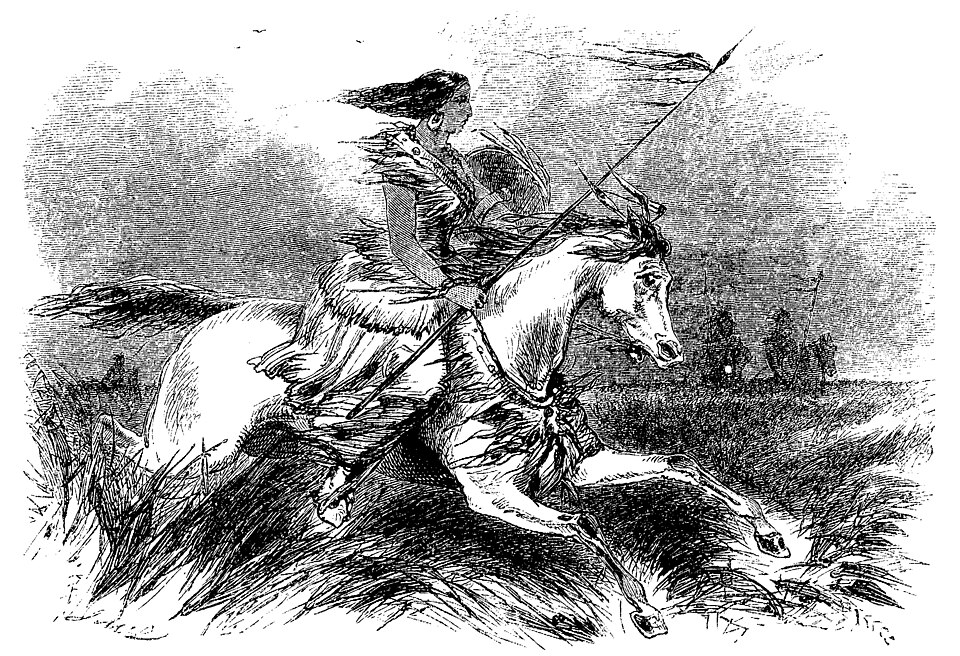 Bíawacheeitchish (known as Woman Chief, c. 1806 – c. 1854) was a remarkable nineteenth-century Crow leader, warrior, hunter, and diplomat. Rising from a captive child to one
of the principal chiefs of the Crow Nation, she lived a life that defied conventional gender roles of her era, earning the deep respect of her people and European-American
visitors alike.
Bíawacheeitchish (known as Woman Chief, c. 1806 – c. 1854) was a remarkable nineteenth-century Crow leader, warrior, hunter, and diplomat. Rising from a captive child to one
of the principal chiefs of the Crow Nation, she lived a life that defied conventional gender roles of her era, earning the deep respect of her people and European-American
visitors alike.
Woman Chief was born into the Gros Ventre (Atsina) tribe around 1806. When she was approximately ten years old, a Crow raiding party attacked her village. Her father was
killed during the skirmish, and she was captured by the Crow people.
She was brought back to the Crow camp and adopted by a prominent family. Unlike many captives who faced hardship, she was treated with care and integrated fully into the
tribe. From an early age, she displayed a strong preference for the traditional pursuits of boys rather than the domestic responsibilities assigned to girls. Recognizing her
inclinations, her adoptive father encouraged her to learn horsemanship, archery, and hunting.
As she matured, Woman Chief formally chose the path of a male warrior, distinguishing herself through exceptional bravery, skill in battle, and strategic acumen.
She participated in numerous war parties against rival tribes, most notably the Blackfoot. In one celebrated engagement, she personally rescued a fellow warrior under
heavy fire and took enemy scalps, proving her valor.
Because of her military successes, she gained immense prestige within the Crow Nation. Warriors volunteered to ride under her command, and she eventually earned a seat in
the tribal council, achieving the rank of chief (specifically recognized as a third or fourth-ranking chief among the band).
In addition to her prowess in combat, she participated in peace negotiations and council meetings, representing her people with authority and eloquence. Fur trader Edwin
Denig, who worked for the American Fur Company and documented her life in the 1830s and 1840s, noted that she sat among the principal chiefs and wielded significant
political influence.
In accordance with the customs of high-status male leaders in the Plains Indian cultures of the time, Woman Chief married and took several wives.
Her wives managed her household, prepared food, tanned hides, and performed other domestic duties, while she maintained her role as a provider, protector, and leader. By
taking multiple wives, she mirrored the lifestyle and socioeconomic status of wealthy male chiefs, solidifying her standing within the community.
Woman Chief met her death around 1854 during a period of escalating tensions and trade disputes. While traveling or visiting a trading post, she was killed by a party of
Gros Ventre warriors—ironically, members of her tribe of birth—who may have recognized her or sought retaliation for past conflicts. Her death was mourned deeply by the Crow
Nation, who remembered her as one of their most courageous and unconventional leaders.
In modern historical and queer studies, Woman Chief is frequently discussed in connection with Two-Spirit traditions and historical LGBTQ narratives:
While historical documentation primarily describes her as a woman who adopted the social, economic, and military roles of men (rather than a distinct ceremonial
Two-Spirit status documented through specific vision quests), her life illustrates the fluidity of gender roles in many Native American societies.
Her practice of marrying multiple women places her within the historical framework of same-sex partnerships in indigenous North America. By living, marrying, and
operating socially as a husband and chief, she provides a vital historical precedent for female-bodied individuals living openly outside traditional heterosexual and
cisgender expectations.
References:
Other references:
- https://www.riabrodell.com/biawacheeitche-or-woman-chief-aka-barcheeampe-or-pine-leaf
- Written manuscript titled "Biography of Woman Chief" (1855–1856), later published in collections such as Five Indian Tribes of the Upper Missouri: Sioux, Arickaras, Assiniboines, Crees, Crows (edited by John C. Ewers, University of Oklahoma Press, 1961). This is considered the most reliable contemporary historical documentation of her life, status, and marriages.
- The Life and Adventures of James P. Beckwourth: Mountaineer, Scout, and Pioneer, and Chief of the Crow Nation of Indians (compiled by Thomas D. Bonner, 1856)
- Journal of Rudolph Friederich Kurz: An Account of His Experiences among Fur Traders and American Indians... 1846 to 1852 (translated by Myrtis Jarrell, edited by J.N.B. Hewitt, Smithsonian Institution / University of Nebraska Press, 1937/1970).
- Bataille, Gretchen M., and Laurie Lisa, eds. Native American Women: A Biographical Dictionary (Routledge, 2001) – Features a biographical entry on Woman Chief authored by Jennifer L. Jenkins.
- Roscoe, Will, ed. Living the Spirit: A Gay American Indian Anthology (St. Martin's Press, 1988)
- Sonneborn, Liz. A to Z of American Indian Women (Infobase Publishing, 2014).
- Capps, Benjamin. Woman Chief (Doubleday, 1979; reissued by Chivers Press, 2002)
- Sobol, Rose. Woman Chief (Dial Press, 1976)
Support this project
This website is a passion project researched, developed, and funded entirely by me. If you find the content valuable and would like to help support the ongoing research and hosting costs, any contribution is deeply appreciated.
Thank you for keeping this independent resource alive!
My books on Amazon: Elisa Rolle's books
BACK TO HOME PAGE
