Queer Places:
Rokeby Estate, River Road, Barrytown, NY 12507
Eton College, Windsor SL4 6DW, United Kingdom
Harvard University (Ivy League), 2 Kirkland St, Cambridge, MA 02138
The Chanler at Cliff Walk, 117 Memorial Blvd, Newport, RI 02840
Sweet Briar Manor, 5126 Mount Morris Road (New York State Route 36 / Route 63), Geneseo, NY 14454
Saint Marys Cemetery, 4807 Crossett Rd, Geneseo, NY 14454, USA
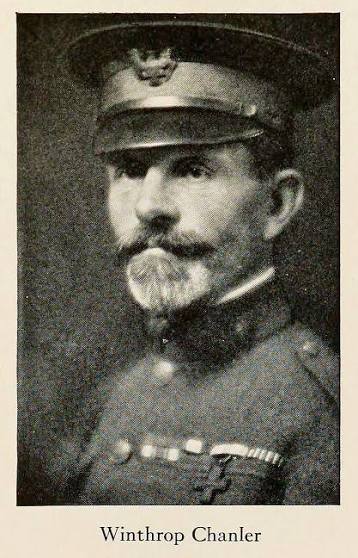 Winthrop Astor Chanler (October 14, 1863 – August 24, 1926), born on October 14, 1863, in New York City, was an American sportsman, soldier, and prominent
Gilded Age figure whose life intersected with notable historical events, high society, and early LGBTQ history. Known familiarly as "Wintie," he was the
second son born to Margaret Astor Ward and John Winthrop Chanler, a U.S. Representative. Through his distinguished lineage, he was directly connected to
the Astor, Livingston, and Stuyvesant families. After losing both parents to pneumonia by 1877, he and his ten siblings became known as the
"Astor Orphans," raised primarily at the family estate, Rokeby, in Barrytown, New York, supported by a substantial inheritance that allowed for a life of
comfort and privilege.
Winthrop Astor Chanler (October 14, 1863 – August 24, 1926), born on October 14, 1863, in New York City, was an American sportsman, soldier, and prominent
Gilded Age figure whose life intersected with notable historical events, high society, and early LGBTQ history. Known familiarly as "Wintie," he was the
second son born to Margaret Astor Ward and John Winthrop Chanler, a U.S. Representative. Through his distinguished lineage, he was directly connected to
the Astor, Livingston, and Stuyvesant families. After losing both parents to pneumonia by 1877, he and his ten siblings became known as the
"Astor Orphans," raised primarily at the family estate, Rokeby, in Barrytown, New York, supported by a substantial inheritance that allowed for a life of
comfort and privilege.
Chanler received an elite education, preparing at Eton College and St. John's Military Academy before graduating from Harvard College in 1885. His time
at Harvard notably linked him to LGBTQ history through a famous collegiate demonstration in favor of Oscar Wilde.
When Wilde arrived at the Boston Music Hall in 1882 for a lecture tour, Chanler orchestrated and led a prank alongside sixty fellow Harvard students.
Marching down the center aisle in pairs wearing exaggerated Wildean costumes—complete with knee breeches, black stockings, wide cravats, shoulder-length
wigs, and carrying sunflowers—Chanler became Wilde's principal and most visible supporter in Boston, much to the public astonishment of his favorite
grand-aunt, Julia Ward Howe, author of "Battle Hymn of the Republic," who sat aghast in the audience.
Following his university years, Chanler married his first cousin once removed, Margaret Louisa Terry, in Rome in 1886. The couple moved to Washington,
D.C., where they formed close friendships with political figures such as Theodore Roosevelt, and later resided in Tuxedo Park, Newport, and New York City,
earning inclusion in Ward McAllister's elite "Four Hundred" index of New York society. They raised eight children together: Laura, John Winthrop II,
Beatrice, Hester, Marion, Margaret Gabrielle, Hubert, and Theodore. As the de facto head of the Chanler family due to his elder brother's mental health
struggles, Winthrop balanced social prominence with a passion for athletics and military service.
Chanler's military pursuits were marked by daring action. During the Spanish–American War, he joined the 1st United States Volunteer Cavalry, famously
known as the "Rough Riders," receiving a conditional commission as a lieutenant colonel under the Cuban government alongside his brother William. On
June 30, 1898, during the Battle of Tayacoba in Cuba, Chanler led twenty-five men ashore near Trinidad to secure a landing site. Ambushed by Spanish
scouts, he sustained a severe gunshot wound through the right elbow while Captain Jose Manuel Núñez was killed, forcing the survivors to take refuge in a
mangrove swamp until rescued by the steamship Florida. After recovering, Chanler spent several years in Sorrento, Italy, pursuing hunting. Decades later,
during World War I, he returned to active service from 1917 to 1918 as an aide to General John J. Pershing on the Western Front.
In his later years, Chanler transitioned from East Coast society life to the quieter countryside of Geneseo, New York, where he purchased
Sweet Briar Farms (later Sweet Briar Manor) in 1903. Embracing the life of a country gentleman, he became the master of hounds for the Genesee Valley Hunt
Club, dedicating his time to fox hunting and breeding elite imported hounds and valuable horses. His life was cut short following a riding accident; on
August 5, 1926, he suffered a fall from his horse that induced a stroke. After weeks of battling for recovery at Brigham Hall in Canandaigua, New York, he
suffered a second stroke and passed away on August 24, 1926, at the age of sixty-two. He was laid to rest at St. Mary's Catholic Cemetery in Geneseo,
leaving behind a legacy as a multifaceted Gilded Age aristocrat, war veteran, sportsman, and a colorful footnote in the cultural reception of
Oscar Wilde.
References:
Other references:
- Morris Jr., Roy (2013). Declaring His Genius: Oscar Wilde in North America. Harvard University Press.
- "Major W. A. Chanler Dies After a Fall; Sportsman and Veteran of Two Wars Succumbs in Hospital at Geneseo, N. Y., at 62". The New York Times, August 26, 1926.
- The World Almanac and Book of Facts. Newspaper Enterprise Association, 1908.
- Thomas, Lately (1971). The Astor Orphans: A Pride of Lions. W. Morrow.
- Chanler, Margaret (1934). Roman Spring (Memoir).
- Margaret Chanler family papers, 1815–1939: Guide. Houghton Library, Harvard Library, Harvard University.
- Livingston Democrat (Geneseo, Livingston County, New York), "Stroke Fatal to Major Chanler", September 1, 1926.
Support this project
This website is a passion project researched, developed, and funded entirely by me. If you find the content valuable and would like to help support the ongoing research and hosting costs, any contribution is deeply appreciated.
Thank you for keeping this independent resource alive!
My books on Amazon: Elisa Rolle's books
BACK TO HOME PAGE
