Queer Places:
413 S Baldwin St, Madison, WI 53703, USA
Forest Hill Cemetery, 1 Speedway Rd, Madison, WI 53705, United States
 Dr. William Wesley Gill (February 16, 1860 - October 3, 1938) was born on February 16, 1860, in Madison, Dane County, Wisconsin, to parents Thomas Gill and Hannah E. Lantry
Gill (1833–1915). He grew up alongside his siblings: Herman L. (1852–1929), Minnie E. Lantry (1863–1948), and Winifred Gill (1866–1906).
Dr. William Wesley Gill (February 16, 1860 - October 3, 1938) was born on February 16, 1860, in Madison, Dane County, Wisconsin, to parents Thomas Gill and Hannah E. Lantry
Gill (1833–1915). He grew up alongside his siblings: Herman L. (1852–1929), Minnie E. Lantry (1863–1948), and Winifred Gill (1866–1906).
Before establishing himself as one of the leading physicians and surgeons in Madison, Dr. Gill studied law and medicine, attending Rush Medical College, as well as
studying in Heidelberg, Germany, and Vienna. Along with James N. Boyd, Dr. Gill founded the first hospital in Madison, located at 413 Baldwin Street. Professionally, he also
served as the medical director of the Guardian Life Insurance Company and was one of Madison's early health officers, at a time when the entire health staff consisted solely
of the health officer and health inspector. Known for his generosity, he rarely worried about collecting fees for his medical services, driven primarily by the ambition to
restore his patients to health.
Deeply embedded in the civic and community life of Madison, Dr. Gill was appointed to the fire and police commission in 1914 by Mayor Adolph H. Kayser, serving on the
commission until 1922 alongside members like Jabe Alford, John G. Hyland, Frank L. Gilbert, and John P. Breitenbach. During his tenure, he conducted physical exams for
applicants free of charge, inaugurated target practice and military tactics for the police, and even taught boxing in the city hall. He was fiercely protective of the
department; during a major 1915 student riot where protesters threw bricks through the police station windows, Dr. Gill famously grabbed a nightstick, rushed outside to help
the officers, and confronted the crowd. Beyond his public safety work, he was an avid outdoorsman who spent time at a cottage on Lake Kegonsa, was prominent in boating on
Lake Monona, and loved music, singing in a Masonic quartet, joining the Madison Maennerchor, and requesting that members of the Maennerchor sing two songs at his funeral.
His life also intersected with LGBTQ legal history in 1916, when he became involved as a character witness in the Wisconsin Supreme Court appeal of a sodomy conviction.
The case centered on W. C. Abaly, a Madison eye, ear, and throat doctor who also maintained a partion office in Richland Center and was charged in Richland County with
having performed fellatio on a young man named Frank Kilby. During the legal proceedings, Dr. Gill testified that he had known Abaly for forty years and that Abaly's
reputation for morality in Madison was good. Another character witness for Abaly was Harry Sauthoff, the Dane County district attorney who was a bachelor at the time. The
legal appeal implicitly raised questions about the credibility of these character witnesses, noting that because they were bachelors, they might potentially be homosexuals
themselves, although the sodomy conviction was ultimately temporarily overturned due to technical procedural issues.
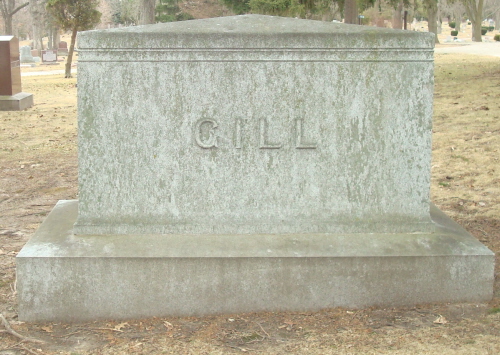
Dr. Gill passed away on October 3, 1938, at the age of 78, and was laid to rest at Forest Hill Cemetery in Madison, Dane County, Wisconsin, with his pallbearers including
six of his closest friends and retired police personnel.
References:
Other references:
- Obituary and biographical article detailing his life, civic career, and funeral, published in a local Madison newspaper.
- Wisconsin Supreme Court legal records concerning the 1916 sodomy conviction appeal involving W. C. Abaly, Frank Kilby, W. W. Gill, and Harry Sauthoff.
Support this project
This website is a passion project researched, developed, and funded entirely by me. If you find the content valuable and would like to help support the ongoing research and hosting costs, any contribution is deeply appreciated.
Thank you for keeping this independent resource alive!
My books on Amazon: Elisa Rolle's books
BACK TO HOME PAGE