Queer Places:
Seignouret-Brulatour Court, 520 Royal St, New Orleans, LA 70130, USA
Metairie Cemetery, 5100 Pontchartrain Blvd, New Orleans, LA 70124, United States
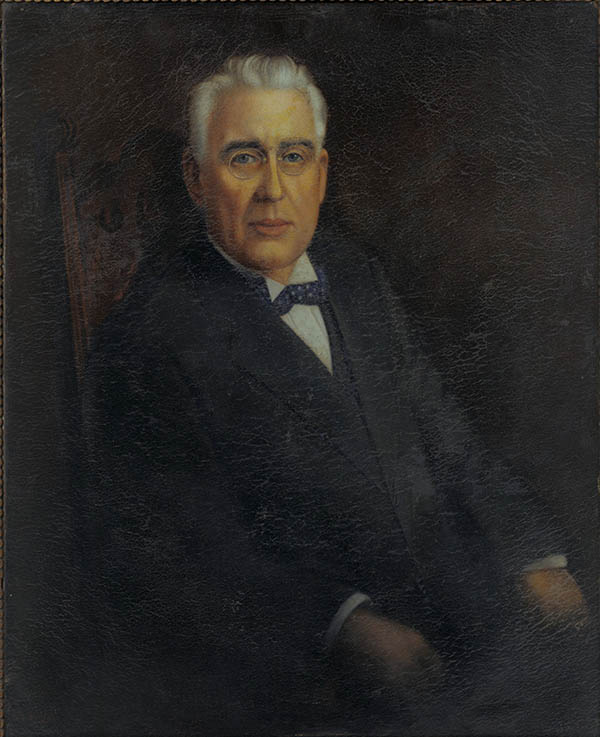 William Ratcliffe Irby (January 4, 1860 - November 20, 1926) was born on January 4, 1860, in Lynchburg, Virginia, to James Jackson Irby and Virginia Ratcliff Chaplain.
Following the Civil War, his family relocated to New Orleans, Louisiana, in 1866, a city that would become the lifelong beneficiary of his civic devotion. Irby followed his
father into the tobacco industry, eventually rising to become a chief executive of the American Tobacco Company, which operated as the world's largest tobacco supplier under
the Duke family. When a landmark 1911 Supreme Court anti-trust ruling broke up the corporate monopoly, Irby transitioned to leadership within the newly formed Liggett &
Myers Tobacco Company. Beyond his immense success in the tobacco sector, Irby established himself as a prominent financial titan, serving as the chairman of the Canal Bank &
Trust Company of New Orleans.
William Ratcliffe Irby (January 4, 1860 - November 20, 1926) was born on January 4, 1860, in Lynchburg, Virginia, to James Jackson Irby and Virginia Ratcliff Chaplain.
Following the Civil War, his family relocated to New Orleans, Louisiana, in 1866, a city that would become the lifelong beneficiary of his civic devotion. Irby followed his
father into the tobacco industry, eventually rising to become a chief executive of the American Tobacco Company, which operated as the world's largest tobacco supplier under
the Duke family. When a landmark 1911 Supreme Court anti-trust ruling broke up the corporate monopoly, Irby transitioned to leadership within the newly formed Liggett &
Myers Tobacco Company. Beyond his immense success in the tobacco sector, Irby established himself as a prominent financial titan, serving as the chairman of the Canal Bank &
Trust Company of New Orleans.
Deeply committed to the educational and institutional advancement of his home city, Irby served as the president of Tulane University's board of administrators. During
his tenure, he revolutionized the university's operations by establishing its central purchasing system, and a campus dormitory was subsequently named in his honor. His
financial generosity was vast, though frequently practiced anonymously. When the historic St. Louis Cathedral suffered severe structural damage from a powerful hurricane in
1915, Irby provided an anonymous gift of $125,000 to the Roman Catholic Archdiocese of New Orleans to fund critical repairs. His identity as the benefactor of this
restoration was not publicly revealed until after his death.
By the early 20th century, the historic French Quarter (Vieux Carré) had largely devolved into an overcrowded, neglected slum, facing the constant threat of commercial
modernization and wholesale demolition. Irby emerged as a principal driving force behind the neighborhood's salvation, using his private fortune to acquire, protect, and
meticulously restore numerous endangered architectural landmarks. Among his most notable rescue efforts was the acquisition and rehabilitation of the grand French Opera
House—built in 1859—and the historic Seignouret-Brulatour Court at 520 Royal Street. Irby bequeathed the Brulatour residence to the Louisiana State Museum, where it remains
protected.
Irby's pioneering preservation work was deeply intertwined with a broader movement driven by a circle of prominent gay, lesbian, and bohemian cultural figures often
referred to as the "Dixie Bohemians". Alongside philanthropist Irby, key figures such as writer and journalist Lyle Saxon and
architect Richard Koch formed a loose but powerful alliance to defend the architectural and cultural integrity of the French
Quarter.
Described by contemporary chroniclers as a figure of immense dignity and old-school Southern power, Irby spent his final years immersed in civic duty and preservation. On
November 20, 1926, after completing his regular morning routines and visiting his bank, Irby tragically took his own life at an undertaker's parlor in New Orleans, leaving
notes citing an incurable heart condition and requesting absolute simplicity for his funeral. He was laid to rest in Metairie Cemetery. Today, William Ratcliffe Irby is
remembered alongside Saxon, Koch, and other queer visionaries as a founding guardian of New Orleans, whose early 20th-century financial intervention and aesthetic
appreciation permanently rescued the French Quarter from oblivion.
References:
Other references:
- United States Federal Censuses (1860, 1870, 1910): Documenting William Ratcliffe Irby's birth household in Lynchburg, Campbell County, Virginia, his family's relocation to Louisiana, and his later residency in New Orleans.
- The Times-Picayune (New Orleans): Contemporary reports detailing his business transactions, banking leadership at Canal Bank & Trust, civic donations, and the extensive coverage following his sudden passing in November 1926.
- The New York Times: Archival business reporting on the 1911 Supreme Court anti-trust dissolution of the American Tobacco Company and Irby’s subsequent appointment as a director of the Liggett & Myers Tobacco Company.
- Time Magazine: Period profiles referencing his status as a prominent financial figure and "old-school Southerner".
- Last Will and Testament of William Ratcliffe Irby (1926): Legal probate records detailing his major philanthropic final bequests, including the transfer of the Lower Pontalba Apartments and the Seignouret-Brulatour (Brulatour) Court to the Louisiana State Museum.
- 64 Parishes (formerly Know Louisiana / Louisiana Endowment for the Humanities): Encyclopedic biographical entry on William Ratcliffe Irby authored by Ned Hemard, detailing his tobacco executive career, anonymous $125,000 restoration gift to the St. Louis Cathedral, and rescue of the French Opera House and Paul Morphy House.
- Louisiana State Museum Archives: Institutional records documenting Irby's foundational contributions of real estate assets (such as the Lower Pontalba Building) that permanently established parts of the museum's French Quarter footprint.
- Preservation Resource Center of New Orleans (PRCNO): Historical overviews ("Risen from the Ashes") mapping out the early 20th-century grassroots and philanthropic initiatives—led by the Vieux Carré Improvement Association, Lyle Saxon, and W.R. Irby—that halted the destruction of the historic district.
- The Historic New Orleans Collection (THNOC): Research libraries and architectural archives housing documentation on early French Quarter preservationists, Richard Koch's structural surveys, and the "Dixie Bohemian" cultural circle.
Support this project
This website is a passion project researched, developed, and funded entirely by me. If you find the content valuable and would like to help support the ongoing research and hosting costs, any contribution is deeply appreciated.
Thank you for keeping this independent resource alive!
My books on Amazon: Elisa Rolle's books
BACK TO HOME PAGE
