Queer Places:
1143 Royal St, New Orleans, LA 70116, USA
Hope Mausoleum, 4841 Canal St, New Orleans, LA 70119 United States
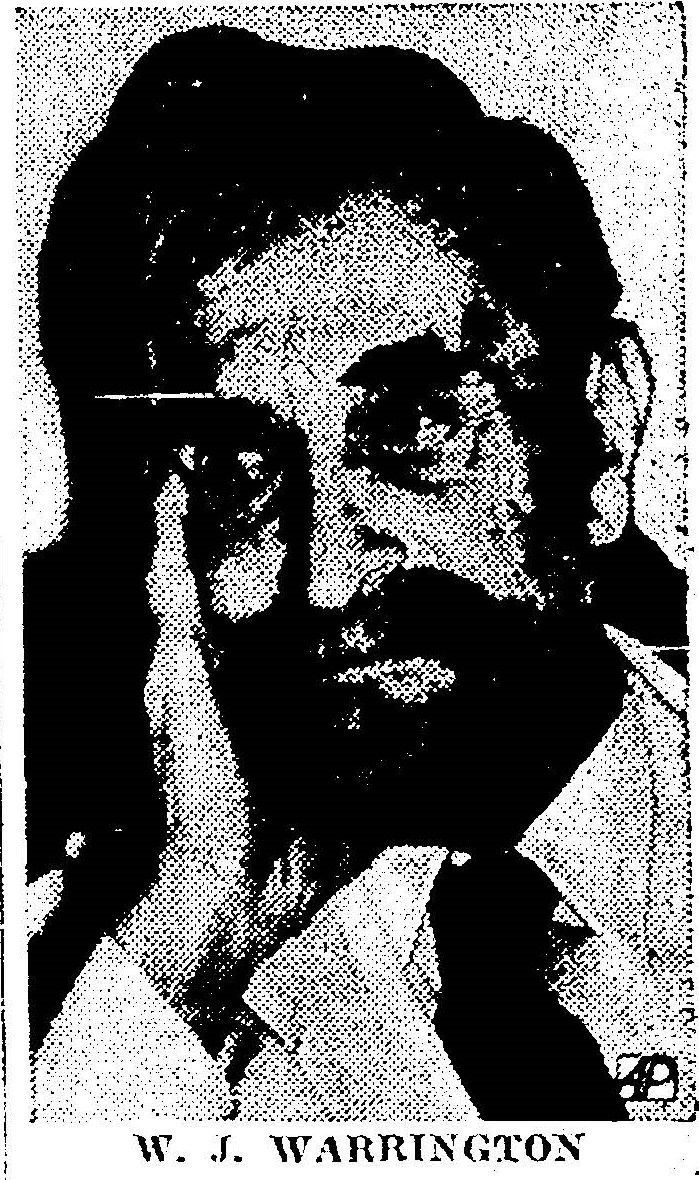 William Jennings Warrington (October 1850 – January 22, 1941) was a New Orleans philanthropist, publisher, entrepreneur, and lifelong bachelor. Best known as the founder
of the Warrington Movement, he spent decades providing shelter, food, and social aid to destitute men and wayward boys.
William Jennings Warrington (October 1850 – January 22, 1941) was a New Orleans philanthropist, publisher, entrepreneur, and lifelong bachelor. Best known as the founder
of the Warrington Movement, he spent decades providing shelter, food, and social aid to destitute men and wayward boys.
Born in Georgia in October 1850 to an English father and a French mother, Warrington inherited substantial wealth from his family's estates abroad.
Before committing entirely to full-time philanthropy, Warrington pursued various business and artistic endeavors across the United States:
Published Warrington's Musical Review in New Orleans (1877–1886). Founded an art school in Kansas City during the 1890s. Managed an Arkansas farm in 1900. Held
interests in coal mining and patented a food-drying apparatus in 1919.
The defining chapter of Warrington's life began when he witnessed two young street boys in New Orleans arrested for stealing a peddler's cart. After securing their
release, housing them, and helping them find employment, local police and social welfare groups began sending other disenfranchised young men to him.
In 1923, Warrington purchased the historic Lalaurie Mansion at 1143 Royal Street in the French Quarter. He converted the mansion into Warrington House, a
non-sectarian shelter operating on the principle that the only prerequisites for admission were "hunger and want".
During the Great Depression, the Warrington Movement expanded to five houses across New Orleans, aiding over 100,000 individuals annually. Warrington published The
Warrington Messenger to share his philanthropic philosophy.
In 1926, Warrington received the prestigious Times-Picayune Loving Cup for unselfish public service. Because he funded his institutions almost entirely out of his own
pocket while living in a sparsely furnished single room, his personal fortune was eventually exhausted. He died penniless on January 22, 1941.
While historical documents from the early 20th century primarily describe William J. Warrington through the lens of non-sectarian charity and bachelorhood, his life
intersects with LGBTQ historical and cultural studies in several key ways:
Warrington remained unmarried throughout his life, devoting his home, wealth, and energy exclusively to housing and supporting men and young males in crisis.
By anchoring his shelters at 1143 Royal Street, Warrington helped establish non-traditional, bachelor-run communal spaces in the French Quarter during the 1920s and
1930s. This era laid the groundwork for the French Quarter's emergence as an epicenter of southern queer culture and Bohemian life.
Warrington's work at Warrington House is cited in historical studies exploring early 20th-century male domestic arrangements and historic preservation in urban
centers (such as Will Fellows' A Passion to Preserve: Gay Men as Keepers of Culture). Historians examine these male-focused shelters and artistic endeavors as important
precursors to mid-century queer social networks and community support systems.
References:
Other references:
- The 1926 Times-Picayune Loving Cup Auction Catalog Archive (New Orleans Auction Galleries, 2012)
- New Orleans City Guide by the Federal Writers' Project (1938)
- So Great a Good: A History of the Episcopal Church in Louisiana by Hodding Carter (1955)
- The Collins C. Diboll Vieux Carré Digital Survey (The Historic New Orleans Collection)
Support this project
This website is a passion project researched, developed, and funded entirely by me. If you find the content valuable and would like to help support the ongoing research and hosting costs, any contribution is deeply appreciated.
Thank you for keeping this independent resource alive!
My books on Amazon: Elisa Rolle's books
BACK TO HOME PAGE
