Queer Places:
University of California, Berkeley, Berkeley, CA, United States
Mountain View Cemetery, 2 Emery Ln, Oakland, CA 94618, United States
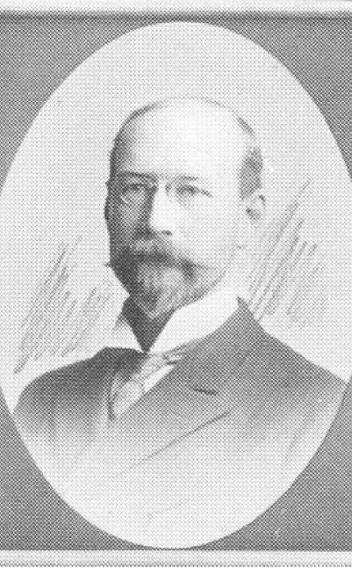 William Dallam Armes (August 3, 1860 - August 18, 1918) was a prominent figure at the University of California, Berkeley, known for his long-standing academic career, his
contributions to the university's cultural landscape, and his role as a founding member of the Sierra Club. A graduate of the University of California, class of 1882, he
eventually returned to his alma mater to serve as an Associate Professor of American Literature within the English Department. Throughout his tenure, he was highly regarded
for his scholarship and his personal involvement in the university's social and intellectual life.
William Dallam Armes (August 3, 1860 - August 18, 1918) was a prominent figure at the University of California, Berkeley, known for his long-standing academic career, his
contributions to the university's cultural landscape, and his role as a founding member of the Sierra Club. A graduate of the University of California, class of 1882, he
eventually returned to his alma mater to serve as an Associate Professor of American Literature within the English Department. Throughout his tenure, he was highly regarded
for his scholarship and his personal involvement in the university's social and intellectual life.
Beyond his academic responsibilities, Armes made a significant impact on the arts at UC Berkeley. He served as the long-time chair of the Musical and Dramatic Committee
and as the director of the Hearst Greek Theatre. In these roles, he was instrumental in transforming the Greek Theatre from a space primarily used for campus functions into
a nationally recognized venue that hosted world-renowned artists, including the famous French actress Sarah Bernhardt. His
efforts helped establish the foundation for the university’s robust tradition of performing arts programming.
Armes was also a man of diverse interests and a notable collector. He was one of the founding members of the Sierra Club and served as its first secretary, a role that
brought him into contact with leading naturalists of the era, including John Muir. Additionally, he was an avid collector of art; upon his death in 1918, he left a
significant bequest to the university that included approximately one thousand Japanese prints. This donation became a cornerstone of the collection for what is now the
Berkeley Art Museum and Pacific Film Archive (BAMPFA), contributing to the museum's transition into an institution with a global scope.
Armes is frequently noted by historians and in university oral histories as a lifelong bachelor who was deeply integrated into the cultural and social circles of his
time. While explicit documentation of personal identity is rare for individuals of his generation, he is often discussed in research concerning the hidden or non-traditional
social histories of early faculty life at Berkeley. References to him often highlight his "charming" personality and his role as a prominent, well-connected bachelor within
the Faculty Club, a designation that in historical research often serves as a point of interest for scholars exploring the lived experiences of gay men in early 20th-century
academia. Though he lived in an era when such identities were not openly labeled or discussed, his inclusion in institutional archives regarding LGBTQ history stems from
these archival observations of his social persona and life as an unmarried man in the university community.
References:
- Oakland History Center (Oakland Public Library): Holds a specific collection titled Letters to William Dallam Armes (1891, 1904), which includes correspondence from notable figures such as naturalist John Muir, poet Fred Emerson Brooks, and New York University professor Francis Hovey Stoddard.
- University of California, Berkeley (BAMPFA Archives): The Berkeley Art Museum and Pacific Film Archive (BAMPFA) maintains records regarding the 1919 bequest from Armes, which provided the institution with approximately 1,000 Japanese prints, a foundational gift for their global art collection.
- The Bancroft Library: As the primary repository for UC Berkeley history, the library holds extensive university archives that document his tenure as an Associate Professor of American Literature and his administrative roles, including his leadership in the Hearst Greek Theatre.
- "Gay Bears" Project (Bancroft Library): This digital archive and research guide specifically documents the history of LGBTQ+ individuals at UC Berkeley. It serves as the primary academic resource for exploring how Armes’ life as a bachelor and prominent faculty member is interpreted within the context of early 20th-century queer history.
- Sierra Club Records: As a founding member and the first secretary of the Sierra Club, Armes is referenced in early organizational histories and biographical sketches related to the club's establishment in 1892.
- Old English Ballads and Folk Songs (1910): Edited and selected by Armes, this volume remains one of his most accessible published academic contributions and is available through the HathiTrust Digital Library for those interested in his scholarly work in English literature.
Support this project
This website is a passion project researched, developed, and funded entirely by me. If you find the content valuable and would like to help support the ongoing research and hosting costs, any contribution is deeply appreciated.
Thank you for keeping this independent resource alive!
My books on Amazon: Elisa Rolle's books
BACK TO HOME PAGE