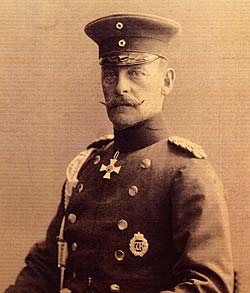
 Georg Albrecht Wilhelm Graf von Hohenau (April 25, 1854 – October 28, 1930) was a Prussian General of the Cavalry (Generalleutnant) who served in the military entourage of
German Emperor Wilhelm II.
Georg Albrecht Wilhelm Graf von Hohenau (April 25, 1854 – October 28, 1930) was a Prussian General of the Cavalry (Generalleutnant) who served in the military entourage of
German Emperor Wilhelm II.Queer Places:
Schloss Albrechtsberg, Bautzner Str. 130, 01099 Dresden-Loschwitz, Germany
Georg Albrecht Wilhelm Graf von Hohenau (April 25, 1854 – October 28, 1930) was a Prussian General of the Cavalry (Generalleutnant) who served in the military entourage of
German Emperor Wilhelm II.
Born at Schloss Albrechtsberg near Dresden, he was the son of Prince Albrecht of Prussia (1809–1872)—the youngest brother of Emperor Wilhelm I—and his second, morganatic wife, Rosalie Gräfin von Hohenau (née von Rauch). Because of his parents' morganatic marriage, Wilhelm was not a member of the main House of Hohenzollern and instead bore the surname of his mother. He was a cousin of Kaiser Wilhelm II.
Following in the footsteps of his father and brother, Wilhelm pursued a career in the Prussian Guard Cavalry. He entered the 1st Guard Dragoner Regiment in Berlin in 1873 and steadily climbed the military ranks. He commanded the elite Regiment der Gardes du Corps and the 1st Guard Cavalry Brigade. By 1905, he was appointed as a duty-attending general à la suite to the Kaiser, placing him at the pinnacle of the Prussian military establishment.
Wilhelm von Hohenau's career and reputation came to a sudden end due to his entanglement in the Harden–Eulenburg Affair (1907–1909), one of the most explosive domestic political scandals of the German Empire.
Hohenau was associated with the Liebenberg Circle, an influential group of intellectuals, diplomats, and military leaders close to Emperor Wilhelm II (centered around Philipp, Prince of Eulenburg, and General Kuno von Moltke), which was targeted by journalist Maximilian Harden over allegations of homosexual conduct.
In 1907, as the scandal widened and the Berlin vice squad compiled lists of suspected homosexual officers within the elite guard units, Hohenau was implicated. Pressured by the unfolding crisis and seeking to protect the reputation of the military and the crown, Emperor Wilhelm II demanded Hohenau’s resignation.
Though Hohenau was formally cleared of the charge of homosexuality in 1908 due to a lack of legal proof, a military court of honor ruled that his unproven innocence still violated the strict code of conduct expected of an officer. As a result, he was stripped of his military rank and permanently dismissed from the army.
Following his disgrace and retirement from public life, financial troubles forced him to sell Schloss Albrechtsberg in 1925. He spent his final years in reduced circumstances until his death in Bad Flinsberg in 1930.
References:
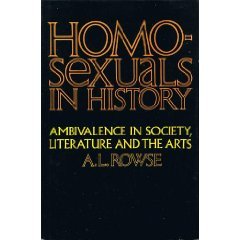 Homosexuals in History, A Study of Ambivalence in Society, Literature and the Arts, 1977 by A.L. Rowse |
Other references:
Support this project
This website is a passion project researched, developed, and funded entirely by me. If you find the content valuable and would like to help support the ongoing research and hosting costs, any contribution is deeply appreciated.
Thank you for keeping this independent resource alive!
My books on Amazon: Elisa Rolle's books