Queer Places:
Forest Home Cemetery, 863 Des Plaines Ave, Forest Park, IL 60130, United States
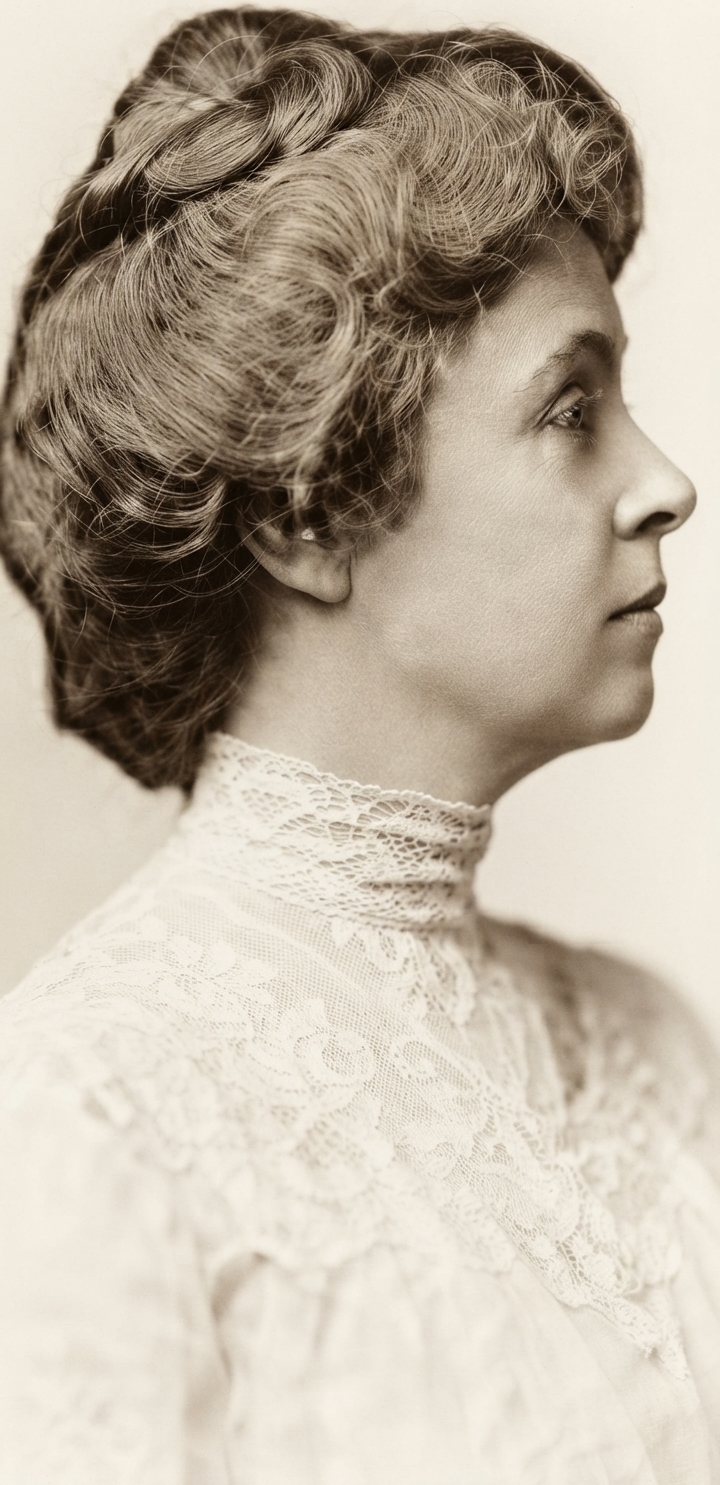 Viola Belle Squire (January 28, 1870 - April 17, 1939), born on January 28, 1870, in Burlington, Iowa (frequently cited in contemporary sources as Lima,
Ohio) to parents Edmund Felix Garrett Squire and Sarah O. Gardener, was a prominent American suffragist, music teacher, lecturer, and author whose
radical activism challenged conventional gender roles and the heteropatriarchal structures of the early twentieth century. Relocating to Chicago around
1909, Squire established herself as a leading voice in the midwestern women's rights movement through her uncompromising stances on taxation, marriage,
and autonomous female identity.
Viola Belle Squire (January 28, 1870 - April 17, 1939), born on January 28, 1870, in Burlington, Iowa (frequently cited in contemporary sources as Lima,
Ohio) to parents Edmund Felix Garrett Squire and Sarah O. Gardener, was a prominent American suffragist, music teacher, lecturer, and author whose
radical activism challenged conventional gender roles and the heteropatriarchal structures of the early twentieth century. Relocating to Chicago around
1909, Squire established herself as a leading voice in the midwestern women's rights movement through her uncompromising stances on taxation, marriage,
and autonomous female identity.
Professionally active as a music teacher and writer, Squire contributed articles on women's rights and music to publications such as The Sunday
Tribune, Harper's Bazaar, and Woman's World. In 1911, she published The Woman Movement in America: A Short Account of the Struggle for Equal Rights,
aiming to educate younger generations on the history of enfranchisement. Her activism took a definitive turn in 1910 when, managing property taxes for
her mother, she initiated a high-profile tax revolt by refusing to pay assessments on a property at 3303 Evanston Avenue in Chicago. Grounding her
refusal in the principle that taxation without representation was unjust, Squire's bold defiance inspired thousands of Cook County women and led her to
co-found and lead the No Vote, No Tax League of Illinois alongside figures like Margaret Haley.
Squire was deeply integrated into the progressive networks of Chicago, joining forces with renowned journalist and activist
Ida B. Wells to co-found the Alpha Suffrage Club in January 1913, recognized as the first suffrage organization
for African American women. Demonstrating her commitment to intersectional civil rights, Squire marched alongside Wells with the Illinois delegation in
the historic 1913 Woman Suffrage Procession in Washington, D.C., proudly wearing a "No Vote, No Tax" sash. Later that year, she joined prominent
reformers like Jane Addams in signing a telegram to President Woodrow Wilson advocating for the rights of British
suffragette Emmeline Pankhurst.
Beyond political enfranchisement, Squire launched a radical critique of marriage, publicly declaring in 1913 that she would rather have a vote than a
husband. Choosing a lifelong single life, she rejected both traditional and companionate marriage as institutions that reinforced female subordination.
To challenge the social standard that automatically afforded men respect at adulthood while defining women only through marital status, Squire defiantly
adopted the title "Mrs." for herself without a husband, sparking sharp debates with conservative suffragists who claimed she was encroaching on married
women's preserves.
Following the passage of women's suffrage, during which she resumed paying taxes regularly, Squire spent a decade living in France starting in 1924,
continuing to write historical articles about the movement before returning to Chicago. She passed away at the age of 69 on April 17, 1939, at her home
on Wallen Avenue, and was laid to rest in Forest Home Cemetery in Forest Park, Illinois, survived by her brothers Frank, Fred, Walter, and Willis.
References:
Other references:
- Chicago Tribune, April 18, 1939 obituary: "BELLE SQUIRE, 69, NOTED SUFFRAGE LEADER, IS DEAD" (detailing her life, career as a music teacher and writer, tax revolt, and residence in France).
- 1913 reports and interviews regarding her anti-marriage stance and adoption of the title "Mrs." without a husband.
- Illinois Deaths and Stillbirths: Official death record for Viola Belle Squire (Event Date: April 16/17, 1939, Chicago, Cook, Illinois; birth date: January 28, 1870; parents: Edmund G. Squire and Sarah O. Gardener).
- Forest Home Cemetery Records (Forest Park, Cook County, Illinois): Burial location and interment details following her passing in April 1939.
- The Woman Movement in America: A Short Account of the Struggle for Equal Rights (Published in 1911, featuring a preface addressing the youth of the nation).
- Periodical articles and essays published in The Sunday Tribune, Harper's Bazaar, Woman's World, and The Delineator (such as "What Women Want in Men," May 1907).
- Historical analyses of spinster suffragists, anti-marriage philosophies, and alternate domestic arrangements within the early 20th-century American women's suffrage movement.
- Documentation concerning the founding and history of the Alpha Suffrage Club (co-founded by Ida B. Wells and Belle Squire in January 1913).
- Records of the 1913 Woman Suffrage Procession in Washington, D.C. (National American Woman Suffrage Association), featuring the Illinois delegation and Squire's participation with a "No Vote, No Tax" sash.
- Records of the No Vote, No Tax League of Illinois (1910–1912), documenting her tax resistance campaigns alongside Margaret Haley and Cook County property assessments.
- Archival correspondence and petitions, including the October 18, 1913 telegram to President Woodrow Wilson regarding British suffragette Emmeline Pankhurst, co-signed by Chicago suffragists including Belle Squire and Jane Addams.
Support this project
This website is a passion project researched, developed, and funded entirely by me. If you find the content valuable and would like to help support the ongoing research and hosting costs, any contribution is deeply appreciated.
Thank you for keeping this independent resource alive!
My books on Amazon: Elisa Rolle's books
BACK TO HOME PAGE
