Queer Places:
Slade School of Fine Art, University College London, Gower St, London WC1E 6BT, United Kingdom
Académie Julian, Passage des Panoramas, 75002 Paris
Académie Colarossi, 10 Rue de la Grande Chaumière, 75006 Paris
St. James Cemetery, 635 Parliament St, Toronto, ON M4X 1S3, Canada
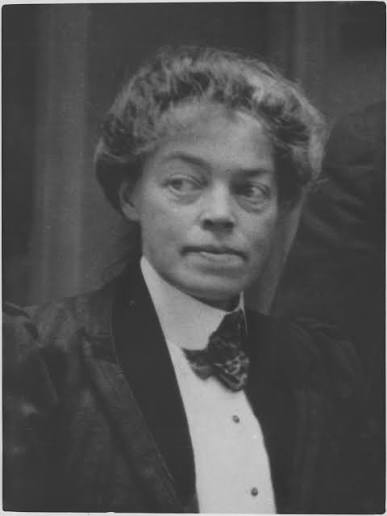 Sydney Strickland Tully RCA (March 10, 1860 – July 18, 1911) was a distinguished Canadian painter known for her pastel and oil portraits, landscapes, and genre pictures, as
well as her notable success across numerous international and domestic exhibitions.
Sydney Strickland Tully RCA (March 10, 1860 – July 18, 1911) was a distinguished Canadian painter known for her pastel and oil portraits, landscapes, and genre pictures, as
well as her notable success across numerous international and domestic exhibitions.
Born and raised in Toronto, she was the child of Maria Strickland and Kivas Tully. Her mother, Maria Strickland, was a niece of the noted author Susanna Moodie, and her
father, Kivas Tully, was a prominent architect. Artistry ran in the family, as her sister, Louise Beresford Tully, was also a Toronto-based artist who operated a teaching
studio in the Yonge Street Arcade. Tully's early artistic studies took place at the Central Ontario School of Art (later OCAD University) in Toronto, where she studied with
Charlotte Schreiber and William Cruikshank, amongst others. In 1884, she traveled to London to continue her education at the Slade School of Art under Alphonse Legros.
Further European studies took place in Paris at the Académie Julian, where she studied with Jean-Joseph Benjamin-Constant and Tony Robert-Fleury, and at the Académie
Colarossi under Gustave-Claude-Etienne Courtois. Later in her career, she also pursued studies at the Long Island Art School with William Merritt Chase.
Tully began her professional career coloring photographs and designing Christmas cards before mastering a variety of mediums, including oil and pastel. She kept a studio
in Toronto from 1888 until her death—initially operating from 1888 to 1890 where she also taught regular classes—and participated steadily in the artistic life of the city.
She maintained an active international presence, traveling to paint and exhibit, including sojourns in London in 1895, the Netherlands between 1906 and 1908, and the Jersey
Channel Islands during that same period. Beyond her visual art, Tully wrote articles for The Globe on European affairs and illustrated a children's book that was published
posthumously in 1911.
Her career was marked by major exhibitions and institutional milestones. She exhibited regularly with the Ontario Society of Artists, which elected her a member in 1889,
and the Royal Canadian Academy of Arts, where she became an Associate the same year. She also participated in the Art Association of Montreal from 1892 to 1909, the Toronto
Industrial Exhibition from 1890 to 1910, the World's Columbian Exposition in Chicago, the Paris Salon in 1888, and the Royal Academy of Arts in 1896 and 1897. Her major
works included The Twilight of Life (1894), Flower Market, Paris (1907), Knalhaven, Dordrecht (1907), and Washing Day (c. 1910). For The Twilight of Life, Tully won an
honorable mention at the Pan-American Exposition in Buffalo and a bronze medal at the Canadian exhibition at the Louisiana Purchase Exposition in St. Louis, Missouri.
Following her passing from pernicious anemia in Toronto on July 18, 1911, a Memorial Exhibition of her paintings and drawings was held at the Art Metropole Galleries in
Toronto later that year.
Tully's work is represented in major collections, including the Art Gallery of Ontario, the National Gallery of Canada, Museum London, and the Government of Ontario.
Notably, Tully bequeathed her award-winning painting The Twilight of Life to the Art Gallery of Ontario, making it the first painting by a Canadian artist ever acquired by
the gallery in 1911. A second work, Evening on the Vaal, was acquired by the AGO by subscription in 1912, and the gallery also holds a third work depicting a young woman
painter working from a dressed female model.
Throughout her life, Tully shared deep personal and professional bonds within progressive women's circles in Toronto, maintaining significant relationships with fellow
trailblazing women artists and educators. Among her closest companions was Harriet Mary Ford, a distinguished artist and
educator who had also studied extensively in Europe and shared Tully's dedication to advancing women's roles in the arts. Tully was likewise connected to
Edith Hayes, another prominent member of Toronto's tight-knit artistic community. These relationships formed the bedrock of a
supportive, domestic, and professional network common among independent professional women of the era, offering mutual encouragement and companionship outside traditional
heterosexual marital structures. Tully never married, choosing instead to dedicate her life entirely to her art, her community leadership, and her chosen circle of female
companions.
References:
- Canada Census records (1871)
- Ontario Deaths, 1869–1937 and Overseas Deaths, 1939–1947 (Registration Year 1911, CN 4608, Archives of Ontario / FamilySearch)
- Art Gallery of Ontario (AGO) – holding works such as The Twilight of Life (1894), Evening on the Vaal, and studies of a young woman painter
- National Gallery of Canada
- Museum London
- Government of Ontario collection
- Royal Canadian Academy of Arts (RCA) exhibition records
- Ontario Society of Artists (OSA) membership and exhibition registries
- Art Association of Montreal exhibition records (1892–1909)
- Toronto Industrial Exhibition / Canadian National Exhibition records (1890–1910)
- World's Columbian Exposition (Chicago) and Pan-American Exposition (Buffalo) documentation
- Memorial Exhibition Catalog, Art Metropole Galleries, Toronto (1911)
- Contemporary dispatches and articles written by Sydney Strickland Tully for The Globe (now The Globe and Mail) regarding European affairs
Support this project
This website is a passion project researched, developed, and funded entirely by me. If you find the content valuable and would like to help support the ongoing research and hosting costs, any contribution is deeply appreciated.
Thank you for keeping this independent resource alive!
My books on Amazon: Elisa Rolle's books
BACK TO HOME PAGE