Wife Beatrice Rosamond Pennington
Queer Places:
31 Upper Bedford Place, Bloomsbury, London (now 31 Bedford Way, Bloomsbury, London WC1B 5DR)
Wavertree, St Peter's Rd, Twickenham TW1 1QX, United Kingdom
East Sheen Cemetery, Sheen Rd, Richmond TW10 5BJ, United Kingdom
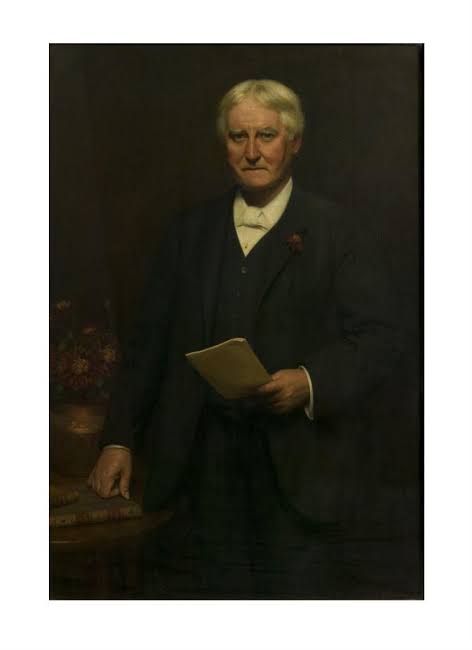 The Reverend Stewart Duckworth Headlam (January 12, 1847 – November 18, 1924) represents one of the most uniquely defiant chapters in late-Victorian religious and social
history. An Anglican clergyman, Christian socialist, and fierce anti-puritan, Headlam spent his entire career clashing with church authorities to advocate for the
working class, the arts, and social justice.
The Reverend Stewart Duckworth Headlam (January 12, 1847 – November 18, 1924) represents one of the most uniquely defiant chapters in late-Victorian religious and social
history. An Anglican clergyman, Christian socialist, and fierce anti-puritan, Headlam spent his entire career clashing with church authorities to advocate for the
working class, the arts, and social justice.
His intersection with LGBTQ+ history is twofold: his courageous public defense of Oscar Wilde and his personal marriage to
Beatrice Rosamond Pennington.
Deeply influenced by incarnational theology, Headlam believed that true Christianity required fighting for the physical and social welfare of humanity. He co-founded
the Guild of St Matthew (one of the earliest Christian Socialist organizations) and was an active early member of the Fabian Society.
He vocally opposed the rigid puritanism of the Victorian Church. In 1879, he founded the Church and Stage Guild to dismantle religious prejudices against theatre
workers, dancers, and actors.
His radical views—including his denial of the doctrine of eternal punishment, support for birth control campaigns, and calls to abolish the House of Lords—led the
Bishop of London to revoke his clerical license for 11 years. Undeterred, he used his private income to fund his political work and served for nearly two decades on the
London County Council.
Headlam's most prominent connection to LGBTQ+ history occurred during the peak of the Oscar Wilde trials. In May 1895, when public hostility against Wilde reached a
fever pitch, Headlam stepped forward to provide the substantial bail money needed to release the playwright between his trials.
He barely knew Wilde personally, having met him only twice. His motivation was deeply rooted in his principles: he believed no man should be prejudged by a mob before
a legal verdict was delivered. Headlam paid a severe social price for this act of solidarity; an angry mob attacked his Bloomsbury home, smashing his windows. When Wilde
was ultimately released from prison in 1897, Headlam was there again to assist him.
On January 24, 1878, Headlam married Beatrice Rosamond Pennington, an educated and progressive woman who initially shared his passion for theology and theatre reform.
However, the marriage was devoid of physical attraction and quickly broke down. They separated permanently within a few years, though they never divorced, and Headlam
strictly refused to discuss the marriage for the rest of his life.
Following her separation from Headlam, Beatrice openly built a life with her female partner, Rhoda Majendie. They lived together
for decades, moving between an apartment in London and country cottages in Hertfordshire and Somerset.
Far from vanishing after her marriage collapsed, Beatrice became a prominent figure in her own right:
She was a radical feminist, suffragist, and member of the Rational Dress Society.
Alongside Emily Massingberd, she co-founded the famous Pioneer Club in 1892—a progressive women's club—and served as
its first honorary secretary.
She was an acclaimed platform speaker who lectured on women's financial education and money management at Forsyth Technical College.
Biographers have often theorized that Headlam's deeply empathetic and defensive stance toward Oscar Wilde may have been intensely personal, informed by his intimate
understanding of his wife’s own sexuality and the alternative life she built outside Victorian heteronormative standards.
Reverend Stewart Headlam spent the second part of his life in his home in St Margaret's-on-Thames was Wavertree, St. Peter's Road, St Margaret's-on-Thames, Middlesex
(now part of Twickenham, southwest London). He named the Arts & Crafts house "Wavertree" after his birthplace near Liverpool. He shared the residence with classical
dancer Martha Wooldridge and lived there until he suffered a fatal series of heart attacks in November 1924.
The Reverend Stewart Headlam is buried at East Sheen Cemetery in southwest London. Following his death at his home in St Margaret's-on-Thames on November 18, 1924,
his funeral service was held at All Souls Church in St Margarets, and he was laid to rest at East Sheen Cemetery a few days later, on November 24, 1924.
References:
- Gayday by Massimo Consoli, 2005
- https://www.oxforddnb.com/view/article/37527
- https://www.headlam.me.uk/html_pages/headlam_P_W.htm
- https://womenwhomeantbusiness.com/2022/06/29/oscar-wildes-bail/
- https://www.camdennewjournal.co.uk/article/the-rebel-priest-who-stood-bail-for-oscar-wilde
Support this project
This website is a passion project researched, developed, and funded entirely by me. If you find the content valuable and would like to help support the ongoing research and hosting costs, any contribution is deeply appreciated.
Thank you for keeping this independent resource alive!
My books on Amazon: Elisa Rolle's books
BACK TO HOME PAGE