Queer Places:
Harvard University (Ivy League), 2 Kirkland St, Cambridge, MA 02138
Cave Hill Cemetery, 701 Baxter Ave, Louisville, KY 40204, United States
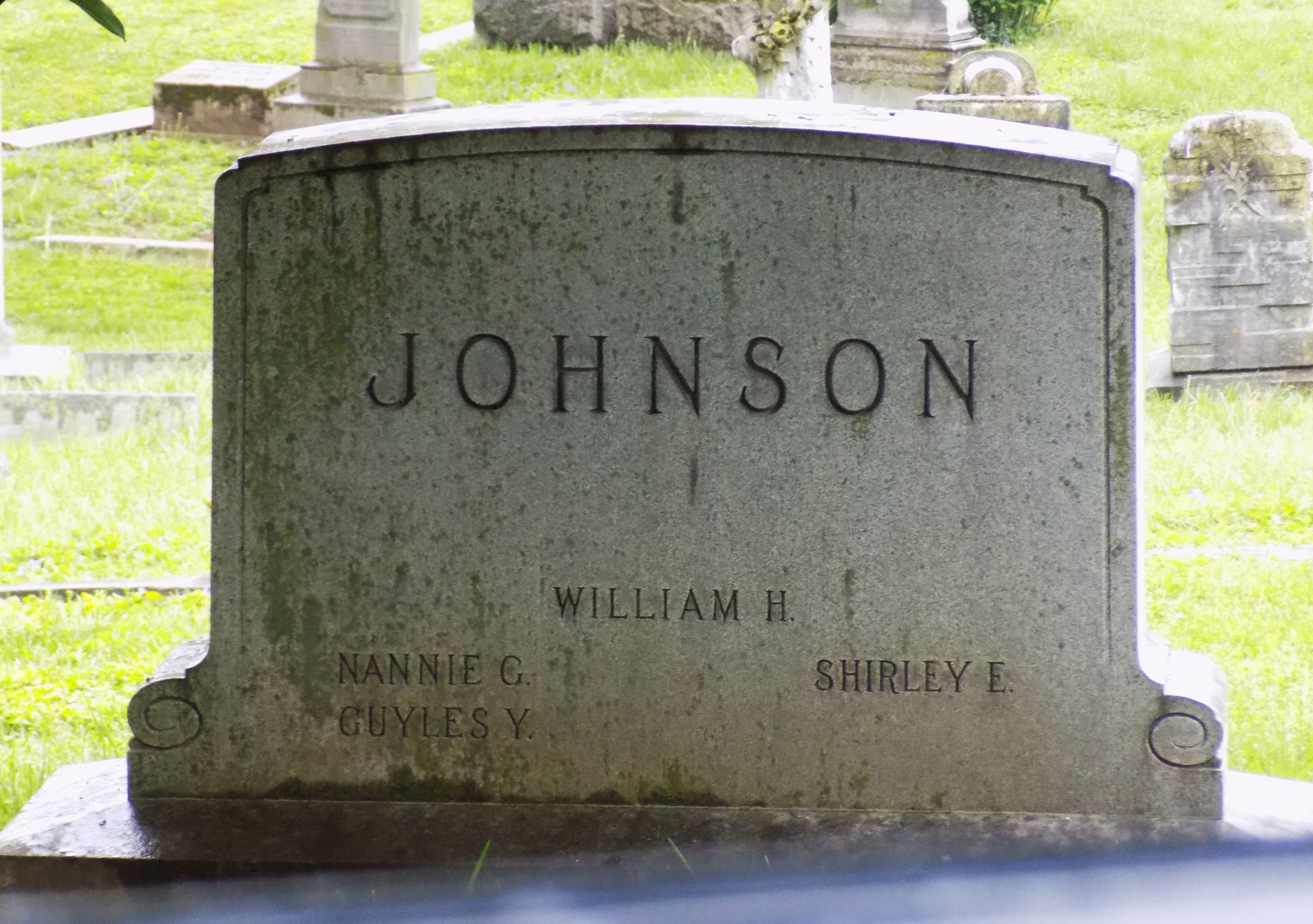 Shirley Everton Johnson (1871 - January 26, 1911) was an American author, journalist, and banker whose brief yet notable life intersected with
turn-of-the-century literary satire, public health reporting, and early explorations of queer cultural history.
Shirley Everton Johnson (1871 - January 26, 1911) was an American author, journalist, and banker whose brief yet notable life intersected with
turn-of-the-century literary satire, public health reporting, and early explorations of queer cultural history.
Born in 1871 or 1872 to William H. Johnson and Nannie Guyles Johnson, he grew up in Kentucky and attended the Louisville High School before entering
Harvard University as a sophomore. He graduated with the Harvard Class of 1895, though he largely remained outside the recognized extracurricular
activities of the college during his undergraduate years. Following his time at Harvard, Johnson returned to Kentucky, where he pursued a professional
life divided between journalism and banking. On June 8, 1904, he married Millie Cecil Mild in Knox, Kentucky. His life was cut short on January 26, 1911,
when he died in Manhattan, New York, at the age of thirty-nine. He was subsequently laid to rest in the Cave Hill Cemetery in Louisville, Kentucky.
As a writer, Johnson is remembered for two distinct publications. The first, issued in 1901, was a nonfiction public health report titled Conquering a
Small Pox Epidemic in Kentucky. However, his most enduring literary footprint is his 1902 (or 1903) satirical novella, The Cult of the Purple Rose: A
Phase of Harvard Life. Written as a fictionalized and fantastical critique, the book parodies the aesthetic movement and the over-refinement of
undergraduate culture at Harvard during the 1890s.
In the context of LGBTQ literary history and queer studies, The Cult of the Purple Rose occupies a fascinating niche. Modern literary historians and
critics, such as those documenting early gay American life, have analyzed Johnson's work alongside contemporary accounts like Two College Friends to map
out expressions of turn-of-the-century male intimacy and queer subcultures in higher education. The text deliberately echoes the decadent aestheticism
associated with Oscar Wilde, referencing symbols such as Robert Hichens's The Green Carnation—a direct nod to the
green carnations famously worn by Wilde and Aubrey Beardsley as coded signals of homosexuality in London,
Paris, and eventually Boston academic circles. Through its lampooning of effete undergraduate societies, Johnson’s satirical work accidentally preserved
a vivid snapshot of the Wildean artistic sensibilities and homosocial codes permeating elite American universities at the turn of the twentieth
century.
References:
Other references:
- Conquering a Small Pox Epidemic in Kentucky (1901) – A public health report detailing disease containment efforts.
- The Cult of the Purple Rose: A Phase of Harvard Life (Published in 1902 or 1903) – A satirical novella published by Richard G. Badger / The Gorham Press, critiquing the aesthetic movement and undergraduate culture at Harvard.
- Harvard University Records: Documentation of the Harvard Class of 1895, recording his entry as a sophomore from Louisville High School and his undergraduate timeline.
- Vital Statistics and Cemetery Records: Documentation of his birth, his marriage to Millie Cecil Mild on June 8, 1904, in Knox, Kentucky, his death in Manhattan, New York, on January 26, 1911, and his burial site at Cave Hill Cemetery in Louisville, Jefferson County, Kentucky.
- Critiques and analyses addressing turn-of-the-century Harvard subcultures, comparing The Cult of the Purple Rose alongside works like Two College Friends.
- Literary retrospectives and cultural commentary examining the influence of Oscar Wilde, Robert Hichens's The Green Carnation, and decadent aestheticism within turn-of-the-century American academic environments.
Support this project
This website is a passion project researched, developed, and funded entirely by me. If you find the content valuable and would like to help support the ongoing research and hosting costs, any contribution is deeply appreciated.
Thank you for keeping this independent resource alive!
My books on Amazon: Elisa Rolle's books
BACK TO HOME PAGE

