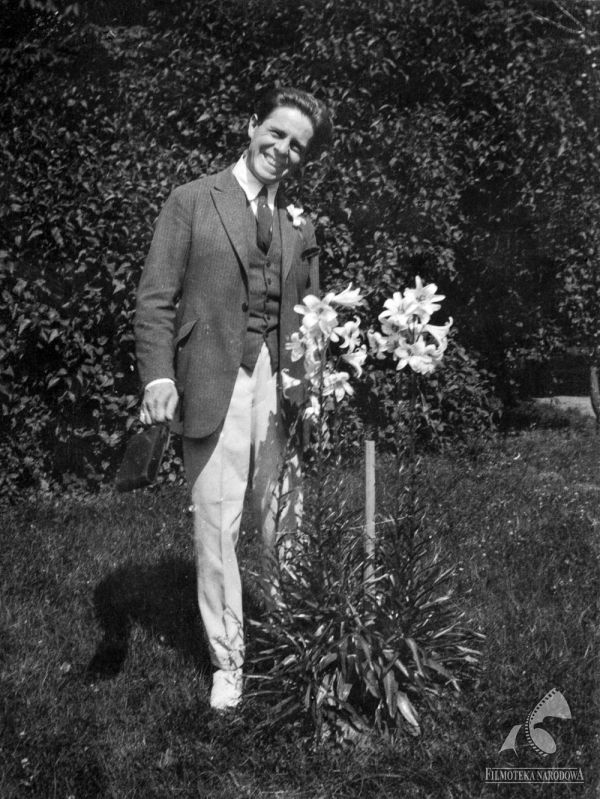
 Ryszard Stanisław Kazimierz Ordyński (October 5, 1878 - August 13, 1953) was a Polish theatre director, actor, and film producer whose career spanned
continental Europe and Hollywood.
Queer Places:
Bródno Cemetery, św. Wincentego 83, 03-530 Warszawa, Poland
Ryszard Stanisław Kazimierz Ordyński (October 5, 1878 - August 13, 1953) was a Polish theatre director, actor, and film producer whose career spanned
continental Europe and Hollywood.
He was born Dawid Blumenfeld on October 5, 1878, in Maków Podhalański, Poland, to Ignacy Blumenfeld-Ordyński, a senior railway official, and Emilia Blumenfeld (née Herlinger). He spent his formative childhood and youth in Kraków, pursuing higher education at the Jagiellonian University's Faculty of Philosophy. In 1900, he officially changed his surname to Ordyński.
Early in his career, Ordyński expanded his artistic boundaries beyond Poland by traveling to Berlin, where he served as an assistant to the legendary Max Reinhardt at the Deutsches Theater. He soon made his mark as a director and theatrical producer on an international scale. By 1916 and 1917, Ordyński was active in the United States, staging major theatrical efforts in Los Angeles. It was during this period that he brought Welsh actor Gareth Hughes to California to star in a revival of the morality play Everyman.
In Hollywood, Ordyński navigated both high-profile artistic circles and early cinema subcultures. Historically documented accounts of the era's social dynamics reveal that Ordyński integrated into the local queer artistic community. During his time in California, he maintained a romantic relationship with Famous Players set designer George James Hopkins, who collaborated with him on productions like Everyman. Together, Ordyński and Hopkins were central figures in a social circle that welcomed emerging gay talent in Hollywood, including Gareth Hughes and actress Alla Nazimova. Despite these fluid personal relationships and his documented place within early Hollywood's gay social networks, Ordyński also entered into four marriages over the course of his lifetime. His first marriage to painter Julia Stefania Stadnik lasted from 1903 to around 1910, followed by a brief marriage in 1913 to German actress Camilla Eibenschütz. Details regarding his third marriage remain sparse, though it is recorded that she was likely an American with whom he had a daughter. His fourth marriage was to Anna Steckiewicz in 1941, with whom he remained until his death.
Following his early stint in North America, Ordyński returned to his homeland during the Second Polish Republic, establishing himself as one of Poland's premier stage and cinema directors. As political tensions mounted in Europe, he left Poland for Paris in 1937, and after the German invasion of France, he relocated back to Hollywood to continue his cinematic work. In 1947, after the conclusion of World War II, Ordyński returned permanently to Poland. He spent his final years in his home country, where he passed away on August 13, 1953, leaving behind a legacy defined by his contributions to Polish cinema and his involvement in early twentieth-century international theatre.
References:
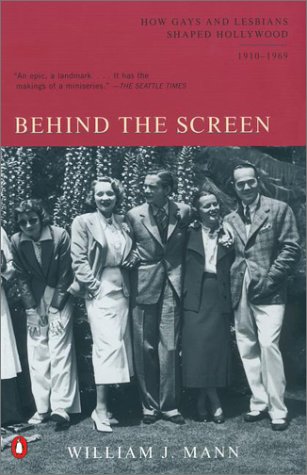 Behind the Screen: How Gays and Lesbians Shaped Hollywood, 1910-1969 Paperback – October 29, 2002 by William J. Mann |
Other references:
Support this project
This website is a passion project researched, developed, and funded entirely by me. If you find the content valuable and would like to help support the ongoing research and hosting costs, any contribution is deeply appreciated.
Thank you for keeping this independent resource alive!
My books on Amazon: Elisa Rolle's books