Queer Places:
Running Eagle Falls (also known as "Trick Falls"), Glacier National Park, MT 59434, United States
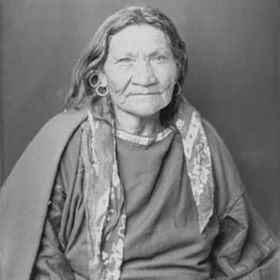 Running Eagle (Pi'tamaka, c. 1800/1810 - c. 1878), born as Yellow Weasel Woman (Otaki) into the Piikani (Piegan) branch of the Blackfoot Confederacy in southern Alberta /
northern Montana, displayed a strong preference for masculine pursuits from around the age of ten. She eschewed traditional female tasks like tanning hides, beadwork, and
domestic chores, preferring instead to participate in hunting, horse racing, and weapons practice alongside young men. Her father, a prominent chief, supported her
inclination and taught her to hunt and shoot.
Running Eagle (Pi'tamaka, c. 1800/1810 - c. 1878), born as Yellow Weasel Woman (Otaki) into the Piikani (Piegan) branch of the Blackfoot Confederacy in southern Alberta /
northern Montana, displayed a strong preference for masculine pursuits from around the age of ten. She eschewed traditional female tasks like tanning hides, beadwork, and
domestic chores, preferring instead to participate in hunting, horse racing, and weapons practice alongside young men. Her father, a prominent chief, supported her
inclination and taught her to hunt and shoot.
When her mother fell ill and her father was killed in a skirmish, Yellow Weasel Woman took full responsibility as the head of her household. To maintain her role as a
provider and hunter while keeping the household functional, she took in a young widow to manage the domestic responsibilities — an arrangement that allowed her to dedicate
herself fully to the male role of provider and protector.
Her status as a warrior was solidified during a raiding party against the enemy Assiniboine. When her horse was shot out from under her, she refused to retreat and
instead fought back, capturing an enemy horse to secure the escape of her party. Later, following a successful solitary vision quest in the Sweet Grass Hills, she was
granted war medicine by the Sun.
Following her visionary experience and a succession of successful war parties and horse raids against the Crow and Flathead nations, Chief Lone Walker conferred upon her
the grand male name Running Eagle (Pi'tamaka). This honor was typically reserved only for male war leaders who demonstrated exceptional bravery and leadership in battle. She
became the only known woman in Blackfoot history to be granted membership in the Braves Society, an elite warrior brotherhood.
In modern historical and LGBTQ+/queer studies, Running Eagle is often discussed within the framework of Indigenous Two-Spirit identities, gender non-conformity, and queer
history:
She completely rejected assigned female gender roles, dressing in male hunting attire, leading male war parties, and occupying social positions traditionally reserved
strictly for men.
By becoming head of the household and bringing in a widow to handle domestic affairs while she acted as the primary hunter and warrior, she established a domestic
structure that bypassed traditional heteronormative Blackfoot marriage expectations.
Historical oral accounts note that she never married a man, dedicating her life entirely to her spiritual calling, warfare, and leadership.
Around 1850, during a battle against the Flathead (Salish) people near the Sun River (in present-day Montana), Running Eagle was ambushed from behind and killed.
Recognizing her formidable reputation, her enemies honored her bravery in death.
Today, Running Eagle Falls (also known as "Trick Falls") in Glacier National Park, Montana, is named in her honor, preserving the legacy of one of the Blackfoot
Confederacy's most celebrated warriors.
References:
Other references:
- James Willard Schultz — Running Eagle, the Warrior Girl (1919)
- John Canfield Ewers — The Blackfeet: Raiders on the Northwestern Plains (1958) & Plains Indian History and Culture (1997)
- Amazing Montanans: Running Eagle (Pi'tamaka), Blackfeet (Piegan) Woman Warrior (Educational Biography Series), Montana Historical Society Historical Archives
- Pi'tamaka (Running Eagle) biographical profile (Glacier National Park historical files), National Park Service (NPS) Historical Records
- Will Roscoe — Changing Ones: Third and Fourth Genders in Native North America (1998)
- Beatrice Medicine — Learning to Be an Anthropologist and Remaining Native (2001)
Support this project
This website is a passion project researched, developed, and funded entirely by me. If you find the content valuable and would like to help support the ongoing research and hosting costs, any contribution is deeply appreciated.
Thank you for keeping this independent resource alive!
My books on Amazon: Elisa Rolle's books
BACK TO HOME PAGE
