Queer Places:
5 Rue de Constantine, 75007 Paris, France
Cimetière du Père-Lachaise, Paris, Département de Paris, Île-de-France, France
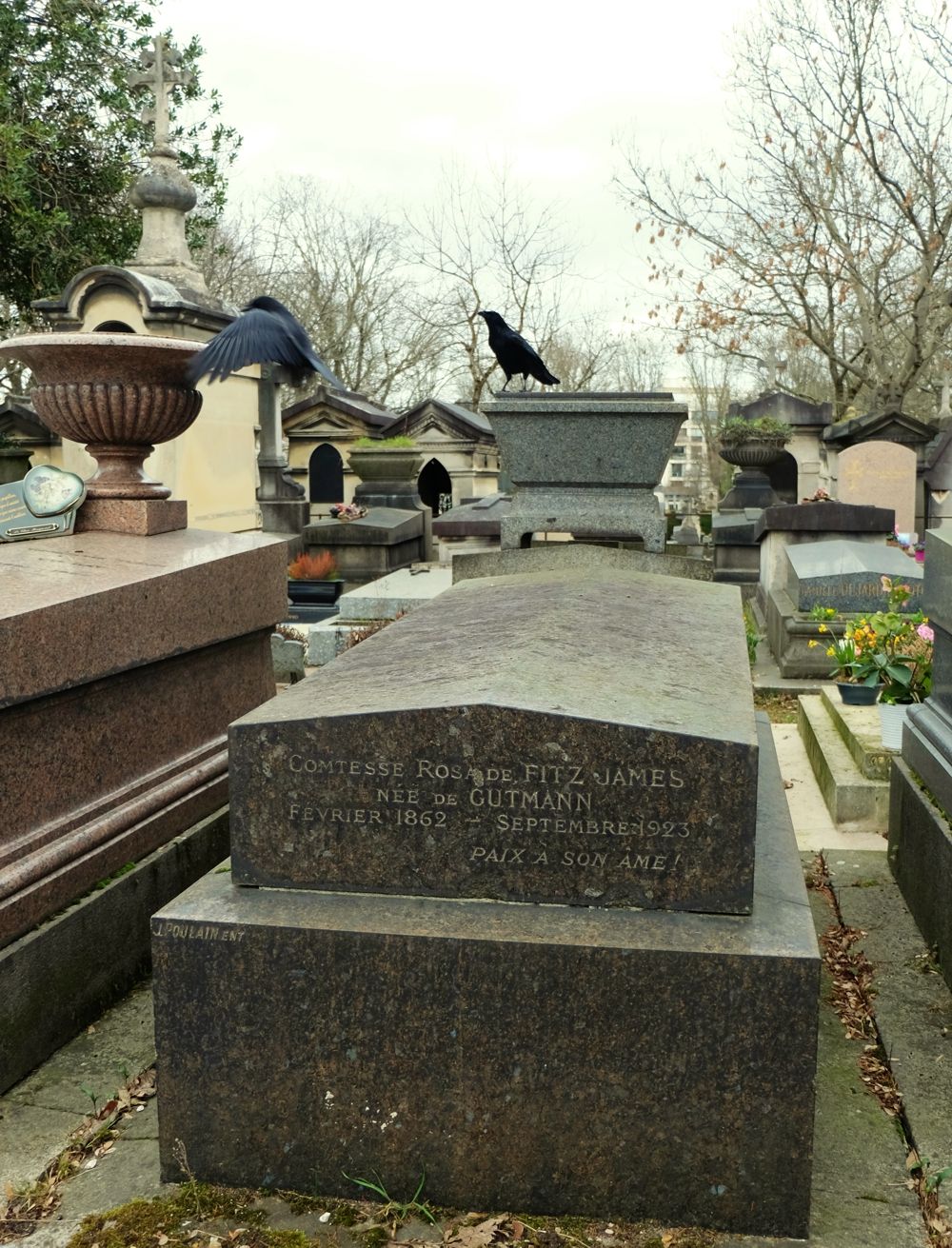 Rosalie von Gutmann, known by her marriage as Countess Robert de Fitz-James (February 20, 1862 - September 25, 1923), was born in Vienna on February 20, 1862, to Wilhelm
Isaak Wolf von Gutmann and Eleonore "Leonor" Latzko. She passed away on September 25, 1923, in the 7th arrondissement of Paris and was laid to rest in the renowned
Père-Lachaise Cemetery. Coming from a very wealthy Jewish industrial and banking family, she grew up alongside siblings including Moritz, Marianne, and Princess Elisabeth
Charlotte "Elsa" von Gutmann von Liechtenstein.
Rosalie von Gutmann, known by her marriage as Countess Robert de Fitz-James (February 20, 1862 - September 25, 1923), was born in Vienna on February 20, 1862, to Wilhelm
Isaak Wolf von Gutmann and Eleonore "Leonor" Latzko. She passed away on September 25, 1923, in the 7th arrondissement of Paris and was laid to rest in the renowned
Père-Lachaise Cemetery. Coming from a very wealthy Jewish industrial and banking family, she grew up alongside siblings including Moritz, Marianne, and Princess Elisabeth
Charlotte "Elsa" von Gutmann von Liechtenstein.
On May 15, 1886, she married Comte Robert Charles Henri de Fitz-James, a French aristocrat from the prestigious Faubourg Saint-Germain who was twenty-five years her
senior and already involved in previous affairs. The couple had no children. Due to her husband's relentless philandering, high society affectionately nicknamed her
"Rosa Malheur"—a clever, empathetic play on the name of the French artist Rosa Bonheur—which quickly won over the sympathy and
affection of Parisian circles.
Despite her rapid rise and foreign Jewish background, Rosalie maintained a remarkable demeanor of reserve and modesty. Physically, she was small, thin, with a slight
limp, strong features, dark and vivacious eyes, a disarming smile, and prematurely white hair. Fluent in English and German, she hosted a cosmopolitan circle from several
residences in Paris, including an apartment on the Rue des Écuries-d'Artois (now Rue d'Artois), a private 18th-century mansion on the Rue de Grenelle, and finally an
apartment on the Rue de Constantine where her friends, the Count and Countess d'Haussonville, lived on the floor above. True to her preference, she notoriously disliked the
sun, keeping her cream-colored silk blinds tightly drawn even in the winter to protect her antiques and tapestries.
Before the First World War, the Comtesse de Fitz-James conducted the most prestigious and brilliant salon in Paris, though she occasionally faced conservative resistance
from diehards like the merciless Count Aimery de La Rochefoucauld, who snippily remarked that she wanted a salon but only got a dining room. Defying such critics, she
mastered the art of entertaining with intimate, highly sought-after dinners limited to eight to ten carefully selected guests. Her Wednesday literary luncheons famously
served as the antechamber to the French Academy.
Her distinguished guest list featured an elite mix of literary figures, diplomats, and aristocrats, including Marcel Proust
(whom she received in the 1890s), Paul Bourget, Count Hermann von Keyserling, Abbé Mugnier, Princess Marthe Bibesco, Princess Paley,
Charles Haas, and numerous ambassadors such as Jules Cambon, Maurice Paléologue, Prince von Radolin, Count Czechen, and Enrique
Larreta.
The Comtesse is also remembered through her close friendship with American novelist Edith Wharton, who detailed her visits in
her memoir, A Backward Glance. Within these sophisticated circles of presumed leisure, Wharton and Rosalie shared a deep bond as independent women carving out lives abroad.
However, Wharton's memoirs largely gloss over the more intimate dimensions of their relationship and the deeper personal trials of Rosa's life, leaving the nuances of their
private connection outside the scope of her published retrospectives.
References:
Other references:
- Wharton, Edith. A Backward Glance. New York: D. Appleton-Century Company, 1934. (Provides first-hand contemporary recollections detailing her entry into Paris salon life, the physical arrangement of the Comtesse's apartments, and her circle before World War I).
- Proust, Marcel. À la recherche du temps perdu (In Search of Lost Time). Paris: Bernard Grasset / Gallimard, 1913–1927. (Captures references to the broader aristocratic and literary milieu of the Belle Époque Parisian salons, which included Madame de Fitz-James).
- Keyserling, Hermann von. The Travel Diary of a Philosopher (Das Reisetagebuch eines Philosophen). New York: Harcourt, Brace and Company, 1925. (Includes historical context on Keyserling's travels and his stay in Paris from 1903 to 1906, where he frequented the Countess's salon).
- Mugnier, Abbé Arthur. Journal de l'abbé Mugnier: 1879–1939. Paris: Mercure de France, 1985. (Contains extensive diary entries and observations regarding Parisian social life, literary luncheons, and regular attendees at the Comtesse de Fitz-James's residence).
- L'Allemagne Dynastique, Tome III: Brunn-Wettin. (Provides genealogical data on the von Gutmann family, including Wilhelm von Gutmann, Eleonore Latzko, and Rosalie's marriage to Comte Robert de Fitz-James).
- Civil registry records of Paris (7th arrondissement) and burial archives of Cimetière du Père-Lachaise documenting her birth, marriage, and death dates.
Support this project
This website is a passion project researched, developed, and funded entirely by me. If you find the content valuable and would like to help support the ongoing research and hosting costs, any contribution is deeply appreciated.
Thank you for keeping this independent resource alive!
My books on Amazon: Elisa Rolle's books
BACK TO HOME PAGE
