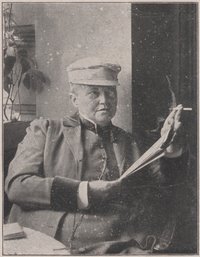
 Rosa Braunschweig (often historically referred to as Rosa von Braunschweig before dropping her noble title for her stage career, June 18, 1850 - November 9, 1918) was a
German theater actress, director, and dramatic instructor.
Rosa Braunschweig (often historically referred to as Rosa von Braunschweig before dropping her noble title for her stage career, June 18, 1850 - November 9, 1918) was a
German theater actress, director, and dramatic instructor.
Rosa Braunschweig (often historically referred to as Rosa von Braunschweig before dropping her noble title for her stage career, June 18, 1850 - November 9, 1918) was a
German theater actress, director, and dramatic instructor.
Born in Neu-Paleschke (West Prussia) to a preacher, she developed an early passion for the performing arts.
After her father's retirement to Danzig, she abandoned her initial plans of becoming a deaconess to pursue drama.
Following formal training under Adele Glaßbrenner-Peroni, she dropped her family's noble title ("von Braunschweig") to embark on a professional acting career. She made her stage debut at age 16 in Graz.
Throughout the 1860s and 1870s, she performed in Danzig, Frankfurt, Riga, Rostock, Düsseldorf, and the court theaters of Coburg and Neu-Strelitz, playing lead heroines and classic theatrical roles.
In 1883, she retired from active stage acting and established herself in Berlin as a dramatic teacher. She directed a prominent theater school (Elevenschule) through the early 1900s and managed touring ensemble productions in Potsdam and Spandau.
Rosa Braunschweig holds a distinct place in early LGBTQ+ history and queer historical research through her contributions to Magnus Hirschfeld's pioneering sexology movement:
In 1903, Braunschweig contributed a significant biographical essay titled "Felicita von Vestvali" to the Jahrbuch für sexuelle Zwischenstufen (Yearbook for Sexual Intermediate Stages), published by Magnus Hirschfeld and the Scientific-Humanitarian Committee (the world's first formal advocate for homosexual and transgender rights).
Her essay focused on Felicita von Vestvali, a famous opera singer and actress renowned for her trouser roles (breeches roles), gender-nonconforming stage presentations, and openly lesbian/queer relationships. Braunschweig's work served as an early historical attempt to document gender transgression and non-conforming identities in the arts.
Photographs of Braunschweig performing in masculine "officer roles" (Offiziersrollen) and male attire were preserved within the archives of the Institut für Sexualwissenschaft in Berlin (and are currently held in archival collections such as the Magnus-Hirschfeld-Gesellschaft).
References:
Support this project
This website is a passion project researched, developed, and funded entirely by me. If you find the content valuable and would like to help support the ongoing research and hosting costs, any contribution is deeply appreciated.
Thank you for keeping this independent resource alive!
My books on Amazon: Elisa Rolle's books