Queer Places:
Hollywood Forever Cemetery, 6000 Santa Monica Blvd, Los Angeles, CA 90038, United States
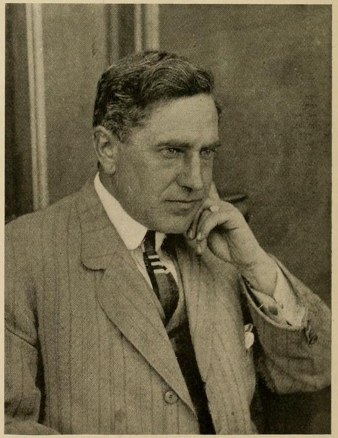 Richard Willis (October 15, 1876 - April 8, 1945) was born on October 15, 1876, in London, England. Over the course of his life, he established himself
as a versatile force in early American cinema, working as a publicist, agent, general manager, screenwriter, scenario editor, actor, and poet.
Richard Willis (October 15, 1876 - April 8, 1945) was born on October 15, 1876, in London, England. Over the course of his life, he established himself
as a versatile force in early American cinema, working as a publicist, agent, general manager, screenwriter, scenario editor, actor, and poet.
By 1912, Willis was living in Los Angeles and serving as scenario editor for the Nestor Motion Picture Company. When Nestor merged into Universal, he
transitioned to become Universal's scenario editor, a role he held until leaving in 1913. That same year, he partnered with W. A. "Gus" Inglis to found
Willis & Inglis, an agency that pioneered talent representation and publicity within the burgeoning West Coast film industry. The firm claimed to be the
first agency on the West Coast to negotiate business directly between producers and artists, as well as the first to conduct personal publicity for film
actors in the region. Their impressive client roster included legendary performers like Mary Pickford,
John Gilbert, Charles Ray, Norma Talmadge, and Lon Chaney Sr., along with acclaimed directors D. W. Griffith, Henry King, Frank Borzage, and
William Desmond Taylor.
Between 1914 and 1917, Willis contributed columns and trade articles to major industry publications such as the New York Clipper, Photoplay, Movie
Pictorial, and Motion Picture Magazine, often writing under pen names such as Dick Willis, Dick Melbourne, or Wil. In 1917, Willis & Inglis expanded by
purchasing the former Kalem Studio on Fleming Street in Los Angeles, where they produced comedy shorts starring Fay Tincher before leasing the property
to producer Jesse D. Hampton. By 1920, the studio was taken over by Charles Ray Productions, with Willis serving as Vice President and General Manager.
Beyond studio management, Willis was active in professional guilds, holding positions as treasurer for both the Photoplay Authors League and the Screen
Writers Guild.
Alongside his executive career, Willis maintained significant links to early Hollywood's Queer history. He was a close personal confidant of silent
film idol J. Warren Kerrigan, one of cinema's earliest gay screen stars who lived openly with his lifelong
partner, actor James Vincent. In an era when studio publicity manufactured heterosexual romances for leading
men to maintain box-office appeal, Willis used his platform as a journalist and publicist to subvert these tropes. Writing in Photoplay, Willis addressed
the gossip surrounding Kerrigan, boldly stating that he knew the star "as he really is" and dismissing studio-invented narratives about his "loving the
girls" as "silly and foolish." Through his work as a publicist and writer, Willis navigated and subtly shielded the private lives of queer artists
working within the early studio system.
Richard Willis passed away in Los Angeles on April 8, 1945, at the age of 68. He was laid to rest at Hollywood Forever Cemetery, situated at the
center of the film community he helped build.
References:
Other references:
- Motion Picture News Studio Directory (1916–1921) – Contains biographical profiles for Richard Willis and agency histories for Willis & Inglis.
- The Motion Picture Trade Directory – Documentation of the founding, operations, and client rosters of Willis & Inglis.
- Universal Film Manufacturing Company Records – Studio archives detailing Willis's role as scenario editor following the Nestor Motion Picture Company merger (1912–1913).
- Kalem Studio Acquisition Records (1917) – Trade coverage on Willis & Inglis purchasing the Fleming Street studio in Los Angeles and leasing operations to Jesse D. Hampton and Charles Ray Productions.
- Photoplay Magazine (1914–1920) – Includes features, columns, and commentary written by Willis (under names like Dick Willis and Wil), including his profile of J. Warren Kerrigan.
- The New York Clipper (1914–1917) – Trade news, production notes, and columns written by or detailing the work of Willis.
- Movie Pictorial & Motion Picture Magazine – Articles, trade news, and publicity pieces published during Willis's tenure as an active Hollywood journalist and representative.
- Screen Writers Guild Archives – Records covering Willis's tenure and service as treasurer.
- Photoplay Authors League Records – Historical roster and leadership listings recording Willis's role as treasurer.
- California Death Index (1940–1949) – Official record confirming the date and location of death for Richard Willis (April 8, 1945, Los Angeles County).
- United States Federal Census Records (1920, 1930, 1940) – Census enumerations for Los Angeles, California, detailing occupation, household, and immigration data.
- Hollywood Forever Cemetery Records – Internment location and burial registry for Richard Willis (Plot/Section records, Hollywood, California).
Support this project
This website is a passion project researched, developed, and funded entirely by me. If you find the content valuable and would like to help support the ongoing research and hosting costs, any contribution is deeply appreciated.
Thank you for keeping this independent resource alive!
My books on Amazon: Elisa Rolle's books
BACK TO HOME PAGE