Queer Places:
Woodland Cemetery, 493 Springbank Dr, London, ON N6J 1H3, Canada
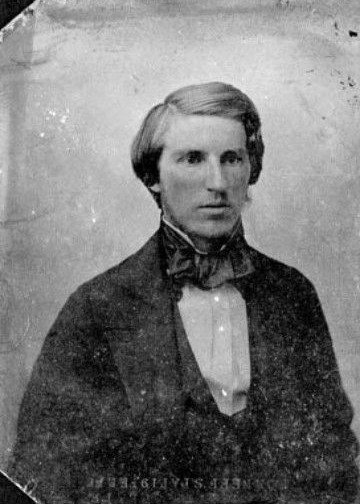 Richard Maurice Bucke (March 18, 1837 – February 19, 1902) was a prominent 19th-century Canadian psychiatrist, author, and philosopher. He is widely recognized for his
progressive, though sometimes controversial, work in asylum management and for his influential writings on mysticism and the evolution of consciousness.
Richard Maurice Bucke (March 18, 1837 – February 19, 1902) was a prominent 19th-century Canadian psychiatrist, author, and philosopher. He is widely recognized for his
progressive, though sometimes controversial, work in asylum management and for his influential writings on mysticism and the evolution of consciousness.
Born in Methwold, England, to the Reverend Horatio Walpole Bucke and Clarissa Andrews, he emigrated to Canada with his family at the age of one, settling on a farm near
London, Ontario. He received little formal schooling, instead educating himself through his father's extensive library.
At 16, Bucke left home to work as a laborer in the American Midwest and eventually traveled to the California mountains to prospect for gold. During a winter expedition
in 1857, he survived a near-fatal trek through the mountains, during which he suffered severe frostbite, leading to the amputation of one foot and part of the other.
Upon returning to Canada in 1858, he enrolled at McGill University in Montreal, where he excelled as a medical student, graduating in 1862. He later pursued further medical
studies in Europe.
Bucke is best known for his long tenure as the medical superintendent of the London Asylum for the Insane in Ontario, a position he held from 1877 until his death.
His career was marked by:
Asylum Reform: He was a strong advocate for more humane treatment of patients, famously pioneering a "non-restraint" policy that abolished the use of physical
restraints and the medicinal use of alcohol in his facility.
Innovations: He introduced occupational therapy, organized sports for patients, and encouraged a more healthful living environment.
Controversial Practices: His pursuit of medical "cures" led to controversial surgical experiments. Influenced by Victorian-era theories regarding the relationship
between reproductive organs and mental illness, he performed hundreds of gynecological surgeries on female patients, a practice that drew significant criticism.
Bucke was a deep student of literature and philosophy. In 1872, he experienced a profound mystical event—which he later termed "cosmic consciousness"—that
profoundly altered his worldview.
He is perhaps most famous for his book Cosmic Consciousness: A Study in the Evolution of the Human Mind (1901), which examined higher forms of consciousness and remains
a foundational text in the study of mysticism.
His life and work were also deeply intertwined with the poet Walt Whitman. After reading Leaves of Grass in 1867, Bucke became a devoted friend and supporter of the poet.
He wrote a biography of Whitman (1883) and served as one of his literary executors following Whitman's death in 1892.
He was a founder of the Medical School at the University of Western Ontario and served as a professor there.
He served as president of the American Medico-Psychological Association (1897–98) and presided over the psychological section of the British Medical Association in 1897.
He was a charter member of the Royal Society of Canada.
Bucke died suddenly on February 19, 1902, after slipping on the veranda of his home and suffering a head injury. He is buried in Woodland Cemetery in London, Ontario.
References:
- https://en.wikipedia.org/wiki/Richard_Maurice_Bucke
- https://www.ebsco.com/research-starters/history/richard-maurice-bucke
- https://www.biographi.ca/en/bio/bucke_richard_maurice_13E.html
- https://whitmanarchive.org/item/anc.00247
- https://rsc-src.ca/en/voices/richard-maurice-bucke-1837-1902
- https://www.apaf.org/library-archives/president-s-of-the-apa/richard-m-bucke-m-d/
- https://www.thymindoman.com/richard-buckes-first-vision-account/
- https://thecanadianencyclopedia.ca/en/article/richard-maurice-bucke
- https://www.lib.uwo.ca/archives/virtualexhibits/londonasylum/buckeintro.html
Support this project
This website is a passion project researched, developed, and funded entirely by me. If you find the content valuable and would like to help support the ongoing research and hosting costs, any contribution is deeply appreciated.
Thank you for keeping this independent resource alive!
My books on Amazon: Elisa Rolle's books
BACK TO HOME PAGE