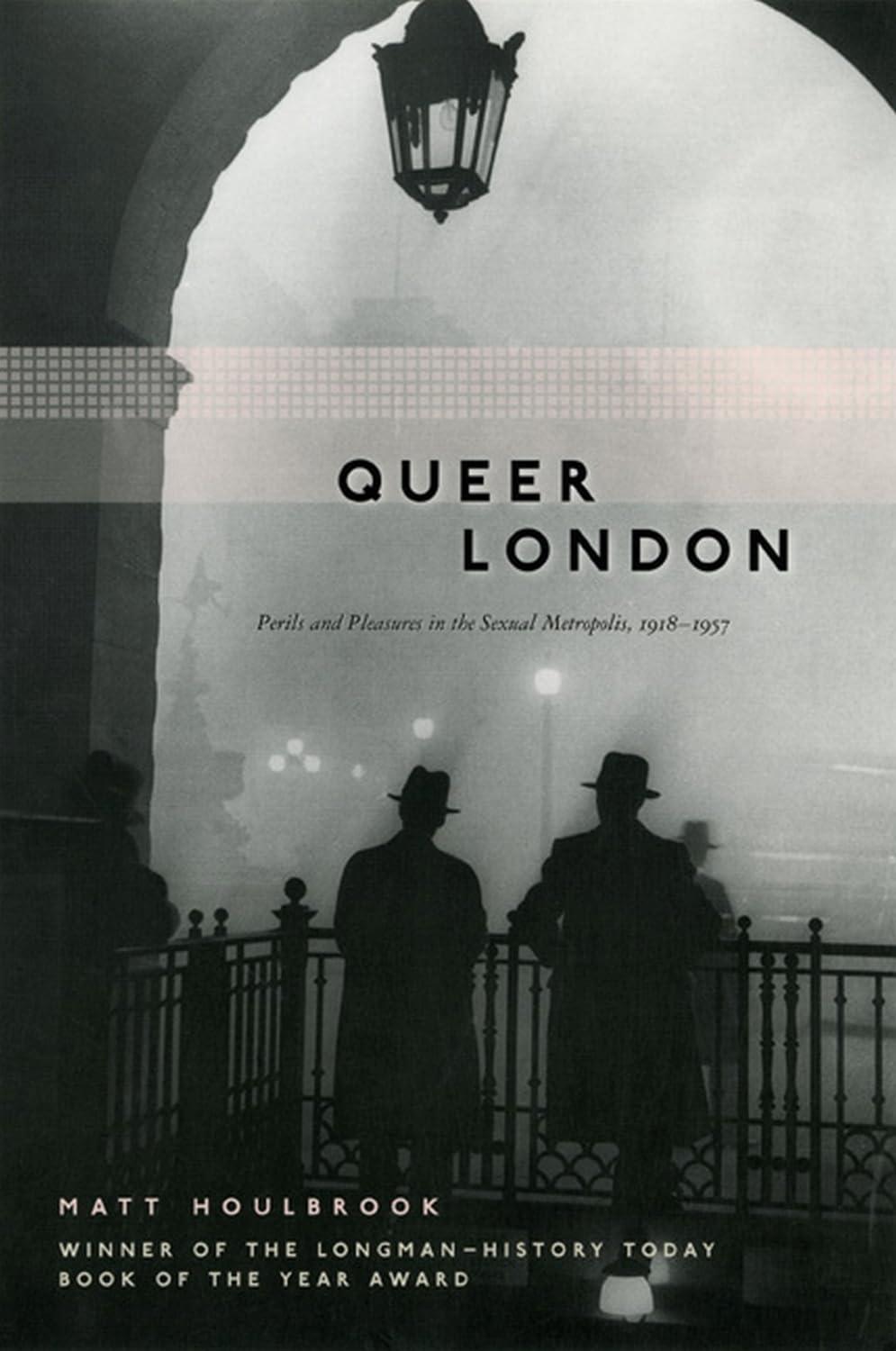
Queer Places:
14 Half Moon Street, Mayfair, London W1J 7ED
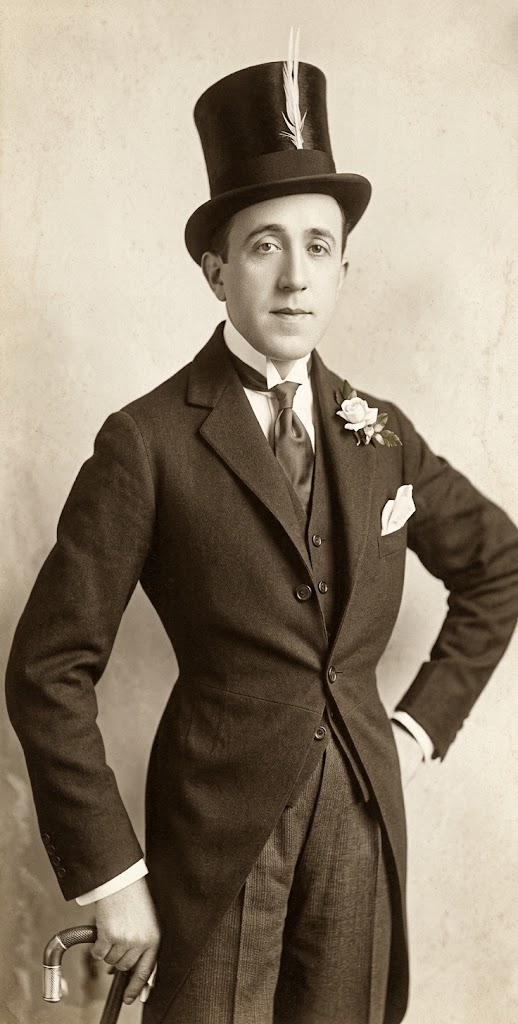 Raoul Reginald "Reggie" de Veulle (c. 1881–1956) was a British actor, fashion costumier, and dress designer whose career and personal life intersected
with the vibrant, subterranean queer networks and high-society scandals of early 20th-century London.
Born in Le Mans, France, where his father served as a British vice-consul, de Veulle was raised in Jersey and was the grandson of Sir John de Veulle,
a former High Bailiff of Jersey. Moving to London to attend the Kensington School of Art, he briefly pursued an acting career in West End productions
before shifting his focus to theatrical costume and fashion design.
By the early 1910s, de Veulle had immersed himself in London’s artistic and bohemian bachelor enclaves. In 1911, he resided at the Half Moon Street
home of Rowland Richard Clegg-Hill, 5th Viscount Hill. Half Moon Street in Mayfair functioned during this period as a notable queer enclave, offering a
discreet residential haven for men such as writer Hugh Walpole alongside de Veulle. During these years, de
Veulle was drawn into a 1911 blackmail trial involving William Cronshaw and John and Rose Powers; court testimony revealed that Cronshaw had met
Frederick Powers through de Veulle and had provided de Veulle with substantial financial sums. Following a period spent traveling and working in
New York—where he first acquired a cocaine habit—de Veulle relocated to Paris to work as a ladies' dress designer.
With the outbreak of the First World War in 1914, de Veulle returned to London to work for Mayfair theatrical costumiers. In 1915, while designing for
Miss Phelps of Albemarle Street, he met the rising stage actress Billie Carleton (born Florence Leonora Stewart). Although de Veulle married Parisian
seamstress and dress designer Pauline Clarisse A. Gay in 1916, his private life remained centered on an inner circle of theatrical and bohemian figures.
Declared unfit for active military duty in September 1918 due to drug addiction, de Veulle operated as a key distributor of illicit substances within his
social set, procuring cocaine and opium from suppliers Ada Lau Ping and her husband Yu Lau Ping of Limehouse, as well as actor Lionel Belcher. De Veulle
hosted private gatherings at his Mayfair apartment where guests discarded formal attire for pyjamas and silk nightdresses, gathering on cushions to smoke
opium prepared over lamps by Ada Lau Ping alongside consuming cocaine.
The central crisis of de Veulle's life occurred following the Victory Ball at the Royal Albert Hall in November 1918. Carleton attended the event
wearing a diaphanous gown designed by de Veulle, while de Veulle attended dressed in a tight-fitting Harlequin costume. The following afternoon, Carleton
was found dead from a drug overdose in her apartment at Savoy Court Mansions, an annex of the Savoy Hotel. Carleton’s lifestyle and opulent living
arrangements had been secretly underwritten by a wealthy, mysterious benefactor known as John Darlington Marsh, who lived in Savile Row and maintained a
box of her pawned jewelry while bankrolling her expenses. Unbeknownst to the court or the press during the ensuing scandal, "John Darlington Marsh" was
in fact D’Arcy Middleton, an Australian swindler and card sharp born in Melbourne around 1872.
Middleton, alongside his brother Gilbert Allen Middleton (who operated under aliases including John Castles and John Castle-Marsh), had built a long
career on high-stakes fraud, card-sharping, and targeted marriages to wealthy women. In 1902, the brothers and two accomplices were convicted in London
for running a illegal gaming house that fleeced young men, resulting in nine-month prison sentences. Following his release, D'Arcy Middleton operated
under the alias "Johnson Marsh" in 1906 while managing an ill-fated London theatrical venture for American actress Marie de Campi. He subsequently
married wealthy American divorcee Sarah Hershey Eddy in 1908 (who died in 1911), attempted to pursue heiress Maude King, and married Texas oil widow Ivor
Tate O’Connor in 1915 before she divorced him in 1916. Throughout these years, D'Arcy's brother Gilbert engaged in extensive racehorse, card, and betting
frauds, running a ring of "ringers" from Downs House in Epsom and Bruce Lodge on Burgh Heath Road, Epsom, while operating as a bookmaker and raising a
family with his wife Beatrice Elizabeth Gardiner (who eventually emigrated to Canada with their children in 1921). Meanwhile, D'Arcy's Australian-born
companion, Louie Middleton, who had been involved in the 1902 gaming house, appears to have been placed in care in Wimbledon under the name Louise Marsh,
suffering from intellectual impairment.
The exposure of Carleton's fatal overdose triggered a sensational inquest and trial that brought intense public scrutiny to de Veulle's lifestyle,
cross-dressing, and illicit gatherings. Although the coroner directed the jury to find de Veulle guilty of manslaughter for providing the fatal drugs,
and the jury initially returned a manslaughter indictment, de Veulle was formally acquitted of manslaughter at the Old Bailey in April 1919 due to
inconclusive medical evidence regarding whether cocaine or barbiturates caused Carleton's death. However, de Veulle pleaded guilty to conspiracy to
procure cocaine alongside Ada Lau Ping and was sentenced to eight months in prison without hard labor. Ada Lau Ping received five months with hard labor
and died of tuberculosis shortly after her release in 1920, while her husband received a fine. D’Arcy Middleton himself died of pneumonia in March 1919
shortly after testifying at the inquest, leaving an estate of just £244 despite his years of swindling; he was buried in Epsom Cemetery in plot H89A,
directly adjacent to Billie Carleton's grave in plot F479A, an arrangement likely overseen by his brother Gilbert.
Following his release from prison, de Veulle resumed his work as a theatrical costume and fashion designer in London and Paris. His post-war career
included designing dresses for the May 1926 stage musical Yvonne, with his original costume sketches preserved in the Emile Littler Archive at the
Victoria and Albert Museum in London. Although the Paris-based Obelisk Press announced in 1933 that it intended to publish a memoir of revelations by de
Veulle, the book never materialized. De Veulle lived out his remaining years in London, where he died in the Islington district in 1956.
References:
Other references:
- Victoria and Albert Museum (V&A), London: Emile Littler Archive — Contains original costume and dress design sketches created by Reggie de Veulle for the May 1926 stage musical Yvonne.
- The National Archives (Kew, UK): Central Criminal Court (Old Bailey) Depositions & Case Files (1919) — R v Raoul Reginald de Veulle (Manslaughter and Conspiracy under the Defence of the Realm Act / Dangerous Drugs regulations).
- Metropolitan Police Records (MEPO) — Case files regarding the Limehouse opium dens, Ada and Yu Lau Ping, and Mayfair drug distribution networks (1918–1919).
- Epsom Cemetery Records: Burial Registers for Plot H89A (Florence Leonora Stewart / Billie Carleton) and Plot F479A (John Darlington Marsh / D'Arcy Middleton).
- The Times (London): Detailed daily court transcriptions and inquest coverage regarding Billie Carleton’s death, the coroner’s inquest, and de Veulle’s Old Bailey trial (December 1918 – April 1919).
- Daily Mirror & Daily Sketch: Photographic reporting, courtroom sketches, and social commentary on de Veulle, Dr. Frederick Stuart, Lionel Belcher, and the Savoy Court Mansions investigation (1918–1919).
- The Era & The Stage: Historical West End theatrical notices, cast lists, and costume design credits (1900s–1920s).
- The New York Times: Coverage of John Darlington Marsh (D'Arcy Middleton), his high-society marriages to Sarah Hershey Eddy (1908) and Ivor Tate O’Connor (1915), and related transatlantic social reporting.
- Queensland Figaro (1902): Contemporary reporting on D'Arcy Middleton, Gilbert Middleton, and their Australian card-sharping operations.
- Baker, Rob. High Buildings Low Morals: Another Sideways Look at Twentieth-Century London. Amberley Publishing, 2017. (Features a dedicated chapter analyzing Billie Carleton’s death, the Victory Ball, and de Veulle's legal case).
- Kohn, Marek. Dope Girls: The Birth of the British Underground. Lawrence & Wishart, 1992 / Granta Books, 2001. (Comprehensive historical examination of post-WWI London drug culture, the Defence of the Realm Act, and the Carleton scandal).
- Oxford Dictionary of National Biography (ODNB): Entry for Carleton, Billie [real name Florence Leonora Stewart] (1896–1918).
- Obelisk Press Prospectuses (Paris, 1933): Historical trade announcements regarding Jack Kahane's planned (and unpublished) memoir by de Veulle.
Support this project
This website is a passion project researched, developed, and funded entirely by me. If you find the content valuable and would like to help support the ongoing research and hosting costs, any contribution is deeply appreciated.
Thank you for keeping this independent resource alive!
My books on Amazon: Elisa Rolle's books
BACK TO HOME PAGE