Queer Places:
Clifton College, 32 College Rd, Clifton, Bristol BS8 3JH, United Kingdom
University of Cambridge, 4 Mill Ln, Cambridge CB2 1RZ
Leith Hill Place, Leith Hill Ln, Dorking RH5 6LY, United Kingdom
Barlaston Cemetery, Barlaston, Stoke-on-Trent ST12 9AF, United Kingdom
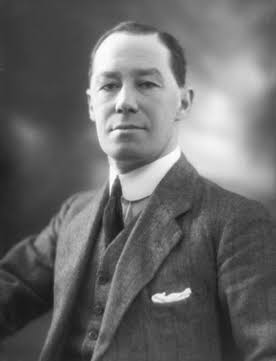 Sir Ralph Lewis Wedgwood, 1st Baronet (March 2, 1874 – September 5, 1956), was an eminent British railway administrator, military officer, and public
servant who played a defining role in the transformation of Britain’s transport infrastructure during the first half of the twentieth century.
Sir Ralph Lewis Wedgwood, 1st Baronet (March 2, 1874 – September 5, 1956), was an eminent British railway administrator, military officer, and public
servant who played a defining role in the transformation of Britain’s transport infrastructure during the first half of the twentieth century.
Born on 2 March 1874 at Barlaston Lea, Staffordshire, he was the third son of Clement Francis Wedgwood, a master potter in the celebrated family firm,
and Emily Catherine Rendel, daughter of the pioneering civil engineer James Meadows Rendel. Growing up in a prominent family alongside siblings such as
the future politician Josiah Clement Wedgwood, Ralph developed an early fascination with railways, avidly collecting locomotive numbers and color-coding
transport maps.
He received his education at Clifton College before matriculating at Trinity College, Cambridge, in 1892. At Cambridge, Wedgwood excelled
academically, achieving First Class honors in both Part I (1895) and Part II (1896) of the Moral Sciences Tripos. Beyond his studies, his university
years placed him at the heart of an influential intellectual and queer-adjacent socio-cultural circle. He was elected to the
Cambridge Apostles, an elite intellectual secret society renowned for its intense personal bonds,
philosophical discussions, and high concentration of figures central to early twentieth-century LGBTQ history and the Bloomsbury Group. During his time
at Trinity, Wedgwood formed deep, lifelong friendships with figures such as philosopher G. E. Moore, historian
G.M. Trevelyan, Maurice Sheldon Amos, and his second cousin, the composer
Ralph Vaughan Williams. His close connection with Vaughan Williams proved creative and enduring, with
the composer dedicating two major works to him: "In the Fen Country" and "A Sea Symphony." Wedgwood’s affectionate, admired presence during these years
was also captured by his cousin Gwen Raverat in her memoir Period Piece, where she recalled how he and his
brother Felix were regarded as "Divine Beings" by their younger relations. In later life, Wedgwood maintained connections across literary and artistic
circles, serving from 1924 to 1944 as a co-executor of the estate of novelist Joseph Conrad alongside Richard Curle.
Upon graduating from Cambridge, Wedgwood entered the railway industry in 1896 under the mentorship of Sir George Gibb at the North Eastern Railway
(NER). He rose rapidly through administrative ranks, serving as Assistant Dock Superintendent at West Hartlepool in 1900, District Superintendent at
Middlesbrough in 1902, and Divisional Goods and Mineral Manager at Newcastle in 1905. By 1912, he had advanced to Chief Goods Manager. With the outbreak
of the First World War, his administrative talent was called upon for national defense. Serving in the Royal Engineers and the Ministry of Munitions, he
attained the rank of Brigadier-General and served as Director of Docks. His war service earned him mention in despatches five times, appointment as a
Companion of the Order of St Michael and St George (CMG) in 1917, and a Companion of the Order of the Bath (CB) in 1918, alongside international honors
including the French Croix de Guerre, Officer of the Legion of Honor, Commander of the Order of the Crown of Belgium, and Officer of the Italian Order of
St Maurice and St Lazarus.
Returning to civilian rail management after the war, Wedgwood was appointed Deputy General Manager of the NER in 1919 and became its final General
Manager in 1922. Following the Railways Act 1921, which grouped dozens of companies into four major entities, Wedgwood was appointed Chief General
Manager of the newly formed London and North Eastern Railway (LNER) on 1 January 1923. Over sixteen years, he steered the LNER through economic hardship
and intense modernization, famously overseeing the era of record-breaking steam locomotives; the company honored his leadership by naming an A4 Class
locomotive, No. 4469, Sir Ralph Wedgwood.
Wedgwood was knighted in 10 July 1924. Alongside his railway duties, he served as a member of the Central Electricity Board from 1931 to 1946. Upon
his retirement from the LNER in 1939, he immediately assumed the chairmanship of the wartime Railway Executive Committee, coordinating Britain's entire
rail system during the critical early years of the Second World War until August 1941. In recognition of his wartime public service, he was created a
Baronet of Castleton in the County of York on 20 January 1942.
In his personal life, Wedgwood married Iris Veronica Pawson, an author known for novels such as The Iron Age and The Livelong Day, on 24 October 1906
at St. Margaret's, Westminster. The couple made their home at Leith Hill Place in Dorking, Surrey, and had three children: John Hamilton Wedgwood, who
succeeded to the baronetcy; Dame Cicely Veronica Wedgwood, who became one of Britain's most distinguished historians; and a son, Ralph Pawson, who died
in infancy in 1909. Sir Ralph Lewis Wedgwood died at his Surrey home on 5 September 1956 at the age of 82 and was buried in the family ground at
Barlaston Cemetery, Staffordshire.
References:
Other references:
- Oxford Dictionary of National Biography (ODNB): Main entry for Wedgwood, Sir Ralph Lewis, first baronet (1874–1956) by O. S. Nock (rev. Geoffrey Channon).
- Burke's Peerage, Baronetage & Knightage: Details on the Wedgwood baronetcy, lineage, marriage to Iris Veronica Pawson, and descendants.
- Who Was Who (A & C Black): Biographical summary covering his education, railway management appointments, wartime military service, honors, and civic roles.
- Alumni Cantabrigienses (University of Cambridge): Matriculation and academic record at Trinity College, Cambridge (Moral Sciences Tripos I & II).
- Clifton College Register: Educational history and early background.
- The National Archives (Kew, London): RAIL Records: Files detailing his tenure with the North Eastern Railway (NER) and London & North Eastern Railway (LNER).
- Ministry of Transport Records: Files on the wartime Railway Executive Committee (1939–1941) under his chairmanship.
- War Office / Military Records: Service records covering his roles in the Royal Engineers and Ministry of Munitions during WWI.
- London Gazette: Official entries for his military honors (CMG 1917, CB 1918), knighthood (10 July 1924), and creation as 1st Baronet of Castleton (20 January 1942).
- Gwen Raverat, Period Piece: A Cambridge Childhood (1952): Personal recollections of her cousins Ralph and Felix Wedgwood during their years as Trinity undergraduates.
- Joseph Conrad Estate Records: Documents relating to his service as co-executor of Joseph Conrad’s estate from 1924 to 1944.
- Works on the Cambridge Apostles & Bloomsbury: References to his membership in the Cambridge Apostles secret society and his friendships with G. E. Moore, G. M. Trevelyan, and Ralph Vaughan Williams.
- O. S. Nock, The Railway Kings and History of the LNER: Detailed analysis of his administrative contributions to the grouping of railways under the Railways Act 1921 and LNER management.
- SteamIndex / Railway Heritage Publications: Historical summaries covering his career progression, dock management, and the naming of LNER A4 Class locomotives (4469 and 4466) in his honor.
Support this project
This website is a passion project researched, developed, and funded entirely by me. If you find the content valuable and would like to help support the ongoing research and hosting costs, any contribution is deeply appreciated.
Thank you for keeping this independent resource alive!
My books on Amazon: Elisa Rolle's books
BACK TO HOME PAGE
