Queer Places:
Eton College, Windsor SL4 6DW, United Kingdom
University of Cambridge, 4 Mill Ln, Cambridge CB2 1RZ
Harvard University (Ivy League), 2 Kirkland St, Cambridge, MA 02138
Richmond Old Burial Ground, Lower Grove Rd, Richmond TW10 6HP, United Kingdom
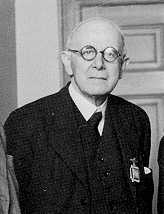 Sir Ralph George Hawtrey (November 22, 1879 – March 21, 1975) was born on November 22, 1879, in Slough, Buckinghamshire, the only son and youngest child
of George Procter Hawtrey, a schoolmaster turned actor, and his first wife Eda Strahan. Following his mother's early death in 1892 and his father's
uncertain financial fortunes in the theatrical world, Hawtrey sought a stable career path. He received a high-level education at Eton before
matriculating as a sizar at Trinity College, Cambridge, in October 1898. At Cambridge, he excelled in the Mathematical Tripos, becoming a Scholar in 1901
and graduating as 14th Wrangler with first-class honours in mathematics. He was a member of the
Cambridge Apostles.
Sir Ralph George Hawtrey (November 22, 1879 – March 21, 1975) was born on November 22, 1879, in Slough, Buckinghamshire, the only son and youngest child
of George Procter Hawtrey, a schoolmaster turned actor, and his first wife Eda Strahan. Following his mother's early death in 1892 and his father's
uncertain financial fortunes in the theatrical world, Hawtrey sought a stable career path. He received a high-level education at Eton before
matriculating as a sizar at Trinity College, Cambridge, in October 1898. At Cambridge, he excelled in the Mathematical Tripos, becoming a Scholar in 1901
and graduating as 14th Wrangler with first-class honours in mathematics. He was a member of the
Cambridge Apostles.
Entering the British Civil Service, Hawtrey briefly joined the Admiralty in 1903 before transferring in 1904 to the Treasury, where he spent the vast
majority of his working life. He rose to become Director of Financial Enquiries in 1919 and later served as Acting Assistant Secretary, remaining with
the Treasury until his retirement in 1945. Though his formal education was in mathematics rather than economics—a field he largely mastered on the job—he
maintained deep ties with the Cambridge economic community and was a regular visitor to
John Maynard Keynes's Political Economy Club. In 1928 and 1929, he took special leave to serve as a
visiting lecturer at Harvard University. After leaving public service, he held the position of Price Professor of International Economics at the Royal
Institute of International Affairs from 1947 to 1952.
Throughout his career, Hawtrey made seminal contributions to monetary economics and business cycle analysis. He pioneered a monetary approach to
economic fluctuations, stressing the primacy of credit money over metallic legal tender and developing an income-and-outlay approach to the quantity
theory of money that directly influenced Keynes's early formulations. As early as 1931, Hawtrey advanced the concept of the economic multiplier, which
became a cornerstone of modern macroeconomics. In the 1920s, he advocated the orthodox fiscal position later termed the "Treasury View," yet he was also
an early proponent of active central bank interest rate adjustments to manage credit expansion.
Hawtrey played an instrumental role on the international stage during the interwar period, notably as a key architect behind the 1922 Genoa
Conference, which sought a stable, managed return to the international gold standard. Alongside Gustav Cassel, he warned that an uncoordinated global
demand for gold would spark a devastating deflationary crisis. He argued that the subsequent failure to properly manage the restored gold
standard—exacerbated by the tight monetary policies of the Federal Reserve and the Bank of France—directly caused the Great Depression, leading him to
advocate for the United Kingdom's departure from gold in September 1931.
Hawtrey received widespread professional recognition for his achievements. He served as Vice-President of the Royal Statistical Society (1929–1931 and
1935–1937), was appointed Companion of the Order of the Bath (CB) in 1941, was elected a Fellow of the British Academy, and received an Honorary
Doctorate of Science in Economics from the University of London. He was knighted in 1956 and named an Honorary Fellow of Trinity College, Cambridge, in
1959. Sir Ralph George Hawtrey died in London on March 21, 1975, at the age of 95, and was buried in the Richmond Old Burial Ground.
Hawtrey's primary connection to LGBTQ history lies in his social and intellectual membership in the Cambridge Apostles, the secretive university
intellectual circle renowned for its dense network of same-sex romantic, emotional, and social bonds. Elected during his time at Trinity College
alongside contemporaries such as John Maynard Keynes, Lytton Strachey, and
Leonard Woolf, Hawtrey was deeply embedded in the homoerotic and bohemian ethos that defined the society at the
turn of the twentieth century. Through his lifelong connection to the Apostles and his close personal friendship with Keynes, Hawtrey remained a key
peripheral figure on the edges of the Bloomsbury Group, whose members famously challenged Victorian morality and pioneered early twentieth-century queer
social frameworks and lifestyles.
References:
Other references:
- The Papers of Sir Ralph Hawtrey (Churchill Archives Centre, Cambridge): The primary collection of Hawtrey's personal and professional papers (Ref: GBR/0014/HTRY), spanning 1780–1974. Includes Treasury memoranda, Royal Institute of International Affairs (Chatham House) records, unpublished manuscripts, and extensive correspondence with John Maynard Keynes and Bertrand Russell.
- The National Archives (Kew, United Kingdom): Holds the official records of the Treasury’s Financial Enquiries Branch (Ref: T 208), which Hawtrey directed from 1919 to 1946.
- Oxford Dictionary of National Biography (ODNB): Entry for "Hawtrey, Sir Ralph George (1879–1975)" by R. D. Collison Black.
- The New Palgrave Dictionary of Economics: Biographical entry by R. J. Bigg ("Hawtrey, Ralph George (1879–1975)", 2nd Edition, 2008).
- Encyclopædia Britannica & Who Was Who: Entries outlining his career, government appointments, knighthood, and academic affiliations.
- Good and Bad Trade: An Inquiry into the Causes of Trade Fluctuations (1913)
- Currency and Credit (1919)
- The Exchequer and the Control of Expenditure (1921)
- Monetary Reconstruction (1923)
- The Economic Problem (1925)
- The Gold Standard in Theory and Practice (1927)
- Trade and Credit (1928)
- Trade Depression and the Way Out (1931)
- The Art of Central Banking (1932)
- Capital and Employment (1937)
- A Century of Bank Rate (1938)
- Deutscher, Patrick (1990): R. G. Hawtrey and the Development of Macroeconomics (Palgrave Macmillan).
- Mattei, Clara E. (2022): The Capital Order: How Economists Invented Austerity and Paved the Way to Fascism (University of Chicago Press) — Chapter 6 focuses specifically on Hawtrey's economic influence.
Support this project
This website is a passion project researched, developed, and funded entirely by me. If you find the content valuable and would like to help support the ongoing research and hosting costs, any contribution is deeply appreciated.
Thank you for keeping this independent resource alive!
My books on Amazon: Elisa Rolle's books
BACK TO HOME PAGE
