Queer Places:
Chiddingstone Castle, Hill Hoath Rd, Chiddingstone, Edenbridge TN8 7AD, UK
Dulwich College, Dulwich Common, London SE21 7LD, United Kingdom
53 Glebe Pl, London SW3 5JB, UK
Streatham Cemetery, The Cottage, Garratt Ln, London SW17 0LT, United Kingdom
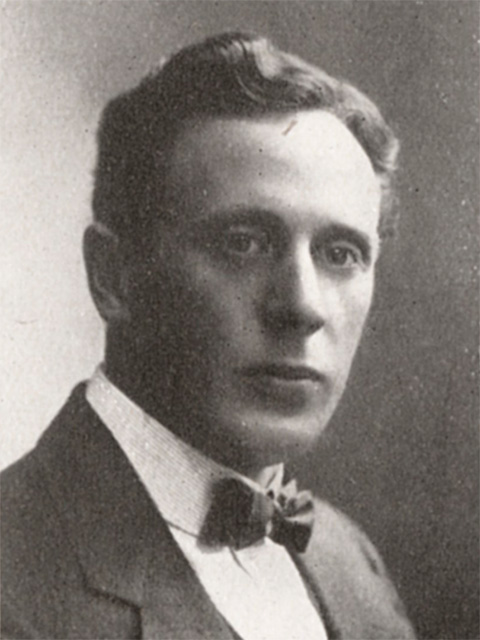 James Philip Sydney Streatfeild (November 5, 1879 – June 3, 1915) was born on November 5, 1878, in Clapham, south London, to Arthur Ogle Streatfeild, a
bank clerk, and Lydia Mary Streatfeild. Through his paternal lineage, he was descended from the prominent Streatfeild family associated with
Chiddingstone Castle in Kent, while his grandfather served as the vicar of East Ham in Essex.
James Philip Sydney Streatfeild (November 5, 1879 – June 3, 1915) was born on November 5, 1878, in Clapham, south London, to Arthur Ogle Streatfeild, a
bank clerk, and Lydia Mary Streatfeild. Through his paternal lineage, he was descended from the prominent Streatfeild family associated with
Chiddingstone Castle in Kent, while his grandfather served as the vicar of East Ham in Essex.
He attended Dulwich College from 1893 to 1895, where he demonstrated early artistic ability and actively participated in school drill competitions,
frequently serving as captain of his form's winning team.
Following his schooling, Streatfeild pursued formal art education and established himself in London's bohemian art scene, working out of a studio
located off King's Road. He is believed to have trained under the celebrated maritime and portrait painter
Henry Scott Tuke, whose impressionistic style and focus on male figures deeply influenced the era's
homoerotic aesthetic.
Streatfeild achieved professional recognition as a portraitist, painting industrial figures, society women, actresses, and young children. Between
1901 and 1915, his works were repeatedly selected for exhibition at the Royal Academy at Burlington House. His studio quickly became a focal point within
artistic and queer social circles of Edwardian London, where he maintained a close friendship with
Robert Ross—the art critic, patron, and former lover of Oscar Wilde.
In 1914, Streatfeild met the 14-year-old aspiring actor Noël Coward, marking a pivotal moment in both of their
lives. Streatfeild took Coward on as a protégé and mentor, introducing the young performer to his bohemian circle and social networks.
Recognizing Coward's potential as well as his own declining health, Streatfeild arranged for his wealthy friend and socialite Mrs. Astley Cooper to
take Coward under her care. Following Streatfeild's recommendation, Mrs. Astley Cooper welcomed Coward to her estate, Hambleton Hall in Rutland,
providing him with patronage, intellectual cultivation, and access to high society that launched his literary and theatrical career.
Streatfeild's presence within queer history rests on his placement at the intersection of Edwardian homophile networks—connecting late Victorian
figures like Robert Ross and Henry Scott Tuke to the modern aesthetic era shaped by Noël Coward.
At the outbreak of the First World War, Streatfeild enlisted in the British Army in November 1914, receiving a commission as a Second Lieutenant in
the 6th Territorial Battalion of the Sherwood Foresters (Notts and Derby Regiment). During the harsh winter of 1914–1915, he was stationed on the coast
of Essex supervising trench construction.
The severe weather conditions severely compromised his health. After contracting trench fever and tuberculosis, he was invalided out of service in
March 1915. Following months of illness, Philip Streatfeild died in a nursing home in Norbury on June 3, 1915, at the age of 36. He was laid to rest in
Streatham Cemetery, Tooting.
References:
- Philip Hoare, Noël Coward: A Biography (Simon & Schuster, 1995) – Covers Streatfeild’s relationship with and mentorship of the young Noël Coward, his artistic milieu, and his connection to Mrs. Astley Cooper.
- Sheridan Morley, A Talent to Amuse: The Biography of Noël Coward (Heinemann, 1969 / Pavilion Books, 1985) – Details Coward’s early life, including his time spent under Streatfeild's influence and introduction to Hambleton Hall.
- Noël Coward, Future Indefinite (Heinemann, 1954) & Present Indicative (Heinemann, 1937) – Coward’s autobiographies referencing his early career, mentors, and social network.
- Commonwealth War Graves Commission (CWGC) – Official casualty database entry for Second Lieutenant James Phillip Sidney Streatfeild, 6th Battalion, Sherwood Foresters (Notts and Derby Regiment), detailing his service, death date (June 3, 1915), and burial at Streatham Cemetery.
- Dulwich College War Record / Register – Records detailing his attendance at Dulwich College (1893–1895), participation in school drill competitions, and subsequent military commission in November 1914.
- The London Gazette – Official notices confirming his territorial commission as Second Lieutenant in the Sherwood Foresters (Nottinghamshire and Derbyshire Regiment).
- Royal Academy of Arts Exhibitors Index (1901–1915) – Records of Streatfeild's submitted and exhibited portraiture and paintings at Burlington House.
- QueerStoryFiles – "Around the World In Another 80 Gays: Part 1" – Outlines his social connections with Robert Ross, Henry Scott Tuke, and the London Edwardian art scene.
Support this project
This website is a passion project researched, developed, and funded entirely by me. If you find the content valuable and would like to help support the ongoing research and hosting costs, any contribution is deeply appreciated.
Thank you for keeping this independent resource alive!
My books on Amazon: Elisa Rolle's books
BACK TO HOME PAGE