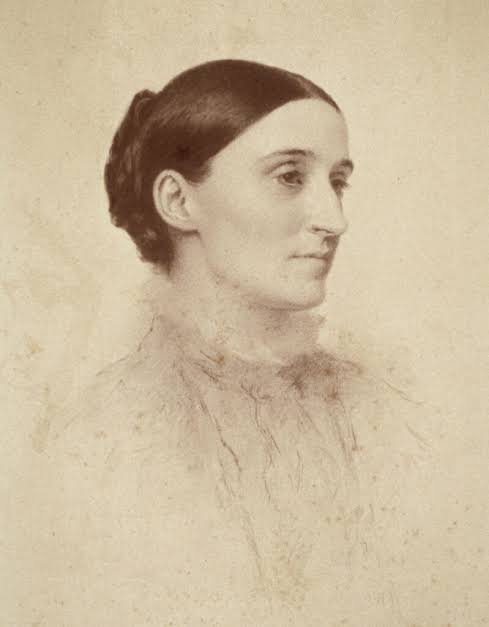
 Pauline Elizabeth Augusta Agassiz Shaw (February 6, 1841 – February 10, 1917) was a prominent American philanthropist, educator, and advocate for women’s suffrage and social reform.
Queer Places:
8 Marlborough St, Boston, MA 02116, USA
Forest Hills Cemetery and Crematory, 95 Forest Hills Ave, Boston, MA 02130, United States
Pauline Elizabeth Augusta Agassiz Shaw (February 6, 1841 – February 10, 1917) was a prominent American philanthropist, educator, and advocate for women’s suffrage and social reform.
Born on February 6, 1841, in Neuchâtel, Switzerland, she was the daughter of the renowned naturalist Louis Agassiz and his first wife, Cécile Braun. Following her mother's death in 1848, she and her siblings remained in Switzerland until 1850, when they moved to Cambridge, Massachusetts, to join their father, who had become a professor at Harvard University. She was significantly influenced by her stepmother, Elizabeth Cabot Cary Agassiz.
In 1860, at age 19, she married Quincy Adams Shaw, a wealthy Boston businessman and financier. Their significant fortune, largely amassed from copper mining, allowed Pauline to dedicate her life and resources to extensive social and educational reform.
Shaw was a pioneering figure in early childhood education. Beginning in 1877, she funded dozens of kindergartens in the Greater Boston area, eventually seeing the model adopted by the public school system. Her other notable contributions included:
Co-founding the North Bennet Street Industrial School (1881), America's first trade school, to provide job training to immigrants and the poor.
Establishing community centers, such as the Civic Service House (1901), to support immigrant families.
Becoming a major financial contributor and leader in the suffrage movement, notably co-founding and serving as president of the Boston Equal Suffrage Association for Good Government.
Shaw remained committed to her work until her death from bronchial pneumonia on February 10, 1917, at her home in Jamaica Plain, Massachusetts. She is memorialized on the Boston Women’s Heritage Trail and honored by the Pauline Agassiz Shaw Elementary School in Boston.
Isobel Briggs maintained a long and intimate association with Pauline Agassiz Shaw, who was a significant benefactor in her life.
Shaw provided consistent financial support to Isobel Briggs and her long-term partner, the political theorist and social worker Mary Parker Follett. This included a stipend that continued until Shaw's death in 1917.
The connection between them was deeply rooted in their shared social and reform-minded circles. Shaw owned the building at Eight Marlborough Street, where Briggs and Follett resided together after returning to Boston in 1900.
Through her sponsorship of various social organizations, Shaw enabled Follett and Briggs to advance their personal and professional developments. Furthermore, Shaw's ownership of land in the Adirondacks provided opportunities for Briggs and Follett to vacation, reflecting the close ties and support Shaw extended to them.
References:
Support this project
This website is a passion project researched, developed, and funded entirely by me. If you find the content valuable and would like to help support the ongoing research and hosting costs, any contribution is deeply appreciated.
Thank you for keeping this independent resource alive!
My books on Amazon: Elisa Rolle's books