Queer Places:
University of Edinburgh, Old College, South Bridge, Edinburgh EH8 9YL, United Kingdom
University of Cambridge, 4 Mill Ln, Cambridge CB2 1RZ
12 Cranmer Rd, Cambridge CB3 9BL, UK
Ascension Parish Burial Ground, Cambridge, City of Cambridge, Cambridgeshire, England
 Norman McLean (October 2, 1865 – August 20, 1947) was born on October 2, 1865, in Lanark, Scotland, the eldest son of the Reverend Daniel McLean—a
Presbyterian clergyman who served as a missionary in Hampden, Jamaica, and later as a minister in Lanark—and Grace Whyte Millar. He received his early
education at the Royal High School of Edinburgh before attending the University of Edinburgh, where he graduated with a Master of Arts in 1885. He
subsequently entered Christ's College, Cambridge, matriculating in January 1887 as a scholar. At Cambridge, he achieved exceptional academic distinction,
earning a First Class in Part I of the Classical Tripos in 1888 and another First Class in the Semitic Languages Tripos in 1890, alongside receiving the
Jeremie Septuagint Prize in 1890, the Mason Prize in 1891, and becoming a Tyrwhitt Scholar in 1891, before completing his Bachelor of Arts in 1890 and
proceeding to his Master of Arts in 1894.
Norman McLean (October 2, 1865 – August 20, 1947) was born on October 2, 1865, in Lanark, Scotland, the eldest son of the Reverend Daniel McLean—a
Presbyterian clergyman who served as a missionary in Hampden, Jamaica, and later as a minister in Lanark—and Grace Whyte Millar. He received his early
education at the Royal High School of Edinburgh before attending the University of Edinburgh, where he graduated with a Master of Arts in 1885. He
subsequently entered Christ's College, Cambridge, matriculating in January 1887 as a scholar. At Cambridge, he achieved exceptional academic distinction,
earning a First Class in Part I of the Classical Tripos in 1888 and another First Class in the Semitic Languages Tripos in 1890, alongside receiving the
Jeremie Septuagint Prize in 1890, the Mason Prize in 1891, and becoming a Tyrwhitt Scholar in 1891, before completing his Bachelor of Arts in 1890 and
proceeding to his Master of Arts in 1894.
Building upon his brilliant academic record, McLean was elected a Fellow of Christ's College in 1893 and appointed a lecturer in Hebrew. His scholarly
expertise expanded into Near Eastern languages, leading to his appointment as University Lecturer in Aramaic in 1903, a post he held until 1931. His
life's work centered on biblical scholarship and textual criticism, particularly the meticulous establishment of a complete variorum edition of
scriptural texts. Collaborating with Dr. A. E. Brooke, he spent forty years editing Volumes I and II of the Larger Cambridge Septuagint, and he also
co-edited the Ecclesiastical History of Eusebius in Syriac with Professor William Wright. Recognized widely for his scholarship, he was elected a Fellow
of the British Academy (FBA) in 1934. Within Christ's College, he took on significant administrative responsibilities, serving as a Tutor from 1911 and
ultimately as Master of Christ's College from 1927 to 1936, though ill-health later forced him to decline the position of Vice-Chancellor.
In October 1888, McLean was elected to the Cambridge Apostles, the prestigious and secret intellectual
society, though he resigned from the group in February 1892. His membership in the Apostles, alongside his association with numerous other figures within
the society who formed close homosocial and homoerotic networks at Victorian and Edwardian Cambridge, places him within the broader cultural and social
circles associated with early homosexual and homosocial history in British academia.
In 1896, McLean married Mary Grace Luce in Malmesbury, Wiltshire. The couple had no children, and Mary tragically predeceased him, passing away in
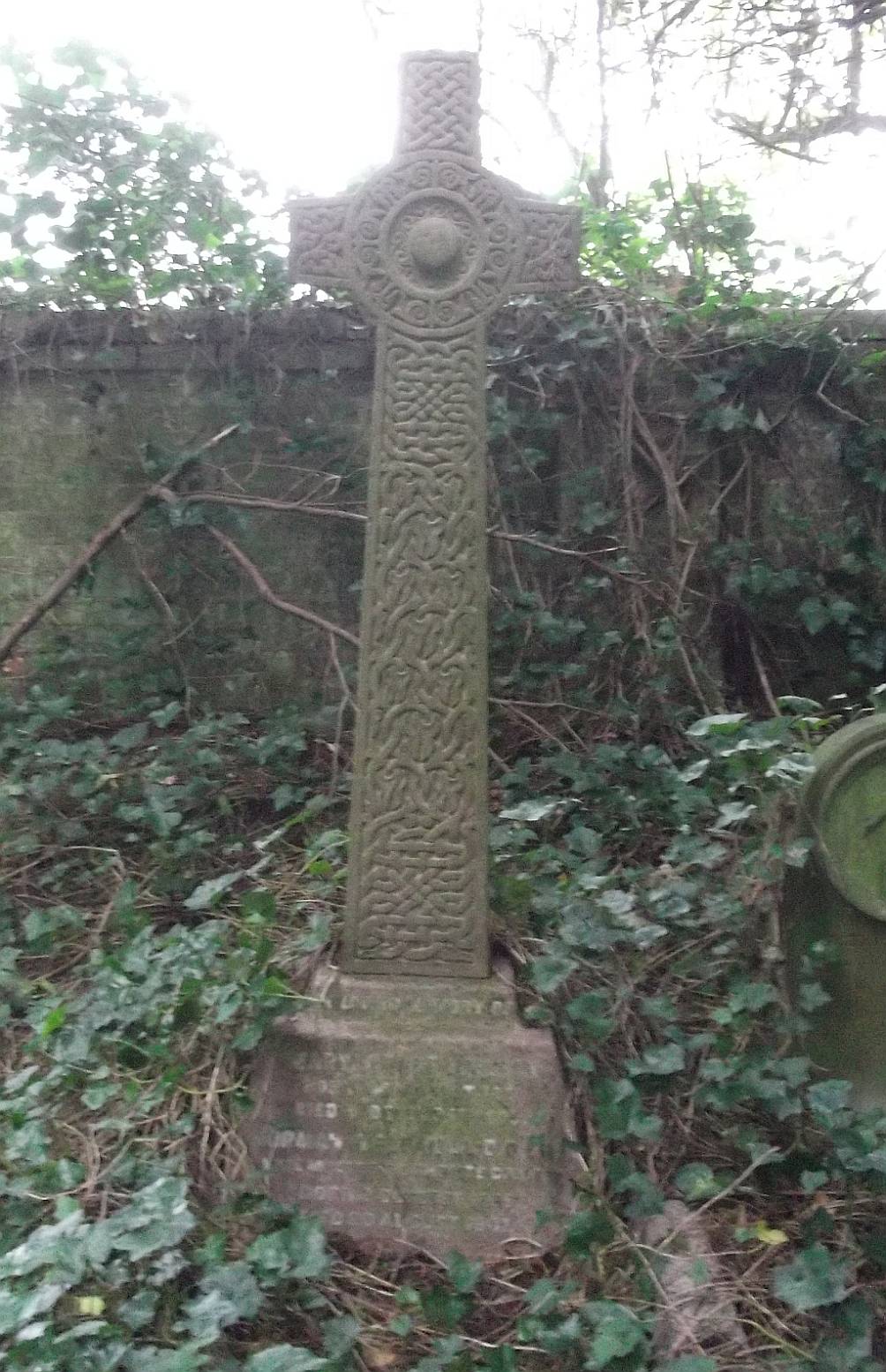
1905. In his later years, McLean resided at 12 Cranmer Road, Cambridge. He passed away on August 20, 1947, at the age of 81. He is buried alongside his
wife Mary in the Parish of the Ascension Burial Ground in Cambridge, bearing the poignant headstone inscription: "Underneath are the everlasting arms."
References:
Other references:
- Oxford Dictionary of National Biography (ODNB): W. A. L. Elmslie, McLean, Norman (1865–1947), revised by R. S. Simpson (Oxford University Press, 2004; online edition, September 2010).
- Alumni Cantabrigienses: J. Venn and J. A. Venn, Cambridge University Press, 10 volumes (1922–1958) — specifically referencing entries in Peile's biographical register of Christ's College (Volume II, page 731).
- Who's Who: Standard biographical entries for Norman McLean, FBA.
- "A Cambridge Necropolis" by Dr. Mark Goldie: Published in March 2000 for the Friends of The Parish of The Ascension Burial Ground (referencing McLean as Cambridge Apostle #216 and detailing burials within the Ascension Parish Burial Ground).
Support this project
This website is a passion project researched, developed, and funded entirely by me. If you find the content valuable and would like to help support the ongoing research and hosting costs, any contribution is deeply appreciated.
Thank you for keeping this independent resource alive!
My books on Amazon: Elisa Rolle's books
BACK TO HOME PAGE
