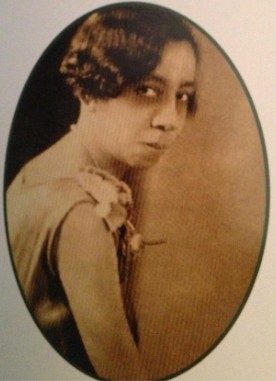
 Nellie May Quander (February 11, 1880 - September 24, 1961) was a pioneering educator, civic leader, and civil rights advocate who left a lasting mark on
American higher education and social reform.
Nellie May Quander (February 11, 1880 - September 24, 1961) was a pioneering educator, civic leader, and civil rights advocate who left a lasting mark on
American higher education and social reform.Queer Places:
Howard University, 2400 6th St NW, Washington, DC 20059, United States
Columbia University (Ivy League), 116th St and Broadway, New York, NY 10027
New York University, New York, NY 10012, United States
University of Washington, 1410 NE Campus Pkwy, Seattle, WA 98195, United States
Lincoln Memorial Cemetery, 4001 Suitland Rd, Suitland-Silver Hill, MD 20746, United States
Nellie May Quander (February 11, 1880 - September 24, 1961) was a pioneering educator, civic leader, and civil rights advocate who left a lasting mark on
American higher education and social reform.
Born on February 11, 1880, in Washington, D.C., to John Pierson Quander and Hannah Bruce Ford Quander, she belonged to one of the oldest documented free African American families in the United States, tracing lineage back over three centuries in Maryland and Virginia. Her family history was deeply tied to the nation's founding narrative; her paternal lineage descended from Nancy Quander, an enslaved woman freed by George Washington's final will, while her mother was related to West Ford, a key historical figure at Mount Vernon. Her extended family included prominent figures such as her granduncle Blanche K. Bruce, who served as a U.S. Senator from Mississippi during Reconstruction.
Quander pursued her early education in Washington public schools, graduating with honors from the Miner Normal School in 1901. Driven by a passion for learning and public service, she enrolled at Howard University at a time when less than one percent of African Americans held college degrees. While studying magna cum laude in history, economics, and political science, she worked simultaneously as a public school teacher at the Garrison School.
During her time at Howard, Quander became deeply involved with Alpha Kappa Alpha, the nation's first African American sorority. Initiated in 1910, she rose to the presidency of the chapter in 1912. When internal divisions threatened to dismantle the organization in favor of a new direction, Quander took decisive action to preserve the sorority’s original mission and vows. She organized graduate members and spearheaded the national incorporation of Alpha Kappa Alpha Sorority, Incorporated on January 29, 1913. Serving as Supreme Basileus until 1919, she authored the constitution’s preamble, expanded undergraduate chapters across the country, organized the sorority's first national conventions, and established its first academic scholarship.
In early 1913, Quander also emerged as a prominent voice for racial equality during the suffrage movement. When preparing to participate in the Woman Suffrage Procession in Washington, D.C., she wrote directly to parade organizer Alice Paul to demand equitable, non-segregated placement for Howard University women within the college section, explicitly stating that Black women would not accept discriminatory conditions to march. Her firm stance highlighted the intersectional struggles faced by Black women fighting simultaneously for racial justice and women's rights. Historically, scholars and historians examining non-traditional women of the era have analyzed figures like Quander—referred to in historical records as a lifelong "spinster"—within broader studies of early 20th-century women's networks and queer historical frameworks, which document how unmarried, highly educated women formed independent social, professional, and civic support systems outside traditional patriarchal household structures.
Quander spent over thirty years teaching in the Washington, D.C., public school system, primarily instructing social studies in junior high schools. A forward-thinking educator, she established the city's first School Safety Patrol Unit at Shaw Junior High School and advised the program for twenty-five years. She continuously expanded her own academic background throughout her career, earning a Master of Arts degree from Columbia University in 1915, a social work certificate from New York University, and completing advanced studies at the University of Washington and Uppsala University in Sweden. In 1916 and 1917, she took a leave of absence from teaching to work as a special field agent for the U.S. Department of Labor Children's Bureau, conducting field studies on social and economic conditions in Delaware.
Alongside her teaching, Quander devoted extensive energy to labor, community, and religious organizations. She held multiple leadership roles within the local and national YWCA and Phillis Wheatley YWCA, advocated for labor rights through the Women's Trade Union League as a delegate for the teachers' union, served as executive secretary of the Miner Community Center, and managed operational affairs as secretary of the trustee board at Lincoln Temple Congregational Church.
Nellie May Quander passed away on September 24, 1961, at the age of 81, and was laid to rest at Lincoln Memorial Cemetery in Suitland, Maryland. Her legacy endures through the global reach of Alpha Kappa Alpha Sorority, Incorporated, and the permanent scholarship endowment established in her name at Howard University.
References:
 Public Faces, Secret Lives by Wendy L. Rouse |
Other references:
Support this project
This website is a passion project researched, developed, and funded entirely by me. If you find the content valuable and would like to help support the ongoing research and hosting costs, any contribution is deeply appreciated.
Thank you for keeping this independent resource alive!
My books on Amazon: Elisa Rolle's books