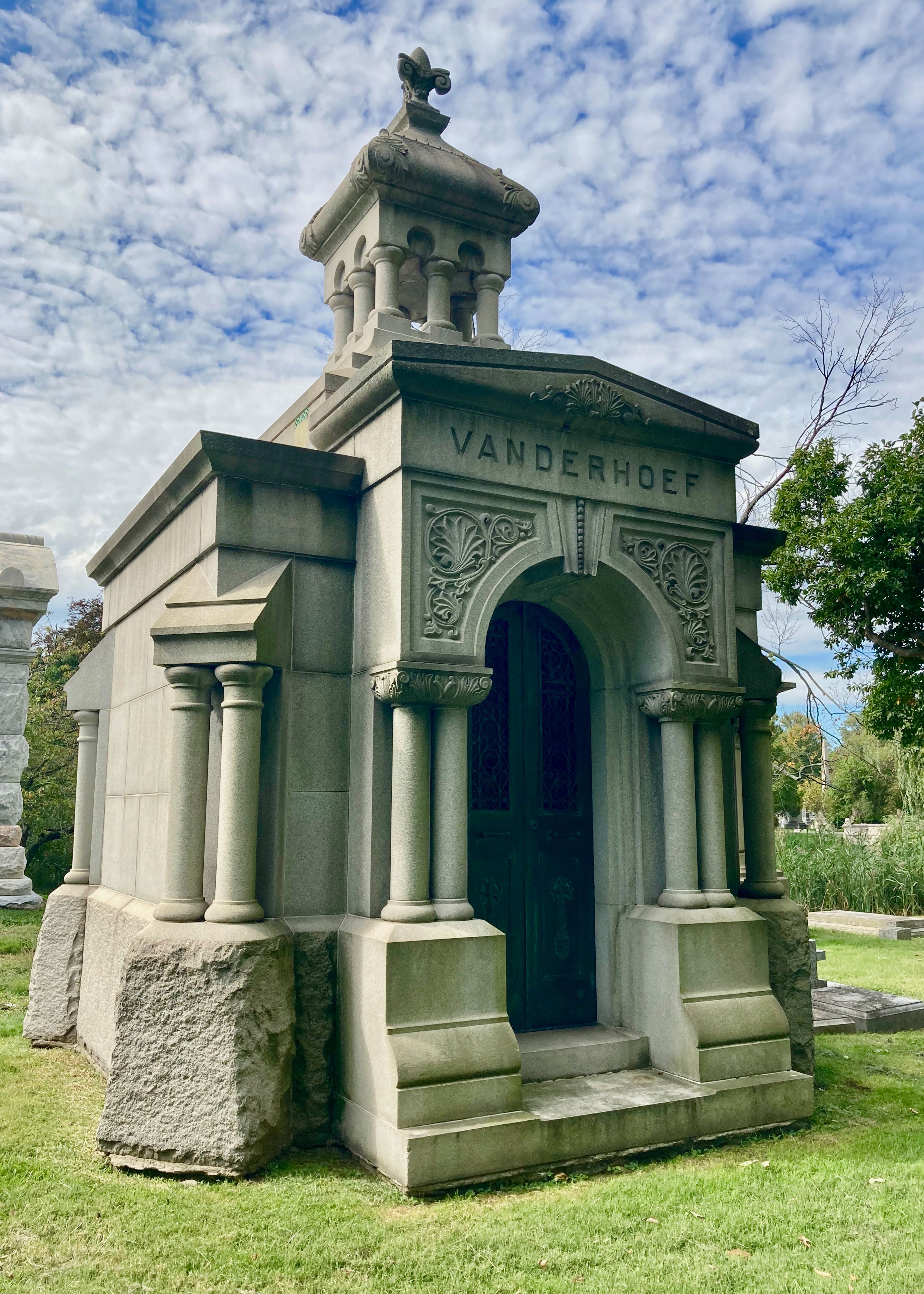
 Nathaniel Scudder Wyckoff Vanderhoef (December 22, 1828 - October 28, 1902) was a prominent New York resident of old Dutch ancestry whose life spanned nearly nine decades of
major transformation in the New York metropolitan area.
Nathaniel Scudder Wyckoff Vanderhoef (December 22, 1828 - October 28, 1902) was a prominent New York resident of old Dutch ancestry whose life spanned nearly nine decades of
major transformation in the New York metropolitan area.Partner James Blake
Queer Places:
Woodlawn Cemetery, Bronx, Bronx County, New York, USA
Nathaniel Scudder Wyckoff Vanderhoef (December 22, 1828 - October 28, 1902) was a prominent New York resident of old Dutch ancestry whose life spanned nearly nine decades of
major transformation in the New York metropolitan area.
He was a member of the historic Vanderhoef family, a well-established Dutch-descended lineage prominent in New York and New Jersey since the colonial era. He married Mary Elizabeth Blauvelt in the 1850s and had a son, Nathaniel Wyckoff Scudder Vanderhoef Jr. (born 1865), who carried forward the family's traditional naming conventions.
Historical interest in N. Wyckoff Vanderhoef extends beyond standard genealogical records due to his identification by historians as the "Wyck Vanderhoef" documented in mid-19th-century diaries and letters.
In the late 1840s and early 1850s—when Vanderhoef was in his early twenties—he worked as a young engineer alongside another engineer named James Blake. Their documented bond between 1848 and 1851 serves as a primary example in modern LGBTQ+ and gender history studies:
In July 1851, prior to a period of separation, Blake recorded their intense emotional and physical closeness in his diary:
"We retired early, but long was the time before our eyes were closed in slumber... our hearts were full of that true friendship which could not find utterance by words, we laid our heads upon each other's bosom..."
Accounts from the period detail that the two shared a bed, embraced, kissed, and wept together upon parting. The emotional intensity was noticed by Blake's wife, who famously observed that Blake "went about like a widower" following Vanderhoef's departure.
Scholars of 19th-century sexuality and social history (such as E. Anthony Rotundo) analyze Vanderhoef and Blake’s connection through two complementary lenses:
In 19th-century American culture, intense physical and emotional intimacy—including bed-sharing, weeping, and kissing between male peers—was a recognized social practice often termed "brother-love" or romantic friendship. These relationships provided emotional support during the transitional phase of young adulthood before marriage.
Modern queer theorists and historians evaluate these diary records as early evidence of same-sex romantic desire, affection, and erotic expression operating prior to 20th-century definitions of sexual identity.
Vanderhoef later transitioned into middle-class domestic life, marrying Mary Elizabeth Blauvelt and raising a family in New York, mirroring the common 19th-century trajectory of transitioning from youthful intimate companionships into traditional married life.
References:
 The Hub of the Gay Universe: An LGBTQ History of Boston, Provincetown, and Beyond Paperback – April 1, 2019 by Russ López |
Other references:
Support this project
This website is a passion project researched, developed, and funded entirely by me. If you find the content valuable and would like to help support the ongoing research and hosting costs, any contribution is deeply appreciated.
Thank you for keeping this independent resource alive!
My books on Amazon: Elisa Rolle's books