Queer Places:
Žabljak, Montenegro
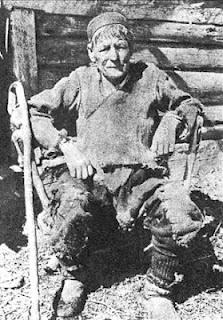 Mikaš Milićev Karadžić (1862–1934) was born in the village of Hanovi, later known as Žabljak, in Montenegro (Crna Gora). After his father, a celebrated hero, was killed in
battle against the Ottoman Empire, his widowed mother was left without another male head of household. To navigate the patriarchal social structures and economic
necessities of the time, she renamed her child Mikaš and raised him as a boy.
Mikaš Milićev Karadžić (1862–1934) was born in the village of Hanovi, later known as Žabljak, in Montenegro (Crna Gora). After his father, a celebrated hero, was killed in
battle against the Ottoman Empire, his widowed mother was left without another male head of household. To navigate the patriarchal social structures and economic
necessities of the time, she renamed her child Mikaš and raised him as a boy.
Mikaš quickly adapted to his male upbringing, playing with boys, tending sheep, and adopting traditional masculine clothing and weaponry. He fiercely rejected any
mention of his biological origins, declaring that he would rather lose his head than live as a woman. Although clan leaders initially expressed embarrassment and
reprimanded him, his mother and close kin supported him, and his determination earned him a respected social standing. In the early 1880s, after local clan leaders brought
the issue to Bishop Visarion Ljubiša, the bishop ruled that Mikaš must never be insulted, though he cautioned him against drinking brandy.
Mikaš later fulfilled military service, earning recognition when examined by the prominent physician Milan Jovanović-Batut in 1885. Following his service, he worked
successfully as a farmer, managing a high-quality flock of sheep and breeding and trading cattle while leasing out arable land. He consistently performed demanding
masculine labor, such as mowing, ploughing, and harvesting. Despite an internment attempt by the occupying Austrian army in 1916—which was thwarted after an informant's
report of his sex was dismissed without a medical examination—Mikaš maintained his social role throughout the post-World War I droughts and political shifts as Montenegro
became part of Yugoslavia.
Within his family and community, Mikaš fully assumed male civic and domestic roles. He voted, officiated as the male head of the household during the annual Feast of
the Archangel Michael on November 8, and was addressed by masculine kinship terms such as svekar (father-in-law). In 1929, Croatian ethnographer Branimir Gušić
photographed him after Mikaš refused a visit from his wife, Marijana Gušić, because she was a woman. In 1933, when Mikaš grew sick and weakened, he was transported to a
relative's home, where he requested that his daughter-in-law uphold his dignity. He was buried in a new masculine suit with the approval of the local priest.
Mikaš Milićev Karadžić is a prominent historical example within the anthropological study of Balkan sworn virgins (virdžine or ostajnice), a traditional phenomenon
historically found in northern Albania, Kosovo, and Montenegro. In these strict patriarchal societies, families lacking a male heir would occasionally raise a daughter to
live socially as a man to preserve family lineage, inherit property, and perform vital labor. While these individuals lived strictly within male social roles out of
familial and economic necessity, figures like Mikaš demonstrate early instances of gender-crossing where individuals fiercely claimed their masculine identity, demanding
social recognition, personal autonomy, and integration into male civic, military, and domestic life.
References:
Other references:
- https://zagria.blogspot.com/2012/04/mikas-milicev-karadzic-1862-1934.html
- Jovanović-Batut, Milan. "Čudna prilika (S moga puta po Crnoj Gori)." Branik, December 12–24, 1885. (Primary contemporary account detailing the physician's 1885 examination and interview with Mikaš).
- Gušić, Marijana. "Etnografski prikaz Pive i Drobnjaka." Narodna starina 9 (1930): 198. (Fieldwork and regional ethnography).
- Gušić, Marijana. "Ostajnica-tombelija-virdžin kao društvena pojava." In Treći kongres folklorista Jugoslavije, 57–58. Cetinje: Obod, 1958. (Analysis of the sworn virgin phenomenon in regional society).
- Gušić, Marijana. "Pravni položaj ostajnice-virdžincse u stočarskom društvu regije Dinarida." In Odredbe pozitivnog zakonodavstva i običajnog prava o sezonskim kretanjima stočara u jugoistočnoj Evropi kroz vekove, edited by Vasa Čubrilović, 280. Belgrade: Srpska akademija nauka i umetnosti, 1976. (Examination of the legal and customary status of virdžine in Dinaric herding communities).
- Grémaux, René. "Mannish Women of the Balkan Mountains." In From Sappho to De Sade: Moments in the History of Sexuality, edited by Jan Bremmer, 144–149. London & New York: Routledge, 1989. (Academic overview of Balkan gender-crossing).
- Grémaux, René. "Woman Becomes Man in the Balkans." In Third Sex, Third Gender: Beyond Sexual Dimorphism in Culture and History, edited by Gilbert Herdt, 246–253. New York: Zone Books, 1994. (Expanded English-language analysis featuring photographs taken by Branimir Gušić in 1929).
Support this project
This website is a passion project researched, developed, and funded entirely by me. If you find the content valuable and would like to help support the ongoing research and hosting costs, any contribution is deeply appreciated.
Thank you for keeping this independent resource alive!
My books on Amazon: Elisa Rolle's books
BACK TO HOME PAGE
