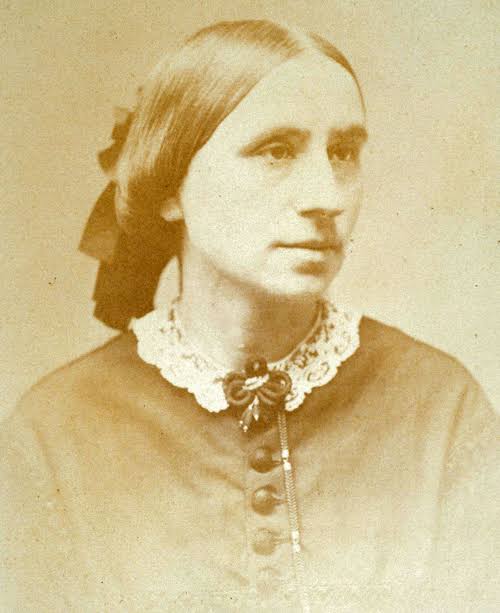
 Dr. Marie Elizabeth Zakrzewska (September 6, 1829 - May 12, 1902) was a pioneering Polish-German physician who became one of the most prominent hospital administrators and medical
trail-blazers in 19th-century America.
Dr. Marie Elizabeth Zakrzewska (September 6, 1829 - May 12, 1902) was a pioneering Polish-German physician who became one of the most prominent hospital administrators and medical
trail-blazers in 19th-century America.Partner Julie Sprague
Queer Places:
41 Forest Hills St, Boston, MA 02130, USA
Forest Hills Cemetery and Crematory, 95 Forest Hills Avenue, Boston, Massachusetts 02130 United States
Dr. Marie Elizabeth Zakrzewska (September 6, 1829 - May 12, 1902) was a pioneering Polish-German physician who became one of the most prominent hospital administrators and medical
trail-blazers in 19th-century America.
Born in Berlin, Zakrzewska initially trained as a midwife, becoming chief midwife at the Charité Hospital in Berlin at just 22. Facing systemic resistance from male colleagues, she emigrated to the United States in 1853 to pursue a full medical degree.
She graduated from Western Reserve College (now Case Western Reserve University) in 1856. She then joined Elizabeth Blackwell and Emily Blackwell as a resident physician at the New York Infirmary for Women and Children, helping establish a clinical training ground for female doctors.
In 1862, Zakrzewska founded the New England Hospital for Women and Children in Boston. It was staffed entirely by women to serve poor patients and provide female physicians with crucial clinical positions denied to them by male-dominated institutions. The hospital was also home to the first professional nursing school in the United States.
As highlighted in Lillian Faderman’s To Believe In Women: What Lesbians Have Done For America, Zakrzewska's life illustrates how mid-19th-century female pioneers often built independent, women-centered lives outside traditional heteronormative structures:
"Loving parents trembled for daughters who challenged gender by becoming doctors or lawyers as much as they would have trembled if those daughters had tried to go through life dressed in men’s clothes."
Her ambition and gender-nonconforming childhood traits (such as shunning traditional domestic expectations) caused tension with her father, who viewed her independence as an "unhappy path" unsuitable for a woman of her era.
Zakrzewska never married a man. She moved within a circle of prominent professional women who formed life partnerships with other women, including Mary Louise Booth (editor of Harper's Bazaar) and Anne Woodward Wright.
From the early 1870s until her death in 1902, Zakrzewska lived with Julie Sprague, sharing a long-term household and emotional partnership typical of what historians retrospectively examine as same-sex domestic partnerships in 19th-century America.
References:
 To Believe In Women: What Lesbians Have Done For America - A History – A Compelling Landmark Account of 19th and 20th Century Rights by Lillian Faderman |
Other references:
Support this project
This website is a passion project researched, developed, and funded entirely by me. If you find the content valuable and would like to help support the ongoing research and hosting costs, any contribution is deeply appreciated.
Thank you for keeping this independent resource alive!
My books on Amazon: Elisa Rolle's books