BURIED TOGETHER
Partner Louise Catherine Breslau
Queer Places:
Académie Julian, Passage des Panoramas, 75002 Paris
Place Louise-Catherine-Breslau-et-Madeleine-Zillhardt, Rue de Buci & Rue de l'Ancienne Comédie, 75006 Paris, France
Barge Louise-Catherine, Quai d'Austerlitz, 75013 Paris, France
Friedhof Baden, Bezirk Baden, Aargau, 5400 Baden, Switzerland
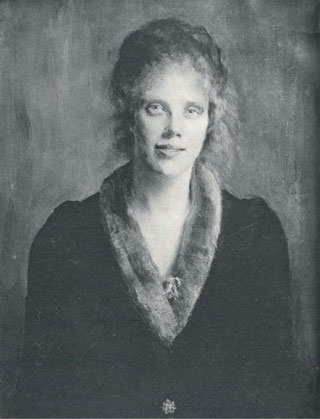 Madeleine Zillhardt (June 10, 1863 - April 16, 1950) was born on June 10, 1863, in Saint-Quentin, Aisne, to her father, Édouard Zillhardt, a merchant, and
her mother, Marie-Virginie Marotte. She grew up alongside her older sister Jenny, born in 1857, who also pursued a path as a renowned painter.
Madeleine Zillhardt (June 10, 1863 - April 16, 1950) was born on June 10, 1863, in Saint-Quentin, Aisne, to her father, Édouard Zillhardt, a merchant, and
her mother, Marie-Virginie Marotte. She grew up alongside her older sister Jenny, born in 1857, who also pursued a path as a renowned painter.
Following her sister's footsteps, Jenny began her artistic training in 1877 at the Académie Julian in Paris—at the time, a renowned institution and the
only major art school open to female students, given that the École des Beaux-Arts did not admit women until 1897. During her studies, Jenny trained
alongside prominent contemporaries such as the Swiss painter Louise Breslau, Sophie Schaeppi, the
Russian artist Marie Bashkirtseff, and the Irish painter Sarah Purser.
Encouraged by her sister, Madeleine entered the Académie Julian in 1884. There, she and Louise Breslau quickly became close, and in 1886, they began
living together permanently and openly. Beyond being Breslau's lifelong companion for over forty years, Madeleine served as her primary muse and favorite
model. Their intimate bond was immortalized when Breslau depicted Madeleine in the masterpiece Contre-jour (Backlighting), which was awarded a gold medal
at the 1889 Paris Exposition and later acquired by the Swiss government in 1896 for the Museum of Fine Arts Bern.
While she spent considerable time working in the background as Breslau's assistant, Madeleine forged an independent artistic path specializing in
ceramics, enameled glass, and painting on earthenware and porcelain, eventually emerging as one of the most original decorators of her time. Her decorative
arts and ceramic works have experienced a significant resurgence of interest since the centenary commemorations of the First World War. During the
conflict, she distinguished herself further by creating patriotic earthenware pieces, including Bravo Tigre! in support of Georges Clemenceau, and Fluctuat
nec mergitur, Paris bombardé, Jurons de ne pas oublier, which denounced the wartime bombing of civilians. Alongside Breslau, she also painted portraits of
soldiers, nurses, and doctors heading to the front lines to gift to their families.
The two women established themselves as an essential couple in Parisian artistic circles, regularly hosting cultural figures such as Henri
Fantin-Latour, Auguste Rodin, the sculptor Antoine Bourdelle, and Edgar Degas, about whom Zillhardt later
authored a biography. Notably, Zillhardt and Breslau distanced themselves from Degas later in life after he adopted anti-Dreyfusard positions. Their
decades together were also chronicled in an interview given by Zillhardt to journalist Blanche Vogt at the couple's Boulevard d'Inkermann home and workshop
in Neuilly-sur-Seine.
Following Breslau's declining health and passing on May 12, 1927, in the 16th arrondissement of Paris, a heartbroken Zillhardt inherited her partner's
estate and dedicated the remainder of her life to preserving and perpetuating her legacy. She published the foundational tribute Louise-Catherine Breslau
et ses amis in 1932 and prevented her partner's works from scattering by donating 66 pieces to various institutions, including the Dijon Museum of Fine
Arts, and bequeathing masterpieces such as the Portrait of Henry Davison to the Jeu de Paume Museum, now housed at the Orsay Museum in Paris.
Demonstrating a deep commitment to philanthropy, Zillhardt purchased a concrete barge on the Seine in 1928, intending to make it available to the
Salvation Army. With the financial support of American patron Winnaretta Singer, Princess of Polignac, the
vessel was renovated in 1929 by the pioneering architect Le Corbusier with assistance from his student, Japanese architect Kunio Maekawa. Renamed the
Louise-Catherine in honor of her late partner, the barge served under Salvation Army management until 1995 as a winter shelter for the homeless and a
summer camp for children, moored along the Seine at the Pont des Arts and later the Pont d'Austerlitz. Following a later acquisition by architect Michel
Cantal-Dupart—who established the Louise-Catherine Association and the Le Corbusier Foundation—and an accidental sinking during the winter floods of 2018,
the historic barge was refloated and remains located at the port of Austerlitz in the 13th arrondissement of Paris.
Madeleine Zillhardt passed away on April 16, 1950, in Neuilly-sur-Seine (Hauts-de-Seine). She and Louise Catherine Breslau are buried together in the
Baden Cemetery (Friedhof Baden) in the Swiss canton of Aargau. Their enduring historical footprint is additionally commemorated in Paris by the place
Louise Catherine Breslau & Madeleine Zillhardt, inaugurated in 2018 in the 6th arrondissement of Saint-Germain-des-Prés.
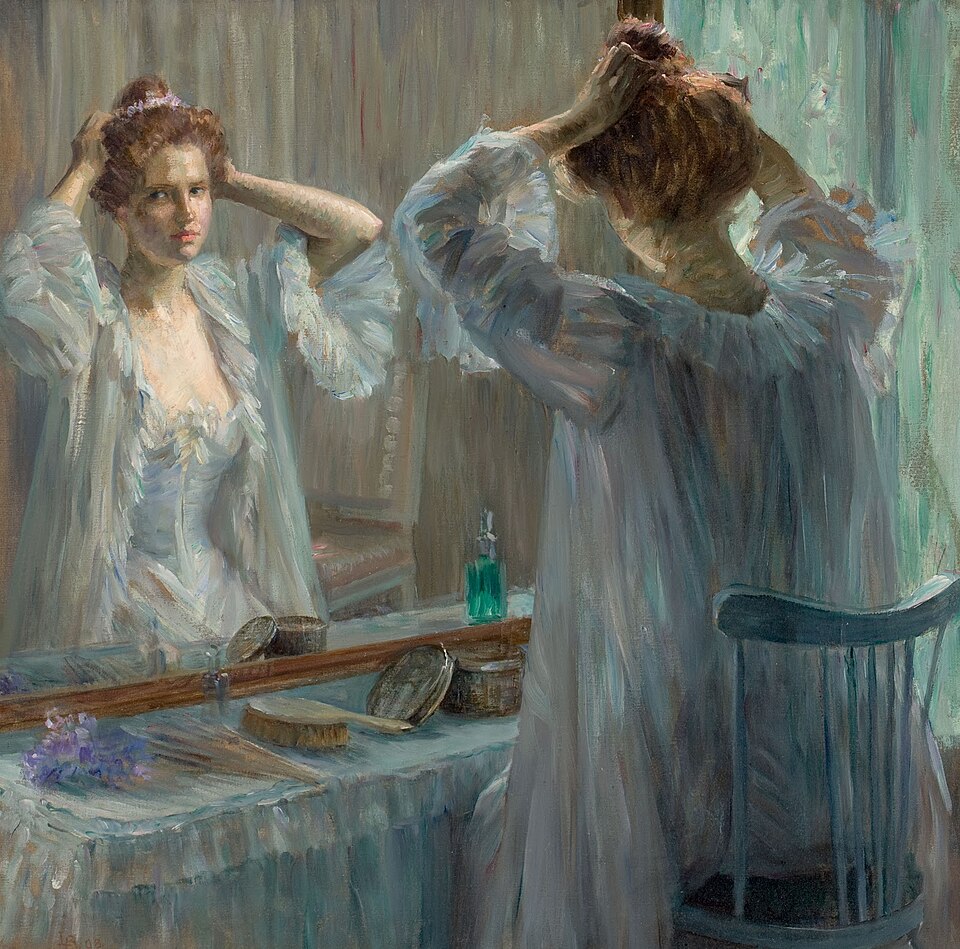
The Toilette (Madeleine Zillhardt)
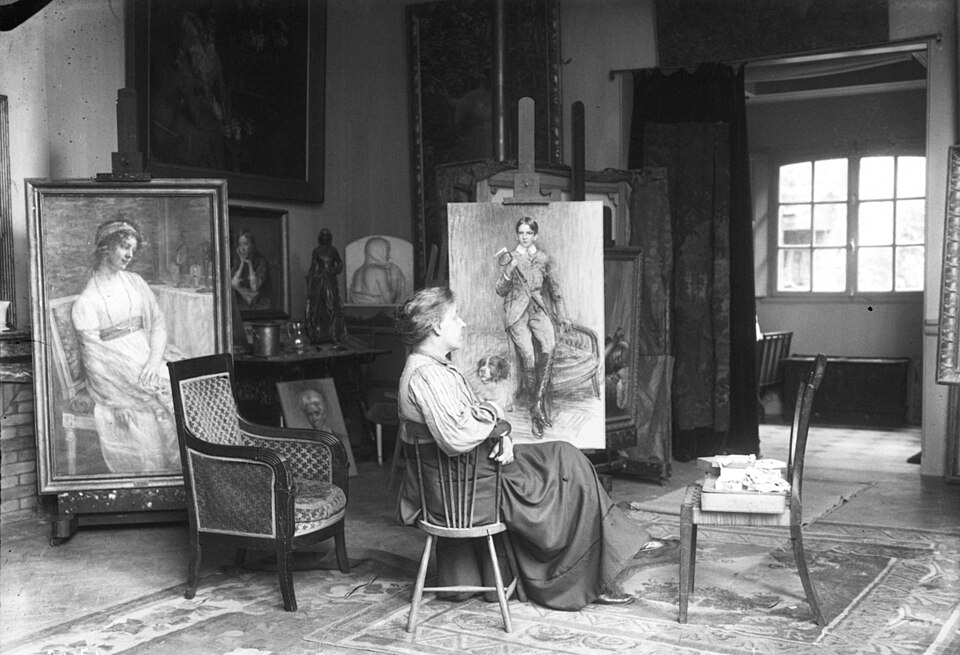
Louise Catherine Breslau in her studio
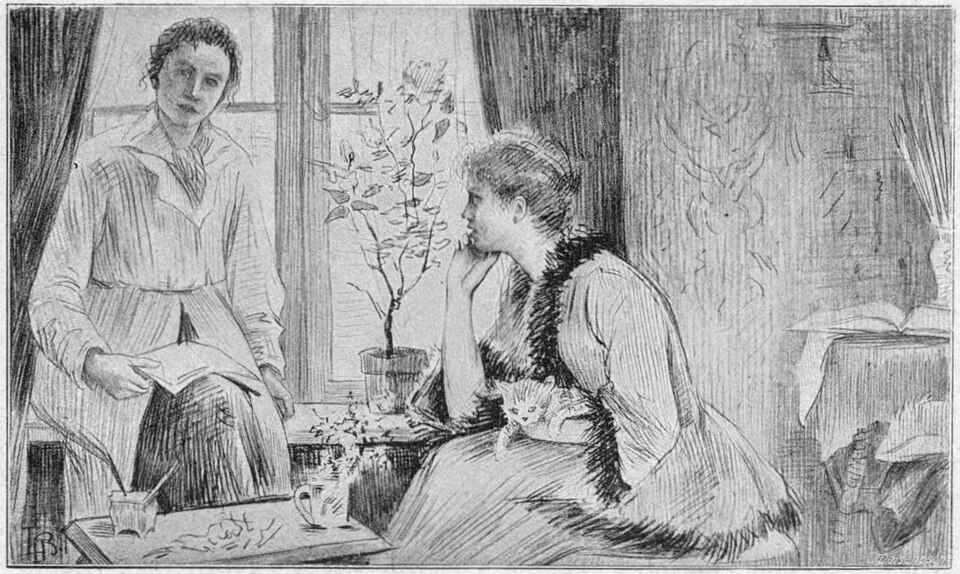
Drawing of 'Contre-jour' with Madeleine Zillhardt by Louise Catherine Breslau
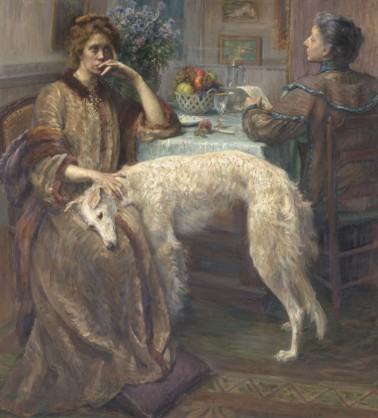
Louise Breslau, La vie pensive (Pensive Life), 1908. The scene takes place in the salon of Louise Breslau’s house in Neuilly-sur-Seine, just outside Paris. As she often did, the artist has shown herself from the back, revealing only her famous aquiline profile. In the foreground sits her attractive red-haired partner Madeleine Zillhardt, stroking a borzoi.
References:
- Zillhardt, Madeleine. Louise-Catherine Breslau et ses amis. Paris: Éditions des Portiques, 1932.
- Zillhardt, Madeleine. Monsieur Edgar Degas. Paris: L'Échoppe, 2015 (new edition).
- Musée de l'Air et de l'Espace (Paris / Le Bourget): Houses her First World War patriotic decorative pieces and earthenware, including Fluctuat nec mergitur, Paris bombardé (1918) and the cafetière La Marne (1918).
- Musée des Beaux-Arts de Dijon: Recipient of a major donation of 66 works by Louise Catherine Breslau preserved and given by Madeleine Zillhardt.
- Musée d'Orsay / Musée du Louvre (Cabinet des Dessins): Holds graphic works and paintings linked to the couple, including the Portrait de Madeleine Zillhardt by Louise Catherine Breslau (donated by Ernst von Bressensdorf).
- Musée Antoine Lécuyer (Saint-Quentin): Exhibits works and portraits connected to Zillhardt, such as Sous la lampe. Portrait de Madeleine Zillhardt.
- Fondation Le Corbusier: Maintains documentation and historical records regarding the renovation and history of the barge Louise-Catherine.
- Bibliothèque Nationale de France (BnF / data.bnf.fr): Official author and registry files for Madeleine Zillhardt.
- Departmental and Civil Archives (Archives départementales de l'Aisne [AD02] & du Bas-Rhin [AD67] / Filae): Vital records concerning her birth in Saint-Quentin and family lineage.
- Gallica (BnF digital library): Periodical archives, contemporary press coverage, and historical interviews (including reports from L'Intransigeant following Breslau's passing in 1927).
Support this project
This website is a passion project researched, developed, and funded entirely by me. If you find the content valuable and would like to help support the ongoing research and hosting costs, any contribution is deeply appreciated.
Thank you for keeping this independent resource alive!
My books on Amazon: Elisa Rolle's books
BACK TO HOME PAGE