Queer Places:
Altstadtfriedhof Aschaffenburg, Güterberg 6-12, 63739 Aschaffenburg, Germany
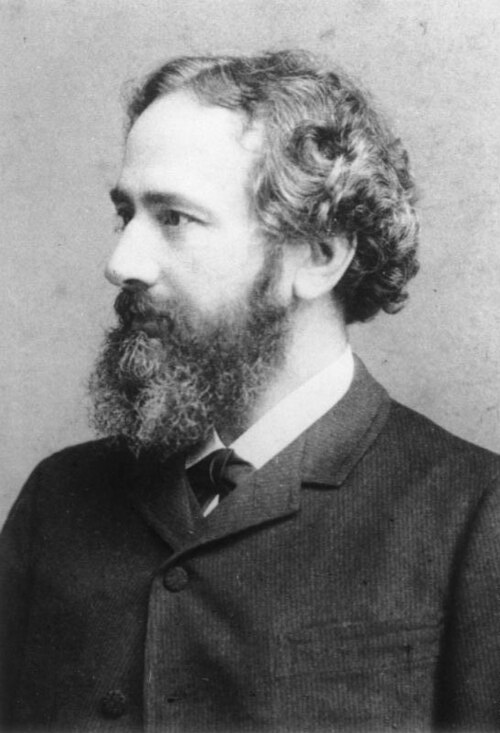 Lujo Brentano (December 18, 1844 – September 9, 1931) was born on December 18, 1844, in Aschaffenburg into a prominent German Catholic intellectual family of Italian
descent. His extensive and elite education spanned several institutions, including Trinity College Dublin, the University of Münster, Ludwig Maximilian University of Munich,
Heidelberg University where he earned a doctorate in law, the University of Würzburg, the University of Göttingen where he earned a doctorate in economics, and Friedrich
Wilhelm University of Berlin, where he completed his habilitation in economics in 1871.
Lujo Brentano (December 18, 1844 – September 9, 1931) was born on December 18, 1844, in Aschaffenburg into a prominent German Catholic intellectual family of Italian
descent. His extensive and elite education spanned several institutions, including Trinity College Dublin, the University of Münster, Ludwig Maximilian University of Munich,
Heidelberg University where he earned a doctorate in law, the University of Würzburg, the University of Göttingen where he earned a doctorate in economics, and Friedrich
Wilhelm University of Berlin, where he completed his habilitation in economics in 1871.
Over the course of his academic career, Brentano established himself as a leading economist, serving as a professor of economics and state sciences at the universities of
Breslau, Strasbourg, Vienna, Leipzig, and most notably at Ludwig Maximilian University of Munich from 1891 until 1914. His early academic work included a thorough
investigation of English trade unions, conducted alongside statistician Ernst Engel. As a prominent Kathedersozialist, or "chair socialist," Brentano advocated for social
reform from the academic lectern and was a founding member of the Verein für Socialpolitik. His economic and social philosophies deeply influenced the later social market
economy, generations of post-World War II German leaders, and students such as the economist Arthur Salz.
Brentano's career was also marked by notable public controversies and political engagements. In 1872, he became embroiled in a famous, extended dispute with Karl Marx and
Friedrich Engels after accusing Marx of falsifying a quotation from a speech delivered by William Ewart Gladstone in 1863. Decades later, at the outbreak of the First World
War in 1914, he signed the controversial Manifesto of the Ninety-Three. Following the German revolution of November 1918, Brentano briefly entered active politics, serving
as the People's Commissar for Trade and Industry in minister-president Kurt Eisner’s revolutionary government of the People's State of Bavaria. His tenure in government was
short-lived, beginning on December 7, 1918, and concluding with his resignation just nine calendar days later on December 16.
Beyond his professional and political life, Brentano maintained an expansive network within European intellectual circles. This network included cross-cultural
connections with figures such as the British essayist and author Vernon Lee, an association preserved in intellectual and queer
history archives through presentation copies of Brentano's works gifted to Lee and bearing personal inscriptions. Brentano spent his final years in Munich, where he passed
away on September 9, 1931, at the age of 86.
Lujo Brentano is buried in the Altstadtfriedhof (Old Town Cemetery) in Aschaffenburg, Bavaria, Germany. Although he died in Munich, he was interred in
Aschaffenburg in accordance with his explicit personal wishes, where he rests in the Brentano family vault (Brentano-Familiengruft) alongside other members of the Brentano
family.
References:
- Brentano, Lujo. Die Arbeitergilden der Gegenwart (Workers' Guilds of the Present). 2 vols. Leipzig: Duncker & Humblot, 1871–1872.
- Brentano, Lujo. Mein Leben im Kampf um die soziale Entwicklung Deutschlands. Jena: Diederichs, 1931.
- Brentano, Lujo. Meine Polemik mit Karl Marx. Zugleich ein Beitrag zur Frage des Fortschritts der Arbeiterklasse und seiner Ursachen. Frankfurt a. M.: Literarische Anstalt, 1890.
- Gagel, Amanda, ed. Selected Letters of Vernon Lee, 1856–1935. Vol. 1, 1865–1884. London: Pickering & Masters (Routledge), 2017. (Documents cross-cultural intellectual correspondence and associations, including preserved presentation copies and inscriptions linking Brentano to Vernon Lee / Violet Paget's epistolary circle).
- Manuscript Collections and Archives: Vernon Lee Papers (1866–1935), Colby College Library, Special Collections. (Contains correspondence records and materials documenting European intellectual figures connected to Lee, cataloging Lujo Brentano among documented correspondents and network associates).
Support this project
This website is a passion project researched, developed, and funded entirely by me. If you find the content valuable and would like to help support the ongoing research and hosting costs, any contribution is deeply appreciated.
Thank you for keeping this independent resource alive!
My books on Amazon: Elisa Rolle's books
BACK TO HOME PAGE