BURIED TOGETHER
Partner Madeleine Zillhardt
Queer Places:
Académie Julian, Passage des Panoramas, 75002 Paris
Place Louise-Catherine-Breslau-et-Madeleine-Zillhardt, Rue de Buci & Rue de l'Ancienne Comédie, 75006 Paris, France
Friedhof Baden, Bezirk Baden, Aargau, 5400 Baden, Switzerland
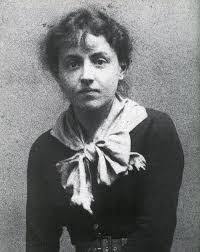 Louise Catherine Breslau (December 6, 1856 – May 12, 1927) was born as Maria Luise Katharina Breslau on December 6, 1856, in Munich, Kingdom of Bavaria, into a German-Jewish
family of Polish descent. Her father, Bernhard Breslau, was a professor of obstetrics and gynecology. When she was two years old, the family moved to Zurich, Switzerland,
following her father's university appointment. Breslau suffered from chronic asthma during her childhood, and drawing was initially introduced as a pastime while she was
bedridden.
Louise Catherine Breslau (December 6, 1856 – May 12, 1927) was born as Maria Luise Katharina Breslau on December 6, 1856, in Munich, Kingdom of Bavaria, into a German-Jewish
family of Polish descent. Her father, Bernhard Breslau, was a professor of obstetrics and gynecology. When she was two years old, the family moved to Zurich, Switzerland,
following her father's university appointment. Breslau suffered from chronic asthma during her childhood, and drawing was initially introduced as a pastime while she was
bedridden.
Recognizing that Switzerland offered limited options for serious artistic training, she traveled to Paris at the age of 18. In Paris, she studied at the Académie Julian,
which was one of the few art institutions open to women at the time. There, she studied under prominent masters like Jean-Paul Laurens and Tony Robert-Fleury.
Breslau quickly distinguished herself within the Parisian art scene:
In 1879, at age 23, she became the first student from the women's atelier at the Académie Julian to debut at the Paris Salon with her portrait Tout passe.
She opened her own atelier around 1886 and became a regular contributor, medalist, and fixture at the Salon, earning the professional respect of major artists like Edgar
Degas and Auguste Rodin.
In 1901, she was awarded the prestigious French Legion of Honour (Légion d'honneur), becoming one of the earliest foreign women artists to receive the distinction.
Breslau was celebrated for her intimate pastels, drawings, and portraits—particularly depictions of women, domestic scenes, and her immediate circle.
During World War I, despite her Swiss naturalization, she showed her loyalty to France by sketching numerous portraits of soldiers, nurses, and doctors heading to the
front lines. Breslau passed away on May 12, 1927, after a long illness, and was buried next to her mother in Baden, Switzerland. A major retrospective was held in her honor
at the École des Beaux-Arts in Paris in 1928.
Louise Catherine Breslau is recognized in art history as a prominent lesbian painter. In 1884, a fellow Académie Julian student named
Madeleine Zillhardt (a French artist, writer, and painter) asked Breslau to paint her portrait. This meeting sparked a
relationship that lasted over 40 years.
Zillhardt moved in with Breslau in 1886, serving as her primary muse, model, companion, and supporter. While the relationship was acknowledged and accepted within
Parisian artistic circles, public discussion of such dynamics was uncommon for the period. They lived openly as a couple among their peers.
Breslau frequently captured their life together in intimate domestic paintings and drawings, such as Contre-jour (1887) and La Vie pensive (1908), which depict Zillhardt
and their shared domestic reality.
Following Breslau's death, Zillhardt dedicated the remainder of her life to preserving and distributing her partner's artistic legacy to museums internationally.
Zillhardt also acquired a former coal barge in Paris, transforming it into a floating shelter (named the Louise-Catherine in honor of Breslau) with the help of architect
Le Corbusier and patrons.
The city of Paris named a street—the Place Louise Catherine Breslau & Madeleine Zillhardt—in the 6th arrondissement (Saint-Germain-des-Prés) to honor both women and their
intertwined legacies.
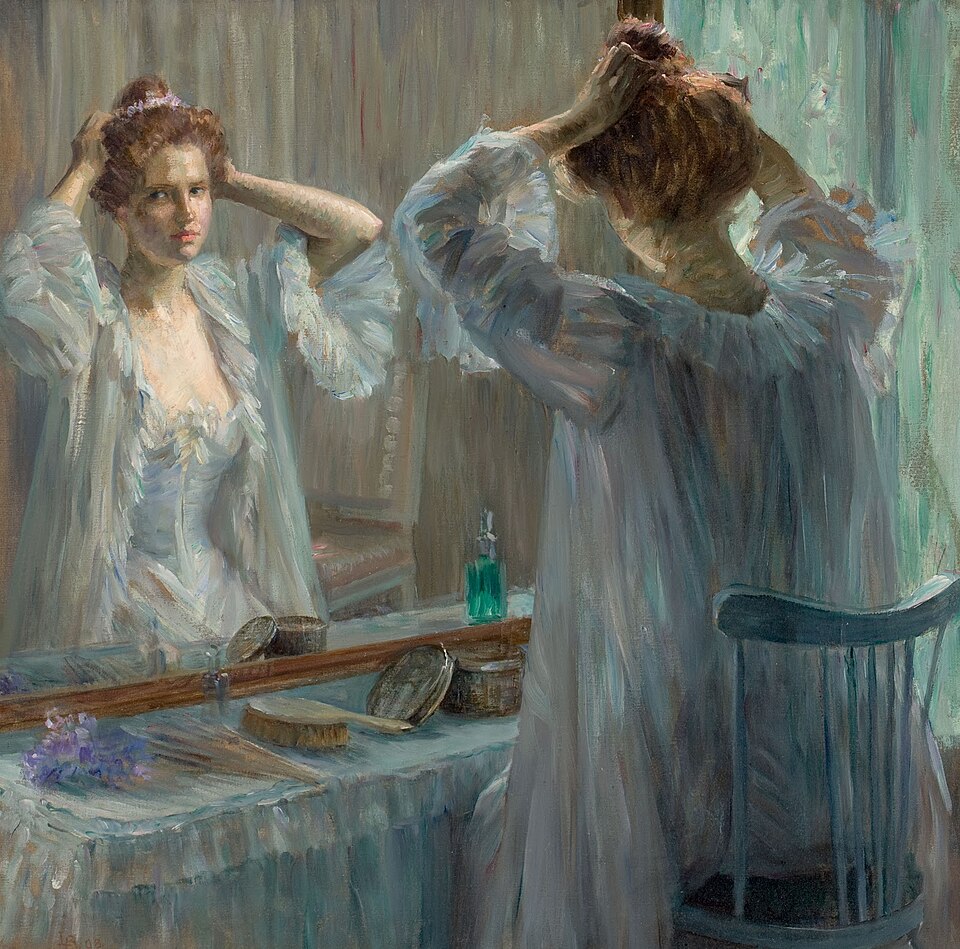
The Toilette (Madeleine Zillhardt)
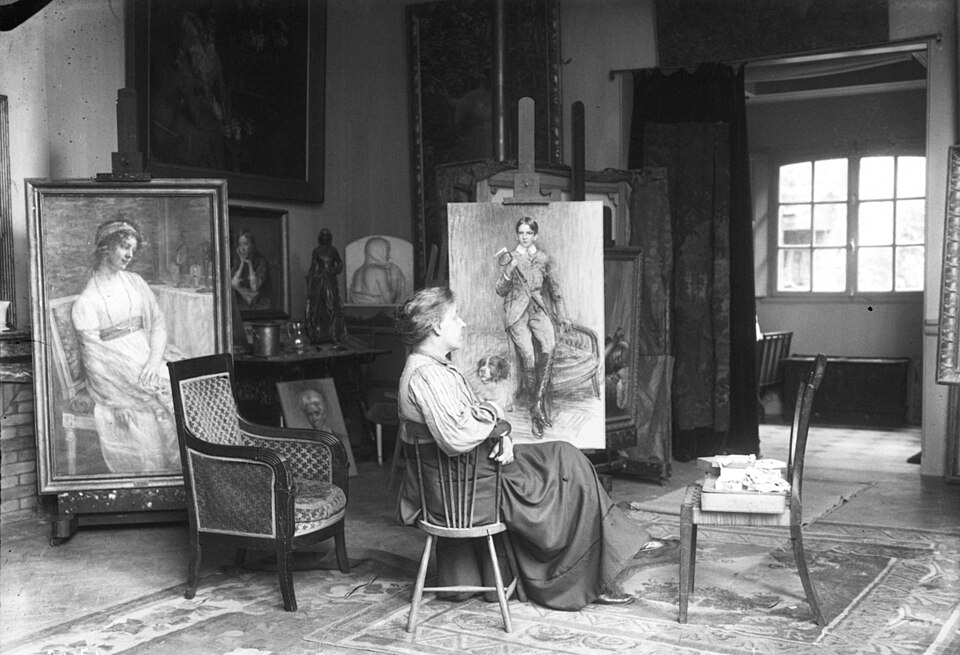
Louise Catherine Breslau in her studio
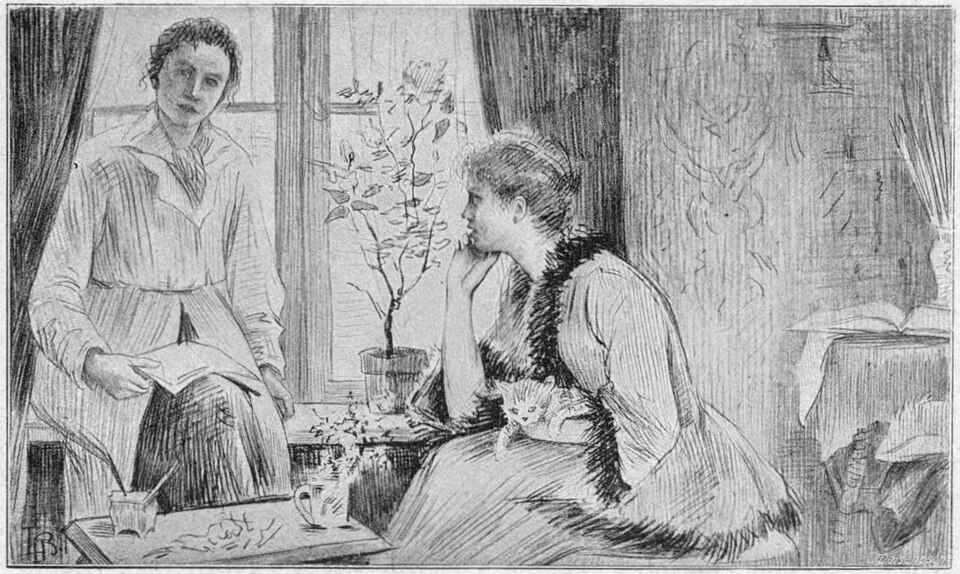
Drawing of 'Contre-jour' with Madeleine Zillhardt by Louise Catherine Breslau
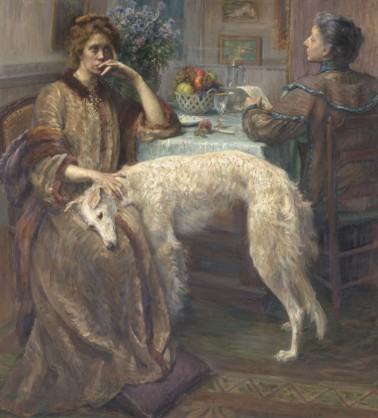
Louise Breslau, La vie pensive (Pensive Life), 1908. The scene takes place in the salon of Louise Breslau’s house in Neuilly-sur-Seine, just outside Paris. As she often did, the artist has shown herself from the back, revealing only her famous aquiline profile. In the foreground sits her attractive red-haired partner Madeleine Zillhardt, stroking a borzoi.
References:
Other references:
- Musée d'Orsay and Louvre Museum (Paris) – Hold examples of her works and document her standing in the French salon system.
- Cantonal Museum of Fine Arts (MCBA) (Lausanne, Switzerland) – Maintains analyses of major works like La vie pensive (1908), detailing her domestic life with Madeleine Zillhardt and her interactions with European art institutions.
- Minneapolis Institute of Art (Mia) and the Dallas Museum of Art – Feature biographical summaries and analyses of her professional rigor within the Parisian art market.
- Academia and Salon Archives: Documentation regarding her studies under Jean-Paul Laurens and Tony Robert-Fleury at the Académie Julian, her 1879 debut at the Paris Salon with Tout passe, and her admission to the Société Nationale des Beaux-Arts.
- The Legion of Honour: Official records detailing her receipt of the French Légion d'honneur in 1901 as an early foreign woman artist recipient.
- Madeleine Zillhardt’s Archives: Historical accounts documenting the 40-year partnership between Breslau and Zillhardt, Zillhardt's work in donating and placing Breslau's art in public collections post-1927, and Zillhardt's efforts with the Louise-Catherine barge project alongside Le Corbusier.
- Municipal Archives of Paris: Records regarding the naming of the Place Louise Catherine Breslau & Madeleine Zillhardt in the 6th arrondissement of Paris.
Support this project
This website is a passion project researched, developed, and funded entirely by me. If you find the content valuable and would like to help support the ongoing research and hosting costs, any contribution is deeply appreciated.
Thank you for keeping this independent resource alive!
My books on Amazon: Elisa Rolle's books
BACK TO HOME PAGE
