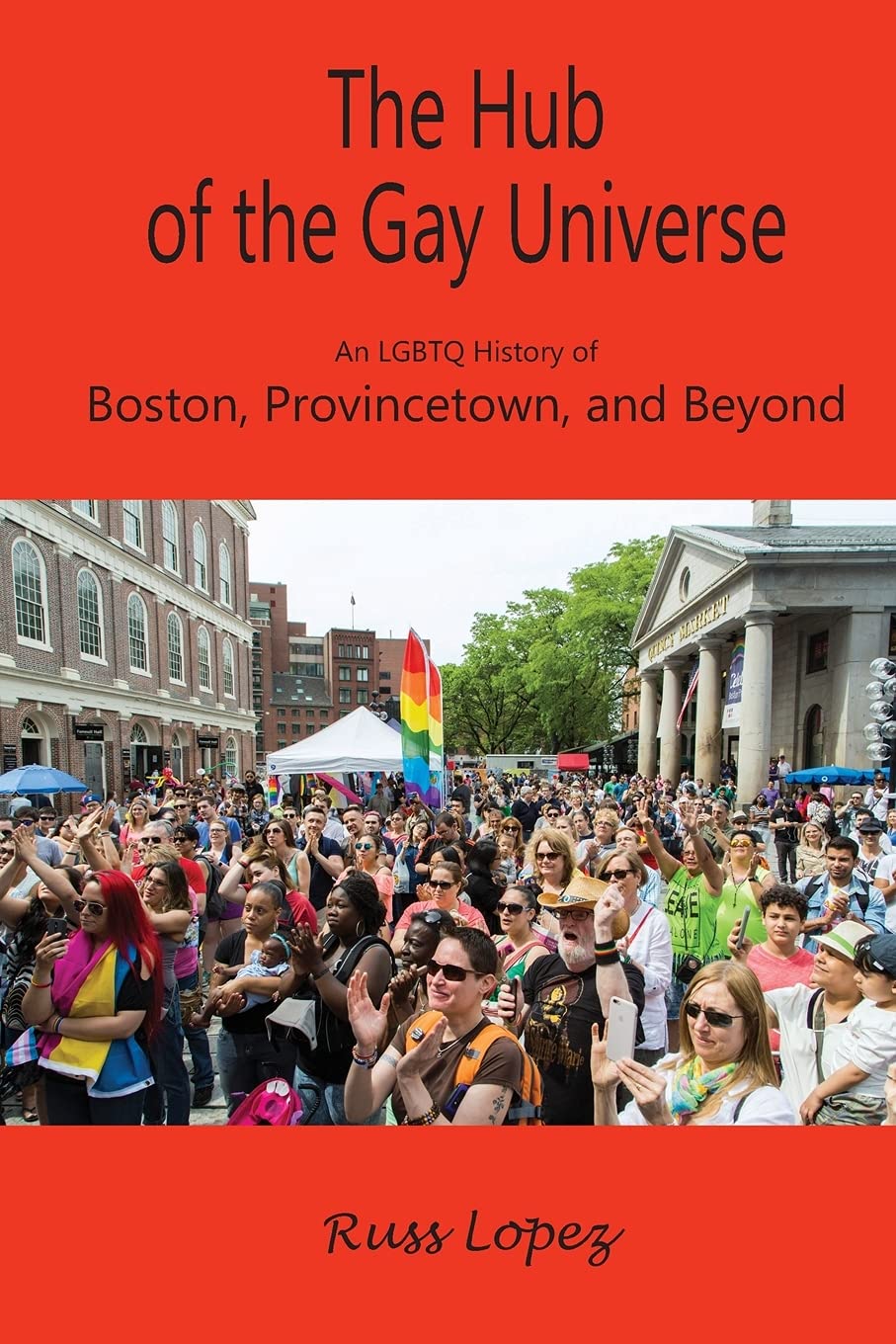
The Hub of the Gay Universe: An LGBTQ History of Boston, Provincetown, and Beyond Paperback – April 1, 2019
by Russ López
Queer Places:
29 Elm St, Machias, ME 04654, USA
Harvard University (Ivy League), 2 Kirkland St, Cambridge, MA 02138
402 Boylston St, Boston, MA 02116, USA
473 Auburn St, Auburndale, MA 02466, USA
105 Revere St, Boston, MA 02114, USA
Lee Porter (August 15, 1872 - 1941) was born on August 15, 1872, in Calais, Maine, as the son of George Thatcher Porter and Harriet Larkin Barnard. He came from a well-established background and pursued his education at Hale's School in Boston before entering Harvard University with the Class of 1897. Following his departure from college, Porter initially worked as a teacher in New York and New Jersey. In September 1899, he transitioned into interior decoration, taking a position with L.F. Perry, Whitney and Company in Boston. For several years thereafter, he maintained a career as an interior decorator associated with James I. Wingate and Son, operating out of a business address at 402 Boylston Street in Boston, while keeping a primary home in Auburndale, Massachusetts, and spending his summers in Maine.
Porter's life took a dramatic turn in 1918 due to his involvement in Boston's early 20th-century gay subculture. At the time, he used an in-town residence at 105 Revere Street, located at the foot of Beacon Hill near Charles Street, which became the center of a notorious police investigation. The home served as a frequent gathering place for gay activity, hosting men who used terms like "fairies" and "queer" to describe themselves, and included notable events such as an autumn drag party where guests wore silk kimonos and performed a candlelight ceremony to curse the police for harassment. Although Porter defended the presence of the kimonos by claiming they were theatrical costumes related to his interest in the antiques business, prosecutors pointed to these social gatherings as evidence of illicit behavior. Evidence presented during court proceedings also highlighted that Porter had lived with a pianist for eleven years, illustrating the existence of long-term same-sex partnerships during the turn of the century, and noted his visits to the Golden Rooster, a popular gay bar of the era.
The scrutiny on Porter's Revere Street residence culminated on the night of October 20, 1918, when Boston police raided the home. Undercover investigators posing as sailors had previously attempted to gain entry multiple times, only to be put off by Porter. Finally, Porter invited them over under the pretense that friends would take them out for a drive. Prior to the arrival of the undercover detectives, a friend of Porter named Charles DeMoulin had been arrested and fined five hundred dollars for attempting to commit sodomy with a sailor he met on Tremont Street near the Keith Theatre. DeMoulin telephoned Porter to announce his arrival with the sailor, and upon reaching the house, the pair went upstairs to look at decorative plaques while DeMoulin attempted to engage in sexual acts.
When the undercover detectives arrived, they sat in the first-floor parlor with Porter, who expressed anger over a newspaper article about men arrested in a lodging house, complaining that lower-income men were unfairly targeted while wealthy individuals in hotels were left alone. Amid the conversation, Porter received DeMoulin's phone call and later interacted affectionately with another civilian visitor who arrived remarking that he felt like he was going to "have kittens," sharing hugs and hand-holding. Porter subsequently gave the undercover investigators a tour of the house, touched one of the men's pants, and tried to initiate sexual contact upstairs, though the investigators continually rebuffed him.
The subsequent legal battle involved two separate trials that exposed the realities of queer life and police entrapment during the period. In the first trial, Porter faced accusations of sodomy and was found not guilty. Undeterred, the authorities prosecuted him a second time, charging him with running a house of ill repute. The prosecution relied heavily on testimony from DeMoulin and the undercover investigators, as well as evidence regarding the gatherings at the Revere Street home. Porter was found guilty and sentenced to one year at Deer Island. He appealed the conviction on the grounds of double jeopardy, arguing that the second charge was unjust given his acquittal of sodomy in the first trial, but the courts ultimately upheld the verdict. By 1922, Porter had relocated to Europe, and no further public records regarding his later life are available.
References:
|
The Hub of the Gay Universe: An LGBTQ History of Boston, Provincetown, and Beyond Paperback – April 1, 2019 by Russ López |
Other references:
Support this project
This website is a passion project researched, developed, and funded entirely by me. If you find the content valuable and would like to help support the ongoing research and hosting costs, any contribution is deeply appreciated.
Thank you for keeping this independent resource alive!
My books on Amazon: Elisa Rolle's books