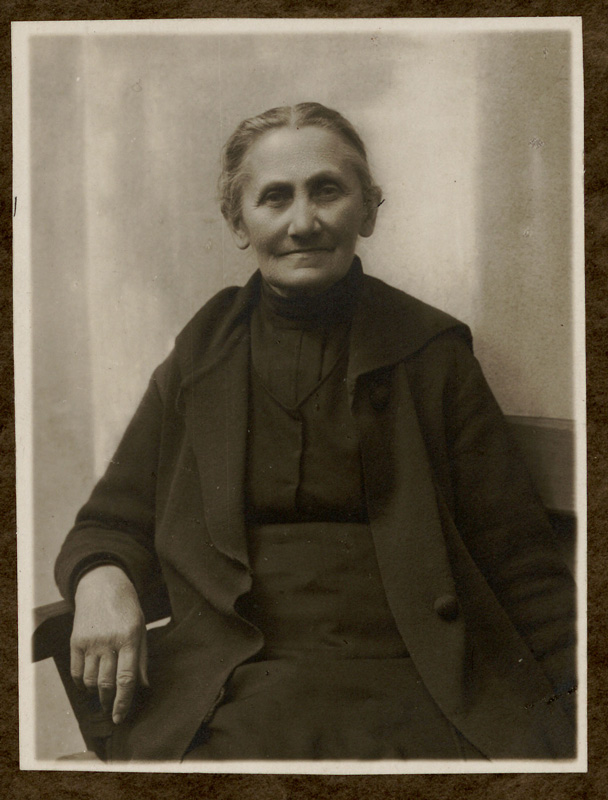
 Klara Schleker (born Auguste Clara Christine Ottilie Schleker; June 3, 1852 – November 4, 1932) was a German women's rights activist, author, and politician.
Partner Käthe Schirmacher
Queer Places:
Heiligen-Geist-Kirche, Margaretenstraße 8, 18057 Rostock, Germany
Klara Schleker (born Auguste Clara Christine Ottilie Schleker; June 3, 1852 – November 4, 1932) was a German women's rights activist, author, and politician.
Schleker was born in Grabow bei Blumenthal (Kreis Ostprignitz) as the third of five children to a family that managed a knight's estate (Rittergut).
As an author, Schleker focused heavily on domestic culture, housing, and household management, publishing notable works such as: Die Kultur der Wohnung (1911) and Die Frau und der Haushalt (1912).
Schleker entered formal politics later in life representing the German National People's Party (DNVP). From 1920 to 1924, she served as a member of the Landtag of the Free State of Mecklenburg-Schwerin, making history as its first Alterspräsidentin (the oldest member presiding over the opening session of parliament). She passed away in Rostock on November 4, 1932.
Schleker met fellow prominent women's rights activist Käthe Schirmacher at a women's congress in 1903. Their bond rapidly deepened, and by 1910, Schirmacher moved into a country house in Marlow, Mecklenburg, that Schleker had built for them to share.
Historical research into their extensive correspondence (which often included multiple letters a day) reveals that Schleker and Schirmacher shared a deeply intimate, physical, and romantic relationship. Historians such as Amy Hackett and other scholars of the German women's movement have cited them as a primary example of an enduring partnership between women within first-wave feminism.
While their surviving letters explicitly detail physical attraction and longing, they did not publicly self-identify as lesbian—a term and political identity that carried immense social stigma and criminalization at the time—and instead maintained the outward appearance of a respectable "Boston marriage" or unmarried women sharing a household, which was common among early feminists.
When Anna Rühling delivered her groundbreaking address to Magnus Hirschfeld’s Scientific-Humanitarian Committee in 1904 highlighting the leadership of homosexual women in the international women's movement, prominent contemporary couples like Klara Schleker and Käthe Schirmacher (alongside Anita Augspurg and Lida Gustava Heymann) were heavily implied as the driving force behind these visible movements.
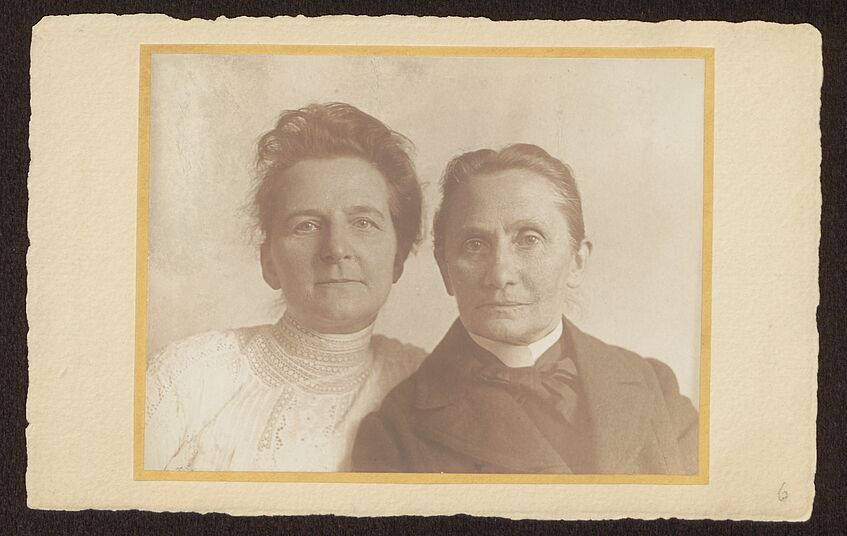
Käthe Schirmacher and Klara Schleker, 1916. (Nl Sch 761/003)
References:
 Sapphistries: A Global History of Love between Women (Intersections, 15) Paperback – January 28, 2011 by Leila J. Rupp |
Other references:
Support this project
This website is a passion project researched, developed, and funded entirely by me. If you find the content valuable and would like to help support the ongoing research and hosting costs, any contribution is deeply appreciated.
Thank you for keeping this independent resource alive!
My books on Amazon: Elisa Rolle's books