Queer Places:
Yaddo, 312 Union Avenue, Saratoga Springs, NY 12866, United States
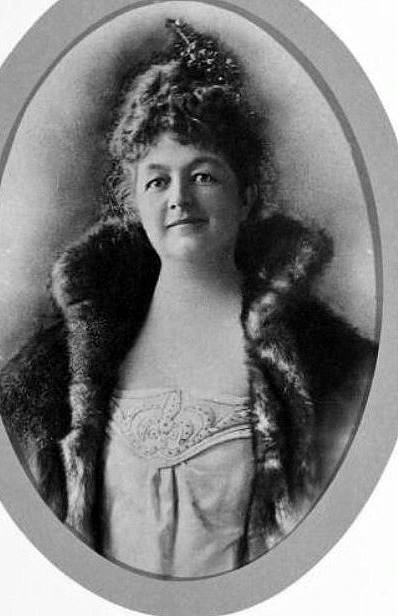 Katrina Trask (born Kate Nichols, May 30, 1853 – January 8, 1922) was an American author, poet, playwright, and philanthropist. She is best remembered as the visionary
founder—both financially and idealistically—of Yaddo, the renowned artists' retreat in Saratoga Springs, New York.
Katrina Trask (born Kate Nichols, May 30, 1853 – January 8, 1922) was an American author, poet, playwright, and philanthropist. She is best remembered as the visionary
founder—both financially and idealistically—of Yaddo, the renowned artists' retreat in Saratoga Springs, New York.
Born to merchant George Little Nichols and Christina Mary Cole, Katrina was privately educated by tutors and in private schools. In November 1874, she married Spencer
Trask, a prominent Wall Street banker and philanthropist.
The couple experienced profound personal tragedy, losing all four of their children in childhood: their first son, followed later by two children who died from diphtheria
in 1888, and a final child who lived for only twelve days in August 1889. Seeking solace after these losses, the Trasks made their permanent home in Saratoga Springs, New
York, on a 300-acre estate they named Yaddo.
Following the death of her last child, Katrina turned to writing as a sanctuary. Publishing initially under anonymity and later as "Katrina Trask," she wrote poetry,
essays, novels, and plays. Some of her notable works include: Under King Constantine (1892): A commercially successful collection of three love poems. Free, Not Bound
(1903): A novel focusing on marriage and the complexities of divorce. In the Vanguard (1913): A highly successful antiwar play that equated killing in the name of patriotism
to cold-blooded murder, widely circulated by the American School Peace League. Religious Plays: Such as The Little Town of Bethlehem (1909) and Without the Walls (1920).
Spencer Trask died tragically in a train crash in 1909. Left without heirs, Katrina dedicated the remainder of her life to realizing their shared dream: transforming
Yaddo into a perpetual sanctuary and creative haven for artists, writers, and musicians. She moved into a small caretaker's cottage on the grounds in 1916 to ensure maximum
endowment funds could support incoming residents. She passed away at Yaddo in January 1922.
While Katrina Trask lived as a Victorian-era philanthropist and writer, her greatest legacy—Yaddo—became deeply intertwined with LGBTQ cultural history in the 20th
century.
Trask envisioned Yaddo as a retreat free from the pressures of industrialization and capitalism, specifically designed to shelter creative minds "hemmed in by
circumstance". This environment of artistic freedom inadvertently provided a vital, supportive space for numerous prominent queer artists who faced severe societal
marginalization during their lifetimes.
Over the decades following its opening to colonists in 1926, Yaddo hosted an extensive roster of influential LGBTQ writers, poets, and composers. These included:
Carson McCullers, who was a frequent visitor and famously stayed in Katrina Trask's old tower room, completing The Member of
the Wedding there. Truman Capote, who worked on his debut novel, Other Voices, Other Rooms, in the very same tower room. And also
James Baldwin, Patricia Highsmith,
Langston Hughes, Aaron Copland and
John Cheever.
In cultural heritage studies (such as National Park Service queer history frameworks), Yaddo is recognized as a vital landscape of American queer heritage because it
functioned as a rare, protected enclave where LGBTQ cultural figures could openly live, network, and produce foundational works of American art and literature away from the
public gaze and systemic prejudices of their eras.
References:
- Lute, K. (2023). Katrina Trask: The Gilded Age of Philanthropy. New American Studies Journal, 74. https://doi.org/10.18422/74-1396
- Lute, Khristeena. "Katrina Trask: The Gilded Age of Philanthropy." New American Studies Journal, vol. 74, 2023. https://doi.org/10.18422/74-1396.
Support this project
This website is a passion project researched, developed, and funded entirely by me. If you find the content valuable and would like to help support the ongoing research and hosting costs, any contribution is deeply appreciated.
Thank you for keeping this independent resource alive!
My books on Amazon: Elisa Rolle's books
BACK TO HOME PAGE