Queer Places:
Waikumete Cemetery & Crematorium, 4128A Great North Road, Glen Eden, Auckland 0602, New Zealand
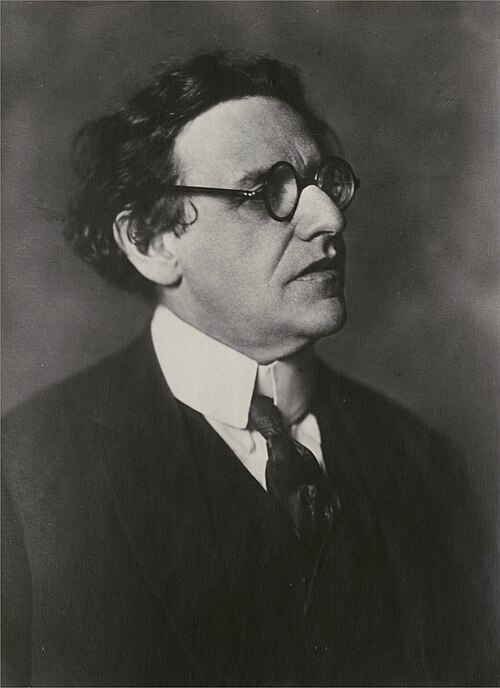 Karl Wolfskehl (September 17, 1869 – June 30, 1948) was born on September 17, 1869, in Darmstadt, Germany, into a distinguished family with roots in
Mainz stretching back a thousand years to a rabbi who had emigrated from Italy with Emperor Otto II. The son of banker and politician Otto Wolfskehl, he
pursued higher education in Germanic languages, philology, and the humanities across Giessen, Leipzig, and Berlin, ultimately earning a PhD under Otto
Behaghel with a dissertation on German mythology. In 1898, he married Hanna de Haan, daughter of Dutch court conductor Willem de Haan, and the couple had
two daughters, Judith and Renate.
Karl Wolfskehl (September 17, 1869 – June 30, 1948) was born on September 17, 1869, in Darmstadt, Germany, into a distinguished family with roots in
Mainz stretching back a thousand years to a rabbi who had emigrated from Italy with Emperor Otto II. The son of banker and politician Otto Wolfskehl, he
pursued higher education in Germanic languages, philology, and the humanities across Giessen, Leipzig, and Berlin, ultimately earning a PhD under Otto
Behaghel with a dissertation on German mythology. In 1898, he married Hanna de Haan, daughter of Dutch court conductor Willem de Haan, and the couple had
two daughters, Judith and Renate.
Financially supported by his family's wealth during his early years, Wolfskehl carved out an independent life dedicated to literature, art, and
scholarship. He proudly balanced his deep Jewish faith and heritage with a profound devotion to German culture and literature. He forged a lasting bond
with the poet Stefan George, emerging as a central figure in George's inner circle. Around 1900, he also
collaborated with philosopher Ludwig Klages and archaeologist Alfred Schuler to form the short-lived Munich Cosmic Circle. Hosting regular salons at his
home, Wolfskehl became a pivotal pillar of the literary bohemia in Munich's Schwabing district alongside luminaries such as
Rainer Maria Rilke, Thomas Mann, Wassily Kandinsky, and
Martin Buber.
His life shifted dramatically with the onset of the First World War and subsequent hyperinflation, which wiped out his family fortune. Having
previously purchased an estate in Kiechlinsbergen in 1915, he and his family relocated there in 1919, forcing Wolfskehl to earn a living as a tutor in
Italy and as a cultural journalist, editor, and translator in Munich. In early 1911, his cultural network famously intersected with English poetry when a
young Rupert Brooke visited Munich to improve his German and was introduced to Wolfskehl—whom Brooke described
as looking like a Bavarian Lytton Strachey—at one of the gatherings held to impart George's literary
philosophy.
The rise of the Nazi regime in 1933 shattered his life in Europe. Appalled by Adolf Hitler's ascent and the Reichstag fire, Wolfskehl fled Germany for
Switzerland, later attending Stefan George's funeral in Minusio alongside fellow Jewish circle member
Ernst Morwitz. He relocated to Italy in 1934, where he became a vital figure in German Exilliteratur, the
anti-Nazi literary exile movement. Defying Nazi efforts to erase his identity, he defiantly maintained that wherever he went, the true German spirit
(Geist) resided, a sentiment reflected in his 1934 poetry collection Die Stimme Spricht.
As Italy drew closer to Nazi Germany, Wolfskehl and his partner, Margot Ruben, fled Europe altogether in 1938, immigrating to New Zealand. There, he
formed a deep friendship with fellow refugee and conductor Georg Tintner, received New Zealand citizenship after the Second World War, and continued
writing. Karl Wolfskehl died on June 30, 1948, in Auckland, New Zealand, and was laid to rest at Waikumete Cemetery in Glen Eden.
References:
Other references:
- Franke, Norman. 'Jüdisch, römisch, deutsch zugleich…'? Eine Untersuchung der literarischen Selbstkonstruktion Karl Wolfskehls unter besonderer Berücksichtigung seiner Exillyrik. Universitätsverlag Winter, Heidelberg, 2006.
- Kotowski, Elke-Vera, and Gert Mattenklott. "O dürft ich Stimme sein, das Volk zu rütteln!" Leben und Werk von Karl Wolfskehl. Olms, Hildesheim, 2007.
- Schlösser, Manfred. Karl Wolfskehl 1869–1948. Leben und Werk in Dokumenten. Agora Verlag, Darmstadt, 1969.
- Schlösser, Manfred. Karl Wolfskehl – Bibliographie. Erato-Presso (Agora Verlag), Darmstadt, 1971.
- Voit, Friedrich. Karl Wolfskehl. A Poet in Exile. Cold Hub Press, Lyttelton / Christchurch, 2019.
- Berglar, Peter. Karl Wolfskehl. Symbolgestalt der deutsch-jüdischen Tragödie. 1964.
- Blasberg, Cornelia (Ed.). Briefwechsel aus Neuseeland 1938–1948 (2 Volumes). 1988.
- Blasberg, Cornelia (Ed.). Briefwechsel aus Italien 1933–1938. 1993.
- Wägenbaur, B., and U. Oelmann (Eds.). Von Menschen und Mächten. Stefan George, Karl und Hanna Wolfskehl. Der Briefwechsel 1892–1933. 2015.
- Wattie, Nelson (Ed. and Transl.). Poetry and Exile. Letters from New Zealand 1938–1948. 2017.
- Blasberg, Cornelia, and Paul Hoffmann (Eds.). Gedichte, Essays, Briefe. 1999.
- Gesammelte Werke (Collected Works, 2 Volumes). Edited by Margot Ruben and Claus Victor Bock, Amsterdam, 1960.
- Die Stimme spricht (Poetry collection). 1934.
- An die Deutschen. 1947.
- Hiob oder Die vier Spiegel (Posthumous). 1950.
- Sang aus dem Exil (Posthumous). 1950.
- Three Worlds / Drei Welten: Selected Poems (German and English). Translated and edited by Andrew Paul Wood and Friedrich Voit, Cold Hub Press, 2016.
Support this project
This website is a passion project researched, developed, and funded entirely by me. If you find the content valuable and would like to help support the ongoing research and hosting costs, any contribution is deeply appreciated.
Thank you for keeping this independent resource alive!
My books on Amazon: Elisa Rolle's books
BACK TO HOME PAGE
