Husband Clark Gable
Queer Places:
Stanford University, 450 Jane Stanford Way, Stanford, CA 94305, United States
12746 Landale St, Studio City, CA 91604, USA
Calvary Cemetery, 4201 Whittier Blvd, Los Angeles, CA 90023, United States
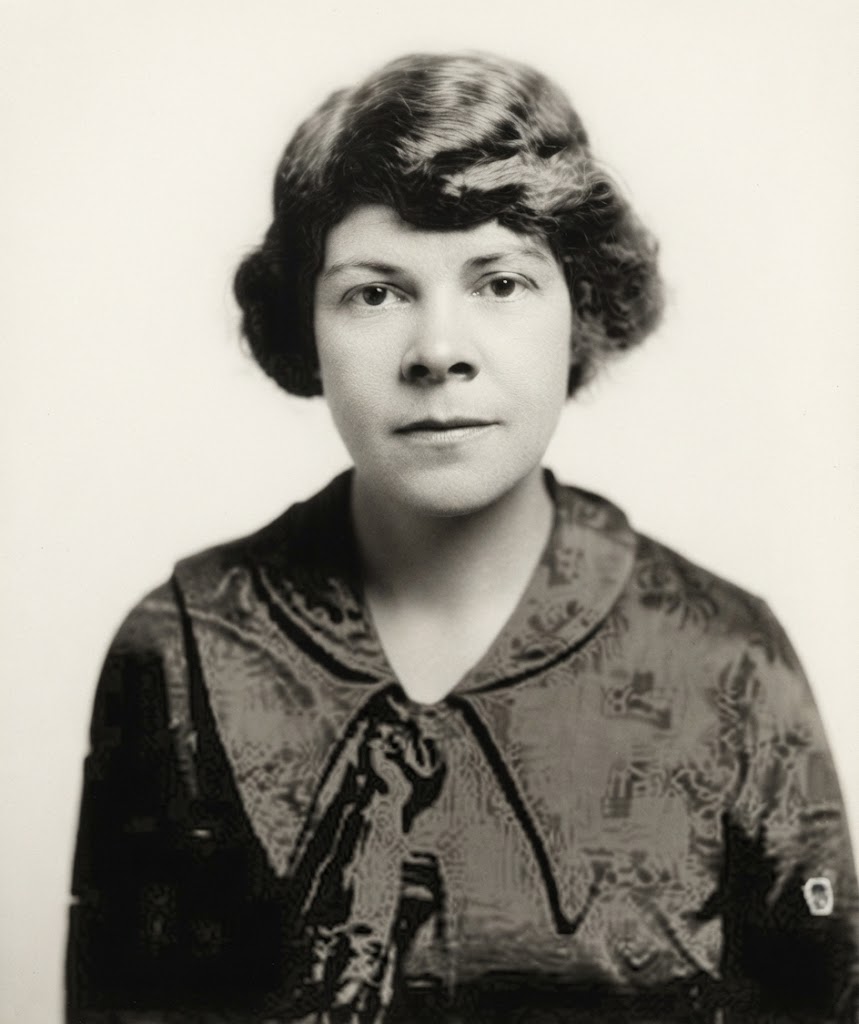 Josephine Dillon (January 26, 1884 – November 11, 1971) was born on January 26, 1884, in Denver, Colorado, as one of six children born to prominent
district attorney Judge Henry Clay Dillon and socialite Florence Hood Dillon. Her sister, Enrica Clay Dillon, became a well-known opera singer. Dillon
spent her early years educated in the California public school system and traveled to Europe for further studies before enrolling at Stanford University,
where she graduated in 1908. Following her graduation, she spent a year studying acting in Italy and returned to the United States to act on Broadway
with Edward Everett Horton's stock company in New York City. Transitioning from performance to
teaching, she relocated to Portland, Oregon, where she established "the Little Theatre," an acting school catering to wealthy students.
While working as a stage director for the Red Lantern Players at the Little Theatre, Dillon met an aspiring, unknown actor seventeen years her junior
named William Clark Gable. Taking a special interest in him, Dillon became his patron and acting coach.
Recognizing his potential, she personally financed the fixing of his teeth, styled his hair, helped him build up his undernourished frame, and retrained
his naturally high-pitched voice to achieve a deeper, more resonant tone. She also worked intensively on his posture and facial expressions.
Dillon moved to Los Angeles in the summer of 1924 to open The Dillon Stock Company, and Gable joined her five months later. They married on
December 18, 1924, though on the marriage license, Gable claimed to be 24 while Dillon stated she was 34. Dillon continued to coach him as he attended
auditions and advised him to use his middle name professionally as "Clark" Gable. After years of careful guidance, Gable gained momentum with stage and
minor film roles, eventually appearing in the 1929 Broadway play Machinal. Shortly before signing with M-G-M, Gable asked Dillon for a divorce. Though
she initially resisted, she eventually filed for legal separation in March 1929, and their divorce was finalized on April 1, 1930.
Throughout their marriage, Dillon maintained that the union was "in name only" and unconsummated, leading biographers and historians to view it
largely as a strategic partnership of convenience. Biographers and cultural historians have also linked Dillon to broader conversations surrounding LGBTQ
history and Hollywood subcultures. Some accounts, such as those by film biographers, have described Dillon as a woman of ambiguous sexuality, noting that
her unconventional life, independence, and professional dominance in an era of strict gender norms fit outside traditional Victorian molds. Despite their
separation, Dillon never remarried and dedicated much of her later life to teaching.
In 1940, Dillon began teaching acting at Christian College in Columbia, Missouri, and published her instructional book Modern Acting, which detailed
the exact training regimen she had used to transform Gable. Upon returning to California, she taught notable actors such as
Gary Cooper, Rita Hayworth, Donna Reed, Linda Darnell, and Bruce Cabot. She also made two minor film appearances
in 1944 in The Lady and the Monster and Men on Her Mind.
Dillon lived quietly in the San Fernando Valley during the 1950s and 1960s. In 1956, she faced a difficult public ordeal when Confidential magazine
falsely claimed she was down and out and abandoned by Gable. Dillon successfully testified against the magazine editors in a 1957 libel trial, though the
ensuing publicity cost her many students and nearly her home. Gable quietly intervened to send her money, and upon Gable's death in November 1960, his
estate fulfilled a stipulation in his will to pay off the remainder of her mortgage.
In her final years, Dillon faced declining health and retirement in the mid-1960s, alongside ongoing harassment from obsessive Gable fans despite
never speaking ill of her ex-husband. She passed away on November 11, 1971, following a lengthy illness at the Rockhaven Sanitarium in Glendale,
California, and was interred at Calvary Cemetery in East Los Angeles. At the time of her death, she left behind an unpublished roman à clef manuscript
about her years with Gable, which ultimately provided valuable insight for historians documenting the early life of the Hollywood legend.
References:
- Dillon, Josephine. Modern Acting: A Guide for Stage, Screen and Radio. New York: Prentice-Hall, Inc., 1940.
- Harris, Warren G. Clark Gable: A Biography. New York: Harmony Books, 2002.
- Spicer, Christopher J. Clark Gable: Biography, Filmography, Bibliography. Jefferson, North Carolina: McFarland & Company, 2002.
- Ellenberger, Allan R. Celebrities in Los Angeles Cemeteries: A Directory. McFarland & Company, 2001.
- United States Federal Census and Passport Records: U.S. Passport Application (December 27, 1918) detailing her physical description, career as an actress, and humanitarian work.
- Marriage and Vital Statistics Records: Los Angeles County marriage license and registration documents (December 1924) and Los Angeles Superior Court legal separation and divorce filings (March 1929 – April 1930).
- Court and Legal Archives: Transcripts and records from the August 1957 libel trial testimony involving Confidential magazine.
Support this project
This website is a passion project researched, developed, and funded entirely by me. If you find the content valuable and would like to help support the ongoing research and hosting costs, any contribution is deeply appreciated.
Thank you for keeping this independent resource alive!
My books on Amazon: Elisa Rolle's books
BACK TO HOME PAGE