Queer Places:
Cementerio de la Recoleta, Junín 1760, C1113 Cdad. Autónoma de Buenos Aires, Argentina
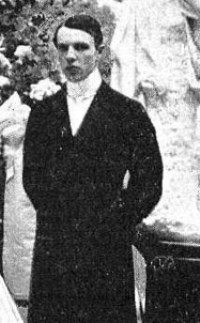 José Evaristo Uriburu Tezanos Pinto (February 13, 1880 - July 29, 1956) was born at the Argentine Legation in Lima, Peru, on February 13, 1880, into one
of Argentina’s most prominent political families. His father, José Evaristo Uriburu, was serving as the head of the Argentine diplomatic mission in Peru
during the War of the Pacific and would later serve as President of Argentina from 1895 to 1898. His mother, Leonor de Tezanos Pinto, was a Peruvian
woman of noble Spanish and Argentine descent. Raised in an environment of high diplomacy and public service, Uriburu pursued his early education at the
Colegio del Salvador in Buenos Aires before continuing his studies in Great Britain, attending institutions such as Imperial College London. He later
earned a law degree from the University of Buenos Aires, establishing a deep fluency in English and British culture that would define his life's work.
José Evaristo Uriburu Tezanos Pinto (February 13, 1880 - July 29, 1956) was born at the Argentine Legation in Lima, Peru, on February 13, 1880, into one
of Argentina’s most prominent political families. His father, José Evaristo Uriburu, was serving as the head of the Argentine diplomatic mission in Peru
during the War of the Pacific and would later serve as President of Argentina from 1895 to 1898. His mother, Leonor de Tezanos Pinto, was a Peruvian
woman of noble Spanish and Argentine descent. Raised in an environment of high diplomacy and public service, Uriburu pursued his early education at the
Colegio del Salvador in Buenos Aires before continuing his studies in Great Britain, attending institutions such as Imperial College London. He later
earned a law degree from the University of Buenos Aires, establishing a deep fluency in English and British culture that would define his life's work.
On September 15, 1903, Uriburu solidified his place at the center of Argentine high society by marrying Agustina Eloísa Roca, the daughter of sitting
President Julio Argentino Roca. This union famously linked two presidential dynasties and was celebrated as the "presidential wedding" of the era.
Their daughter was Clara "Clarita" Agustina de Uriburu Roca, an Argentinian socialite
included in The Book of Beauty by Cecil Beaton.
Uriburu began his career in law, agriculture, and local politics within the Mitre-inspired Republican Party and the Civic Union. His public service
expanded into municipal affairs and finance, culminating in his appointment to the board of directors of the Banco de la Nación Argentina in 1919.
In 1921, President Hipólito Yrigoyen appointed Uriburu as Envoy Extraordinary and Minister Plenipotentiary to the United Kingdom. When diplomatic
relations between the two nations were elevated in 1927, Uriburu became the first official Argentine Ambassador to the Court of St James's, a post he
held until 1931. During his years in London, he became a central figure in Anglo-Argentine commercial, financial, and aristocratic circles. His prominent
position in London society also brought him into the inner orbit of the British royal family and high society. Historical accounts and biographies
examining the private life of Prince George, Duke of Kent, identify Uriburu as one of the prince's
romantic and sexual liaisons during this period, linking the Argentine diplomat to the secretive, aristocratic LGBTQ subculture of 1920s and 1930s
London.
Upon returning to Argentina in 1931, Uriburu continued to hold vital public and financial roles. Following the restructuring of the nation's banking
system, he served as the very first Vice President of the Central Bank of Argentina (Banco Central de la República Argentina) from 1935 until his
resignation in 1945. Parallel to his financial career, Uriburu was a distinguished historian and intellectual. He spent decades organizing his family’s
extensive historical archives, authoring major scholarly works on Argentine independence, including El general Arenales en la época colonial, Historia
del General Arenales, and editing the Memorias de Dámaso de Uriburu. He was a founding member of the National Academy of Moral and Political Sciences, a
full member of the National Academy of History of Argentina, and was awarded an honorary doctorate in law from the University of Cambridge. Uriburu
passed away in Buenos Aires on July 29, 1956, at the age of 76.
José Evaristo Uriburu Tezanos Pinto is buried in the Recoleta Cemetery (Cementerio de la Recoleta) in Buenos Aires, Argentina.
References:
- Archivo General de la Nación (Argentina): Family collection (Fondo Uriburu / Fondo Arenales), containing personal correspondence, diplomatic papers, and historical documents compiled by Uriburu.
- Central Bank of Argentina (Banco Central de la República Argentina): Institutional archives documenting his tenure as the bank's first Vice President (1935–1945), along with records from the Museo Histórico y Numismático "Dr. José Evaristo Uriburu".
- National Academy of History of Argentina (Academia Nacional de la Historia de la República Argentina): Academic proceedings, induction records (May 4, 1946), and funeral tribute addresses delivered by members, including Miguel Ángel Cárcano and Enrique Udaondo.
- The National Archives (UK): Foreign Office records covering his tenure as Envoy Extraordinary and Minister Plenipotentiary (1921–1927) and as Argentina's first Ambassador to the Court of St James's (1927–1931).
- El general Arenales en la época colonial (1915)
- Historia del General Arenales, 1770–1831 (1924)
- Memorias de Dámaso de Uriburu (Editor/Compiler)
- San Martín y los preparativos de la expedición liberadora al Perú (1946)
- La República Argentina a través de las obras de los autores británicos (1948)
- National Academy of History: Boletín de la Academia Nacional de la Historia, containing academic papers, tributes, and formal biographies of academy members.
- Rapoport, Mario: Las relaciones anglo-argentinas: aspectos políticos y económicos, documenting the diplomatic, economic, and institutional history of Anglo-Argentine relations during Uriburu's tenure in London.
- Periodical Archives: Contemporary coverage of his diplomatic appointments and public career in historic periodicals such as Caras y Caretas and La Nación.
- Biographical Literature on Prince George: Historical works and royal biographies (such as Christopher Warwick's George, Duke of Kent and Francis King's Yesterday Came Suddenly) examining the Duke of Kent's private life and social network in 1920s and 1930s London.
- Social Histories of Interwar Britain: Academic and biographical studies exploring LGBTQ and aristocratic subcultures in interwar London.
Support this project
This website is a passion project researched, developed, and funded entirely by me. If you find the content valuable and would like to help support the ongoing research and hosting costs, any contribution is deeply appreciated.
Thank you for keeping this independent resource alive!
My books on Amazon: Elisa Rolle's books
BACK TO HOME PAGE