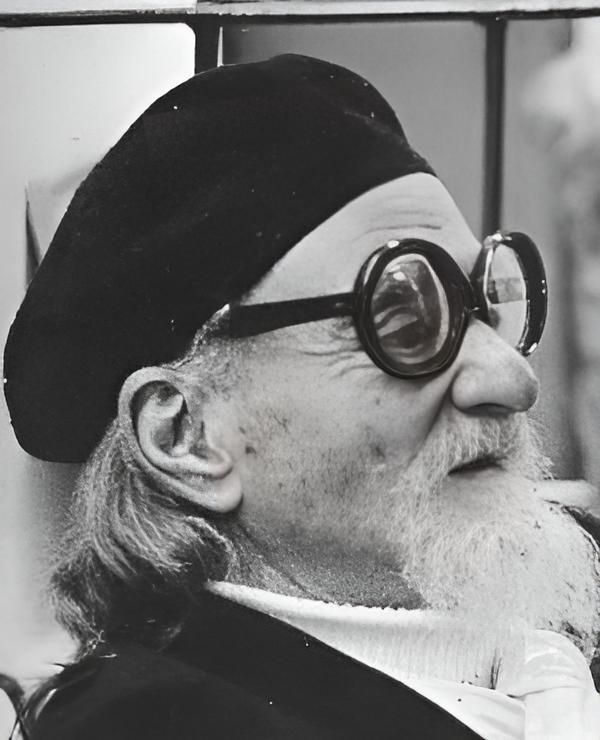
 José de Jesús Benjamín Buenaventura de los Reyes y Ferreira (October 17, 1880 - August 5, 1977), widely known as Chucho Reyes, was a self-taught Mexican
artist, antique collector, and prominent figure in twentieth-century aesthetics.
José de Jesús Benjamín Buenaventura de los Reyes y Ferreira (October 17, 1880 - August 5, 1977), widely known as Chucho Reyes, was a self-taught Mexican
artist, antique collector, and prominent figure in twentieth-century aesthetics.Queer Places:
C. José María Morelos 102, Zona Centro, 44100 Guadalajara, Jal., Mexico
C. Milan 20, Juárez, Cuauhtémoc, 06600 Ciudad de México, CDMX, Mexico
José de Jesús Benjamín Buenaventura de los Reyes y Ferreira (October 17, 1880 - August 5, 1977), widely known as Chucho Reyes, was a self-taught Mexican
artist, antique collector, and prominent figure in twentieth-century aesthetics.
Born on October 17, 1880, in Guadalajara, Jalisco, he grew up in a cultured yet strict household on Morelos Street—a building that now serves as the Museo de los Títeres. After attending primary school at the Liceo de Varones, where he took basic art classes, Reyes worked a series of informal jobs. His early career included lithography at the Loreto y Ancira print shop, silver casting, and window display decorating at the Casa Pellandina art supply store. His time at a chocolate factory sparked a fascination with the grease patterns formed on wrapping paper, while visits to local workshops nurtured a deep reverence for Mexican folk art, fireworks, and traditional handicrafts.
Following his father’s death in 1911, Reyes inherited the family home, converting part of it into an antique shop and art salon. During this period, he began decorating the delicate crepe paper used to wrap customer purchases. These painted wrapping sheets quickly grew popular in their own right, launching his unintended career as an artist. Reyes lived an openly eccentric life, but in 1938, his reality was shattered when he was denounced for his "sexual preferences." Arrested alongside several young men from prominent local families, he was physically beaten by police and publicly humiliated, forced to wear a sign labeling him a "corrupter of youth." This homophobic persecution forced Reyes to abandon his ancestral home and relocate to Mexico City at fifty-eight years old, supported by artistic allies including André Breton and Frida Kahlo.
In Mexico City, Reyes settled into a colonial house in Colonia Juárez with his sisters, transforming it into a vibrant bohemian hub for intellectuals, architects, and artists such as Diego Rivera, Carlos Pellicer, Salvador Novo, Juan Soriano, and Luis Barragán. Free from the constraints of his hometown, he produced the vast majority of his artistic output in his courtyard studio while continuing to collect and sell colonial and folk art. Painting on fragile crepe paper and cardboard without an easel, he mixed gouache, oils, and plant dyes to depict roosters, angels, circus performers, devils, and traditional toys. His work featured bold colors, naive lines, and expressive forms heavily influenced by popular crafts and sacred iconography, earning praise from international figures like Marc Chagall—who dubbed him the "Mexican Chagall"—and Pablo Picasso.
Reyes also exerted a profound influence on modern Mexican architecture as a color and design consultant, collaborating closely with figures like Luis Barragán, Mathias Goeritz, and Ricardo Legorreta. Despite half a century of prolific creation, he did not hold his first major individual exhibition until 1967 at the Palacio de Bellas Artes. In his later years, he traveled abroad for the first time, visiting Europe, the Middle East, and New York, and received honors such as the José Clemente Orozco medal in 1977. Chucho Reyes died in Mexico City on August 5, 1977, at ninety-six years old, leaving behind an enduring legacy as both a pioneer of Mexican folk aesthetic appreciation and a central, resilient figure in Mexico’s queer artistic heritage.
References:
Other references:
Support this project
This website is a passion project researched, developed, and funded entirely by me. If you find the content valuable and would like to help support the ongoing research and hosting costs, any contribution is deeply appreciated.
Thank you for keeping this independent resource alive!
My books on Amazon: Elisa Rolle's books