Queer Places:
University of Oxford, Oxford, Oxfordshire OX1 3PA
St Mary & St Peter's Church, Dunscombe Ln, Salcombe Regis, Sidmouth EX10 0JH, United Kingdom
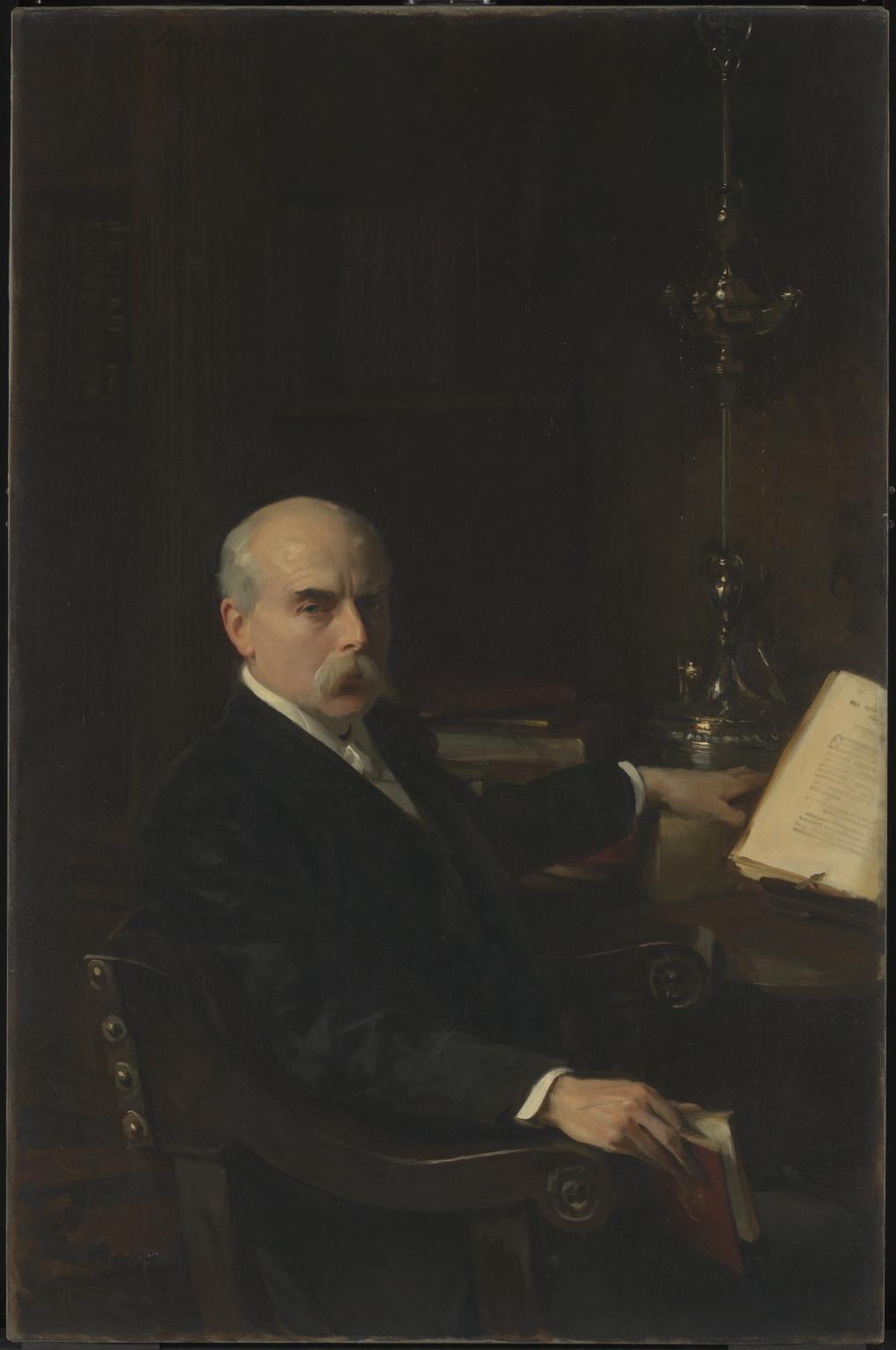 Ingram Bywater (June 27, 1840 - December 18, 1914) was a prominent British classical scholar and expert on Aristotle. Walter Pater
publishes an essay on Johann Joachim Winckelmann, examining his Hellenism and homoeroticism. His relationships include
Ingram Bywater whilst at Queen’s College, Oxford in 1860, the painter Simeon Solomon, and poet
Algernon Charles Swinburne between the end of the 1860s and 1873.
Ingram Bywater (June 27, 1840 - December 18, 1914) was a prominent British classical scholar and expert on Aristotle. Walter Pater
publishes an essay on Johann Joachim Winckelmann, examining his Hellenism and homoeroticism. His relationships include
Ingram Bywater whilst at Queen’s College, Oxford in 1860, the painter Simeon Solomon, and poet
Algernon Charles Swinburne between the end of the 1860s and 1873.
Born in London on June 27, 1840, Bywater was the only child of John Ingram Bywater, a clerk in H.M. Customs. He was educated at University College School and King's
College School before matriculating at Queen's College, Oxford, in 1858.
He was elected a fellow of Exeter College, Oxford, in 1863. He later served as the University Reader in Greek (1884) and the Regius Professor of Greek at Oxford
(1893–1908).
He is best known for his work on Aristotle, including his editions of Ethica Nicomachea (1890) and De Arte Poetica (1898), as well as his edition of the Fragments of
Heraclitus (1877). He was also a founding fellow of the British Academy in 1902.
Bywater married in 1885. His wife was a member of the Cornish family and the widow of Hans William Sotheby, a former fellow of Exeter College. They lived in Oxford during
the term and in London during vacations.
He was a noted bibliophile, and upon his death in 1914, he bequeathed a significant collection of approximately 4,000 early classical volumes to the Bodleian Library at
Oxford.
Walter Pater and Ingram Bywater were contemporaries and friends during their time at Queen’s College, Oxford. While biographical accounts frequently note their close
association, the specific nature of their relationship has been a subject of significant interest and scholarly debate regarding Pater’s personal life and his exploration of
Hellenism.
Walter Pater and Ingram Bywater were both students at Queen's College, Oxford, in the early 1860s. They moved in the same intellectual circles and shared interests in
classical scholarship, philosophy, and literature.
Some modern biographers and literary critics suggest that the two had an intimate, romantic relationship during their years as undergraduates. This interpretation is
often used to contextualize Pater’s later work—particularly his 1867 essay on Winckelmann—where he famously explores the connection between Hellenism and homoeroticism,
suggesting that an affinity for Greek culture could be deeply tied to personal temperament and "romantic, fervid friendships with young men."
Evidence of the relationship is largely derived from later interpretations of their correspondence and personal records. Some sources, such as the Dictionary of Art
Historians, characterize their connection as a "gay relationship," noting that it may have been a factor in Pater’s social dynamics at the time. Conversely, other historical
accounts emphasize a "very close" but primarily intellectual and cultural friendship that persisted long after their university years.
The scholarly interest in this relationship stems from Pater’s broader influence on the Aesthetic movement and the development of modern queer literary criticism.
Because Victorian authorities and the individuals involved often kept records of such private matters discreet—or had them suppressed by family members—much of the specific
detail regarding Pater’s intimate life remains a subject of historical inference.
The connection between Pater and Bywater serves as a focal point for understanding how the "Greats" (classics) curriculum at Oxford provided a framework through which
nineteenth-century figures like Pater explored themes of beauty, desire, and identity.
References:
- https://www.guyburch.co.uk/?p=4755
- https://dbcs.rutgers.edu/all-scholars/bywater-ingram
- https://en.wikisource.org/wiki/Dictionary_of_National_Biography,_1927_supplement/Bywater,_Ingram
- https://en.wikipedia.org/wiki/Ingram_Bywater
- https://www.thebritishacademy.ac.uk/publishing/memoirs/pba-7/bywater-ingram-1840-1914/
- https://dokumen.pub/the-book-beautiful-walter-pater-and-the-house-of-macmillan-9781472554307-9781472513359.html
- https://arthistorians.info/paterw/
Support this project
This website is a passion project researched, developed, and funded entirely by me. If you find the content valuable and would like to help support the ongoing research and hosting costs, any contribution is deeply appreciated.
Thank you for keeping this independent resource alive!
My books on Amazon: Elisa Rolle's books
BACK TO HOME PAGE