Queer Places:
Satyagraha House, 15 Pine Rd, Orchards, Johannesburg, 2192, South Africa
Tolstoy Farm, Fallow, dirt road, Roodepoort 302-Iq, 1835, South Africa
Degania Alef Military Cemetery, Road 90, Kinneret, Northern District, Israel
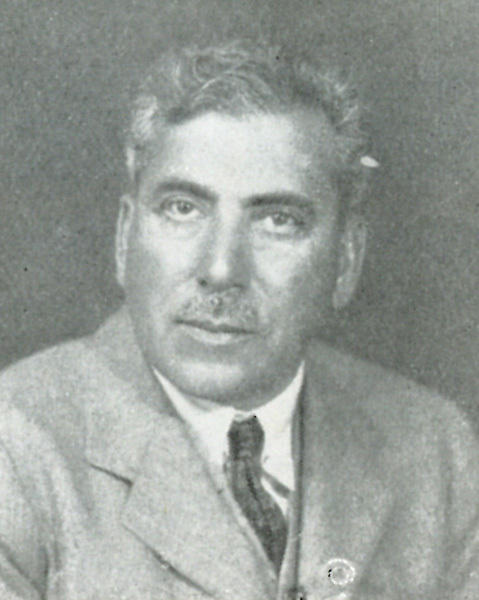 Hermann Kallenbach (March 1, 1871 – March 25, 1945) was born on March 1, 1871, in Žemaičių Naumiestis, Lithuania, which was then a part of the Russian
Empire, as the third eldest of seven children. His father, Kalman Leib Kallenbach, initially worked as a Hebrew teacher and later as a timber merchant.
Growing up, Kallenbach focused on his education, sports, and friendships with the local youth before moving on to study architecture in Stuttgart and
Munich, Germany. In 1896, he relocated to South Africa to join his uncles in Johannesburg, where he successfully established himself as an architect,
acquired considerable property, and became a South African citizen. Alongside his professional success, he was an enthusiastic and skilled ice-skater,
swimmer, cyclist, gymnast, and sport-loving bachelor.
Hermann Kallenbach (March 1, 1871 – March 25, 1945) was born on March 1, 1871, in Žemaičių Naumiestis, Lithuania, which was then a part of the Russian
Empire, as the third eldest of seven children. His father, Kalman Leib Kallenbach, initially worked as a Hebrew teacher and later as a timber merchant.
Growing up, Kallenbach focused on his education, sports, and friendships with the local youth before moving on to study architecture in Stuttgart and
Munich, Germany. In 1896, he relocated to South Africa to join his uncles in Johannesburg, where he successfully established himself as an architect,
acquired considerable property, and became a South African citizen. Alongside his professional success, he was an enthusiastic and skilled ice-skater,
swimmer, cyclist, gymnast, and sport-loving bachelor.
A major transformation occurred in Kallenbach's life in 1904 when he met Mohandas Gandhi, who was then working in South Africa. The two men engaged in
long discussions on religious, social, and philosophical issues, leading Kallenbach to become deeply influenced by Gandhi's ideas of satyagraha and human
equality. They developed a profoundly close relationship, becoming dedicated devotees and soulmates to one another. For a period, they shared a home
designed by Kallenbach known as Satyagraha House. In 1910, Kallenbach donated a 1,100-acre farm near Johannesburg to Gandhi, which was named Tolstoy Farm
after Leo Tolstoy, whose writings and philosophy both men admired. On this communal farm, Kallenbach abandoned his wealthy and athletic lifestyle to
adopt simple living, a vegetarian diet, and Gandhi's equality politics. He actively participated in the South African Satyagraha non-violent resistance
struggle until it concluded in 1914, acting as a manager during the 1907–1913 movement, risking his safety to protect Indian resisters, accompanying
Gandhi on his first penitential fast in 1913, serving time in prison alongside him, and journeying with Gandhi and his wife on their final voyage from
South Africa to London in 1914. During their close association, they famously referred to each other as "Upper House" and "Lower House," with the Lower
House metaphorically preparing the budget and the Upper House vetoing it.
Although Kallenbach had planned to accompany Gandhi to India in 1914, the outbreak of the First World War disrupted his plans; because of his German
citizenship, he was interned as an enemy alien in detention camps and held as a prisoner of war on the Isle of Man from 1915 until 1917. Following the
war, he returned to South Africa to resume his architectural career and maintain his correspondence with Gandhi. The rise of Nazism and severe
antisemitic propaganda in Europe later shocked Kallenbach into a profound rediscovery of his Jewish roots. He became a committed Zionist, served on the
Executive Board of the South African Zionist Federation, and made plans to settle in Palestine with a societal vision that avoided a state, military, or
industry to prevent traditional colonialism. At the request of Moshe Shertok, Kallenbach visited Gandhi in May 1937 to enlist his sympathy for Zionism,
temporarily returning to an ashram-like lifestyle during the visit. While they disagreed on Zionism and Kallenbach's belief that Hitler needed to be
violently resisted, their deep friendship endured, leading to another visit in 1939.
Hermann Kallenbach passed away on March 25, 1945. In his will, he allocated a portion of his substantial estate to benefit South African Indians,
while leaving the bulk to support Zionism. His extensive library was donated to the Hebrew University of Jerusalem, and his cremated remains were buried
at Kibbutz Degania in Israel. Throughout history, Kallenbach's unique relationship with Gandhi has sparked significant analysis and controversy regarding
its nature, with cultural historians and biographers noting their deep emotional bond, and scholars like Tridip Suhrud describing them as a couple, a
perspective explored in works such as Joseph Lelyveld's Great Soul: Mahatma Gandhi and His Struggle With India and Shimon Lev's Soulmates: The Story of
Mahatma Gandhi and Hermann Kallenbach. The historical significance of their partnership led the Indian Government to purchase the Gandhi-Kallenbach
Archives in 2012 to preserve their private correspondence, and a statue commemorating Kallenbach and Gandhi was unveiled in Rusnė, Lithuania, on
October 2, 2015.
References:
- Wikipedia Entry: [Hermann Kallenbach](https://en.wikipedia.org/wiki/Hermann_Kallenbach) – Comprehensive biographical overview detailing his architectural career, association with Gandhi, and Zionism.
- Biographical Blog & Database: [Gay Influence: Hermann Kallenbach](http://gayinfluence.blogspot.com/search/label/Hermann%20Kallenbach) – Explores his life, historical context, and LGBTQ historical links.
- Biographical Literature: Soulmates: The Story of Mahatma Gandhi and Hermann Kallenbach by Shimon Lev (Orient BlackSwan, 2012) – Detailed study of their partnership, ideals, and Gandhi's attitude toward Zionism.
- Biographical Studies: Great Soul: Mahatma Gandhi and His Struggle With India by Joseph Lelyveld (Alfred A. Knopf, 2011) – Contains historical analysis and scholarly commentary on Kallenbach and Gandhi's bond.
- Dedicated Biographies: Works by Isa Sarid (daughter of Kallenbach's niece Hanna Lazar) and Christian Bartolf exploring Kallenbach's personal personality and life trajectory.
- Autobiographical Sources: An Autobiography: The Story of My Experiments with Truth by Mohandas K. Gandhi – Features primary references to Kallenbach as his "soulmate" during the South African years.
- Archival Collections: The Gandhi-Kallenbach Archives – Private correspondence and historical documents purchased by the Indian Government in July 2012 to preserve their socio-philosophical records.
- Genealogical & Vital Records: JewishGen / Global Family History Databases – Documenting his birth on March 1, 1871, in Žemaičių Naumiestis, Lithuania, family tree details (parents Kalman Leib and Rachel Kallenbach, and siblings), and death on March 25, 1945.
- Memorial & Burial Records: Kibbutz Degania Alef Cemetery Records (Israel) – Documenting the final resting place of his cremated remains.
- Monuments & Public Tributes: The Kallenbach-Gandhi Statue in Rusnė, Lithuania – Unveiled on October 2, 2015, by Lithuanian Prime Minister Algirdas Butkevičius and Indian Minister of State Mohanbhai Kundariya.
Support this project
This website is a passion project researched, developed, and funded entirely by me. If you find the content valuable and would like to help support the ongoing research and hosting costs, any contribution is deeply appreciated.
Thank you for keeping this independent resource alive!
My books on Amazon: Elisa Rolle's books
BACK TO HOME PAGE