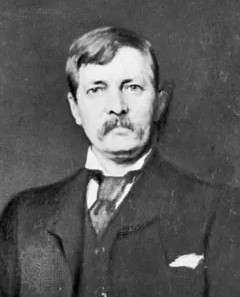
 Henry Morton Stanley (January 28, 1841 - May 10, 1904) was a Welsh-American journalist and explorer, best known for his 1871 expedition to find the missing Scottish
missionary Dr. David Livingstone in Central Africa.
Henry Morton Stanley (January 28, 1841 - May 10, 1904) was a Welsh-American journalist and explorer, best known for his 1871 expedition to find the missing Scottish
missionary Dr. David Livingstone in Central Africa.Queer Places:
St Michael and All Angels Churchyard, Church Ln, Pirbright, Woking GU24 0JJ, United Kingdom
Henry Morton Stanley (January 28, 1841 - May 10, 1904) was a Welsh-American journalist and explorer, best known for his 1871 expedition to find the missing Scottish
missionary Dr. David Livingstone in Central Africa.
Born as John Rowlands in Denbigh, Wales, his early life was characterized by extreme hardship, including time spent in a workhouse after being abandoned as a child. He emigrated to the United States as a teenager, where he adopted the name of a benefactor, Henry Hope Stanley.
He served in the American Civil War on both sides (Confederate and Union) and later became a high-profile foreign correspondent for the New York Herald.
He became internationally famous for successfully locating Livingstone in Ujiji, Tanzania, greeting him with the iconic, "Dr. Livingstone, I presume?"
Stanley’s later expeditions mapped much of the Congo River and the African Great Lakes. His work under the patronage of King Leopold II of Belgium was instrumental in the founding of the Congo Free State, which eventually became infamous for the brutal colonial exploitation and human rights abuses sanctioned by Leopold.
He eventually returned to Britain, was knighted, served in Parliament, and married the painter Dorothy Tennant in 1890.
The question of Stanley’s sexuality has been a subject of scholarly interest and speculation, primarily due to his complex personal relationships and the traumatic circumstances of his youth.
Stanley is included in academic reference works such as the Who's Who in Gay and Lesbian History (edited by Robert Aldrich), which explores his life through the lens of queer history.
Historians have often analyzed his intense, sometimes possessive, emotional attachments to young male companions on his expeditions, most notably a boy he named Kalulu (born Ndugu M'Hali). Kalulu, an enslaved youth Stanley "adopted," was a constant presence during his travels, and the nature of their relationship has been a frequent topic of debate.
Periodical archives sometimes reflect contemporary, often coded, curiosity about his personal life. For example, a newspaper cutting from 1891 titled "Stanley's early life. A remarkable story that may explain the explorer's queer actions" highlights that even during his own lifetime, observers were speculating about the nature of his behavior and psychological makeup.
Many biographers point to the severe abuse Stanley suffered in the St. Asaph workhouse as a formative event that shaped his emotional development, his deep-seated insecurities, and his often volatile interpersonal relationships.
Other references:
Support this project
This website is a passion project researched, developed, and funded entirely by me. If you find the content valuable and would like to help support the ongoing research and hosting costs, any contribution is deeply appreciated.
Thank you for keeping this independent resource alive!
My books on Amazon: Elisa Rolle's books