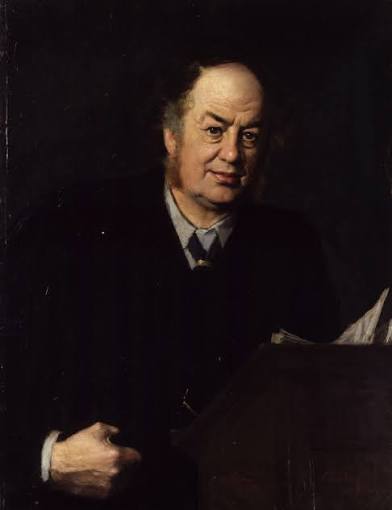
 Henry Jackson (March 12, 1839 – September 25, 1921) was a distinguished English classical scholar, academic administrator, and long-standing Fellow of Trinity College,
Cambridge.
Henry Jackson (March 12, 1839 – September 25, 1921) was a distinguished English classical scholar, academic administrator, and long-standing Fellow of Trinity College,
Cambridge.Queer Places:
Cheltenham College, Bath Rd, Cheltenham GL53 7LD, United Kingdom
University of Cambridge, 4 Mill Ln, Cambridge CB2 1RZ
Ascension Parish Burial Ground, All Souls Ln, Cambridge CB3 0EA, United Kingdom
Henry Jackson (March 12, 1839 – September 25, 1921) was a distinguished English classical scholar, academic administrator, and long-standing Fellow of Trinity College,
Cambridge.
Born in Sheffield on 12 March 1839, he was the son of a prominent surgeon. He attended Sheffield Collegiate School and Cheltenham College before entering Trinity College, Cambridge, in 1858. He graduated in 1862 as the third Classic.
Jackson spent over 50 years living within the walls of Trinity College, holding numerous influential positions:
Fellow of Trinity College: Elected in 1864. Praelector in Ancient Philosophy: Held from 1875 to 1906. Regius Professor of Greek: Succeeded Sir Richard Claverhouse Jebb in 1906, serving until 1921. Vice-Master of Trinity College: Served from 1914 to 1919.
He is widely credited, alongside Henry Sidgwick and others, with establishing the Cambridge supervisory system, initially within the Classics department at Trinity. Beyond his administrative roles, he was a noted reformer who supported the abolition of university tests and the admission of women to university education.
While his published output was not prolific, his influence was significant through his lectures and his mentorship of students such as Francis Cornford. His primary research focus was Greek philosophy, particularly the work of Aristotle and Plato.
Notable publications: An edition of Book 5 of Aristotle’s Nicomachean Ethics (1879) and various articles on Plato’s "later theory of ideas" for the Journal of Philology, which he co-edited from 1879 until his death.
He was a devotee of literature, particularly the works of William Makepeace Thackeray, and was also interested in anthropology and politics (he was a supporter of Irish Home Rule).
Jackson was an active member of the Cambridge Apostles, an intellectual secret society at Cambridge, having been elected to the group in 1863. He remained a prominent figure within the society for decades; in 1898, he was honored as one of the group's oldest members during a gala meeting.
Jackson married Margaret Thornton in 1875, and they had two sons and three daughters. His later life was marked by the long-term illness of his wife. He was awarded the Order of Merit in 1908. Jackson passed away in Bournemouth on 25 September 1921 and is buried at the Parish of the Ascension Burial Ground in Cambridge. A memorial brass in his honor is located on the north wall of the Trinity College Ante-Chapel.
References:
Support this project
This website is a passion project researched, developed, and funded entirely by me. If you find the content valuable and would like to help support the ongoing research and hosting costs, any contribution is deeply appreciated.
Thank you for keeping this independent resource alive!
My books on Amazon: Elisa Rolle's books