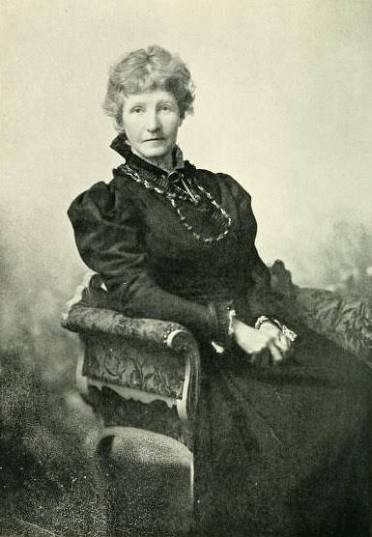
 Helen Allingham (née Paterson; September 26, 1848 – September 28, 1926) was one of the most celebrated British watercolorists and illustrators of the Victorian era.
Queer Places:
Golders Green Crematorium, 62 Hoop Lane, Golders Green, London Borough of Barnet, Greater London NW11 7NL England
Helen Allingham (née Paterson; September 26, 1848 – September 28, 1926) was one of the most celebrated British watercolorists and illustrators of the Victorian era.
Born in Swadlincote, Derbyshire, to medical doctor Alexander Henry Paterson and Mary Chance Herford, she was raised in an environment rich in female artistic talent. Her maternal grandmother, Sarah Smith Herford, was a landscape painter, and her aunt, Laura Herford, was a professional artist who became a key mentor.
Following her father's premature death, the family relocated to Birmingham. Helen studied at the Birmingham School of Design before moving to London in 1866 to attend the Royal Female School of Art. In 1867, she entered the Royal Academy Schools—a path made possible by her aunt's pioneering efforts a few years earlier.
She began her career as a commercial illustrator to support herself. In 1870, she was hired as the sole female founding staff member of The Graphic magazine. One of her most famous illustration commissions was providing twelve full-page engravings for the serialisation of Thomas Hardy's novel Far from the Madding Crowd in The Cornhill Magazine (1874).
On August 22, 1874, she married Irish poet and editor William Allingham. After her marriage, she stepped back from commercial illustration to devote herself to watercolor painting.
The family moved to Witley in Surrey in 1881. Deeply inspired by rural England, Allingham began documenting traditional Surrey and Sussex thatch-roofed cottages. Her detailed, warm, and sympathetic style was widely acclaimed, and her work influenced artists across Europe, including Vincent van Gogh during his early development.
In 1890, Allingham made art history by becoming the first woman admitted as a full member of the Royal Watercolour Society. She continued exhibiting until her death on September 28, 1926.
Helen Allingham's personal and professional trajectories were heavily shaped by her aunt, Anne Laura Herford.
Laura Herford made history in December 1860 when she submitted drawings to the Royal Academy Schools signed with the gender-neutral initials "A. L. Herford". Admitted on pure artistic merit, the Academy's admission letter was inadvertently addressed to "L. Herford, Esq." Upon discovering Herford was a woman, the Academy honored the admission, breaking the gender barrier and enabling women to pursue formal academic art training in Britain. When Helen moved to London in 1866, she lived at 40 Fitzroy Square with Laura, who served as her guardian and mentor during her early years in the capital.
In London, Laura Herford lived as a long-term companion to Miss Mary Millicent Montgomery (who had previously lived as a companion to Lady Byron, Anne Isabella Milbanke). Within 19th-century queer and women's history research, such companionate cohabitations—often termed "Boston marriages" or female romantic friendships—represented vital frameworks of independence for women outside heterosexual marriage.
Herford moved in progressive circles of independent women. She trained alongside pioneering feminists like Barbara Bodichon and Anna Mary Howitt in Eliza Fox’s drawing classes and signed early petitions advocating for women's professional independence. She also shared household and studio arrangements with figures like ceramicist William De Morgan.
Herford's home at Fitzroy Square—where she hosted and mentored Helen Allingham—is documented as a key site in historic networks of queer women, female artists, and activists carving out autonomous spaces in 19th-century London.
References:
Support this project
This website is a passion project researched, developed, and funded entirely by me. If you find the content valuable and would like to help support the ongoing research and hosting costs, any contribution is deeply appreciated.
Thank you for keeping this independent resource alive!
My books on Amazon: Elisa Rolle's books