Queer Places:
University of Wisconsin–Madison, 500 Lincoln Dr, Madison, WI 53706, United States
Northern Illinois University, 231 N Annie Glidden Rd, DeKalb, IL 60115, United States
Forest Hill Cemetery, 1 Speedway Rd, Madison, WI 53705, United States
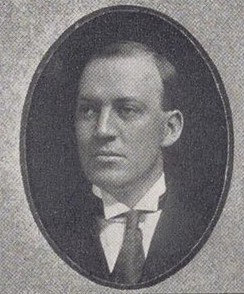 Harry Edward Sauthoff (June 3, 1879 - June 16, 1966) was born on June 3, 1879, in Madison, Wisconsin, to German immigrants August and Hermine Sauthoff.
Raised alongside his siblings Harriet and Berthold, he completed his undergraduate studies at the University of Wisconsin–Madison in 1902. Following his
graduation, Sauthoff embarked on a brief career as an educator and athletic coach, teaching at Lake Geneva High School from 1902 to 1905 before
transitioning to Northern Illinois University. During his single academic year at Northern Illinois in 1905–1906, he headed the school's athletic
programs, coaching both the football team to a 3–1–1 record and the basketball team. He soon returned to his alma mater to pursue legal studies, earning
his degree from the University of Wisconsin Law School in 1909 and entering private practice in Madison.
Harry Edward Sauthoff (June 3, 1879 - June 16, 1966) was born on June 3, 1879, in Madison, Wisconsin, to German immigrants August and Hermine Sauthoff.
Raised alongside his siblings Harriet and Berthold, he completed his undergraduate studies at the University of Wisconsin–Madison in 1902. Following his
graduation, Sauthoff embarked on a brief career as an educator and athletic coach, teaching at Lake Geneva High School from 1902 to 1905 before
transitioning to Northern Illinois University. During his single academic year at Northern Illinois in 1905–1906, he headed the school's athletic
programs, coaching both the football team to a 3–1–1 record and the basketball team. He soon returned to his alma mater to pursue legal studies, earning
his degree from the University of Wisconsin Law School in 1909 and entering private practice in Madison.
Sauthoff entered public service in 1915 when he was elected as the District Attorney for Dane County, a role he held until 1919. During his tenure as
district attorney, Sauthoff inadvertently became connected to early LGBTQ legal history in Wisconsin. In 1916, he served as a character witness in the
Wisconsin Supreme Court appeal of Dr. W. C. Abaly, a Madison physician convicted of sodomy in Richland
County for performing fellatio on a young man named Frank Kilby. Sauthoff, alongside prominent Madison physician
W. W. Gill, testified in favor of Abaly’s moral reputation. The legal proceedings implicitly targeted
the credibility of both character witnesses by pointing out their bachelor status, suggesting that as unmarried men, they might also be covert
homosexuals. The Supreme Court ultimately overturned the conviction temporarily due to technical procedural flaws, but the case remained a notable early
instance of legal rhetoric linking bachelorhood to non-normative sexuality.
Following his time as district attorney, Sauthoff aligned himself with the progressive faction of the Republican Party, serving as executive secretary
to Wisconsin Governor John J. Blaine in 1921. That same year, he represented the state at international conferences on regional waterway improvements.
His political profile continued to rise as he served a term in the Wisconsin State Senate from 1925 to 1929. In his personal life, Sauthoff married Alice
Thoroughgood Kimball, who passed away in 1935, and he later married Lenore E. Deering Gilmour in 1937.
Sauthoff’s national political career took off in 1934 when he was elected to the United States House of Representatives representing Wisconsin's 2nd
congressional district as a candidate for the newly formed Wisconsin Progressive Party. He served two consecutive terms in the 74th and 75th Congresses
from 1935 to 1939. After losing his seat to Republican Charles Hawks Jr. in the 1938 midterms, Sauthoff reclaimed the position in 1940 and served another
two terms in the 77th and 78th Congresses until 1945. In 1944, he launched a campaign as the Progressive Party's final nominee for the United States
Senate, ultimately placing third with less than six percent of the vote. Following his electoral defeat, Sauthoff stepped back from public office and
resumed his law practice in Madison until his retirement in 1955. He died on June 16, 1966, at the age of 87 and was buried at Forest Hill Cemetery in
Madison.
References:
Other references:
- Biographical Directory of the United States Congress: Entry for SAUTHOFF, Harry (1879–1966). Details his birth in Madison, academic background at the University of Wisconsin–Madison, public service career, and congressional tenure representing Wisconsin's 2nd District.
- Wisconsin Blue Book (1925, 1935, 1941 editions): State legislative and administrative records documenting his tenure as Dane County District Attorney, Executive Secretary to Governor John J. Blaine, Wisconsin State Senator (26th District), and U.S. Representative.
- University of Wisconsin Alumni Records & Yearbooks (1902, 1909, 1910): Graduation registers and Badger yearbooks detailing his undergraduate degree (1902), law degree (1909), and early career.
- Northern Illinois State Normal School Athletics Archives: Institutional records documenting his service as head football coach (1905) and basketball coach (1905–1906).
- Wisconsin Supreme Court Records (1916): Case filings and appellate records regarding State v. W. C. Abaly, detailing the character testimony offered by District Attorney Harry Sauthoff and Dr. W. W. Gill, as well as the appellate arguments referencing their bachelor status.
- Wisconsin LGBTQ History Project Archives: Historical documentation analyzing early 20th-century Wisconsin legal precedent, sodomy prosecutions, and societal perceptions of bachelorhood in relation to non-normative sexuality.
- U.S. Federal Census Records (1880, 1900, 1910, 1920, 1930, 1940): Population schedules recording his birth to German immigrants August and Hermine Sauthoff, household makeup in Madison, and marital status over time.
- Wisconsin Marriage & Death Registers: Public records documenting his marriages to Alice Thoroughgood Kimball and Lenore E. Deering Gilmour, as well as his death on June 16, 1966.
- Find a Grave / Forest Hill Cemetery Archives: Memorial listing (Memorial ID: 12586289) for Harry Edward Sauthoff in Madison, Dane County, Wisconsin, including gravestone transcriptions and family plot records.
Support this project
This website is a passion project researched, developed, and funded entirely by me. If you find the content valuable and would like to help support the ongoing research and hosting costs, any contribution is deeply appreciated.
Thank you for keeping this independent resource alive!
My books on Amazon: Elisa Rolle's books
BACK TO HOME PAGE