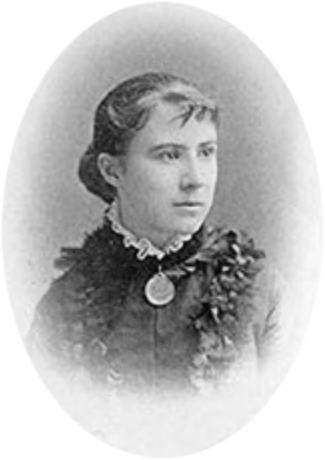
 Harriet Mary Ford (1859 – October 31, 1938) was a multifaceted Canadian artist, painter, muralist, jeweller, critic, writer, and lecturer.
Queer Places:
Académie Colarossi, 10 Rue de la Grande Chaumière, 75006 Paris
Bovingdon Green, Marlow, SL7 2JH, UK
Harriet Mary Ford (1859 – October 31, 1938) was a multifaceted Canadian artist, painter, muralist, jeweller, critic, writer, and lecturer.
Born in Brockville, Canada West, to barrister David B. Ogden Ford, she was orphaned at the age of ten and subsequently educated at the Bishop Strachan School, a private Anglican school for girls in Toronto, from 1870 to 1878.
Ford pursued extensive artistic education and international travel. She studied at the Central Ontario School of Art in Toronto, the St John's Wood Art School, and the Royal Academy in London. In France, she refined her skills at the Académie Colarossi in Paris and studied under Luc-Olivier Merson and Joseph Blanc. She also completed a residency in Italy and traveled widely across countries like Spain and England. Living intermittently between Canada and England, Ford spent considerable time in artistic hubs, preferring St. Ives and sharing a cottage in Newlyn and Bovingdon Green with fellow artists Edith Hayes and Sydney Strickland Tully.
Throughout her career, Ford was recognized as an authority on Renaissance art and established herself as a prominent figure who epitomized the concept of the "Canadian New Woman". She remained unmarried, was financially independent, and maintained a dedicated professional focus. Her progressive ideas and lifestyle occasionally drew public pushback; for instance, after winning a poster competition for the Toronto Horse Show in 1896, she faced criticism from an anonymous writer in Saturday Night magazine who attacked both her artwork and the archetype of the independent woman.
As an active contributor to the arts community, Ford founded the Society of Mural Decorators in 1894 and completed commissions for private homes of wealthy patrons like Charles Porteous and James Mavor, as well as public institutions such as Saint John's Convalescent Hospital in Toronto. She passed away on October 31, 1938, in Bovingdon Green, Marlow, Buckinghamshire, England. Regarding LGBTQ links, historical accounts and public documentation emphasize her life as an independent woman sharing long-term domestic and creative spaces with female artist companions such as Edith Hayes and Sydney Strickland Tully, fitting patterns of historic women's networks, though specific personal or romantic details regarding queer identity are not formally detailed in the available biographical record.
References:
Support this project
This website is a passion project researched, developed, and funded entirely by me. If you find the content valuable and would like to help support the ongoing research and hosting costs, any contribution is deeply appreciated.
Thank you for keeping this independent resource alive!
My books on Amazon: Elisa Rolle's books