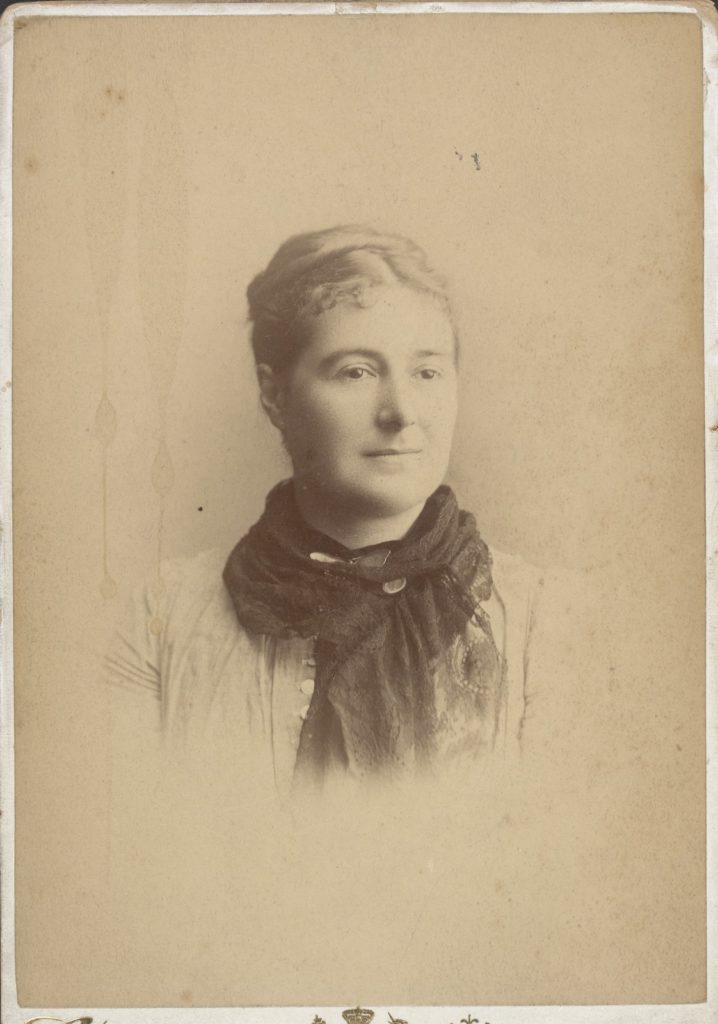
 Harriet Elizabeth Rowell (who swam and operated under the professional pseudonym Harriet Elphinstone-Dick, January 5, 1852 – July 8, 1902) was a pioneering Australian
swimmer, physical culture educator, feminist icon, and entrepreneur.
Harriet Elizabeth Rowell (who swam and operated under the professional pseudonym Harriet Elphinstone-Dick, January 5, 1852 – July 8, 1902) was a pioneering Australian
swimmer, physical culture educator, feminist icon, and entrepreneur.Partner Alice C. Moon
Queer Places:
The Steyne (later Newstead Forest), 85 A'Beckett Rd, Beaconsfield Upper VIC 3808
Cheltenham Pioneer Cemetery, Charman Rd, Cheltenham VIC 3192, Australia
Harriet Elizabeth Rowell (who swam and operated under the professional pseudonym Harriet Elphinstone-Dick, January 5, 1852 – July 8, 1902) was a pioneering Australian
swimmer, physical culture educator, feminist icon, and entrepreneur.
Born on January 5, 1852, in Brighton, England, she was the third of eleven children born to watchmaker and jeweller Phillip George Rowell and his family. Growing up in a sports-minded household, Harriet excelled early in swimming, giving lessons at Charles Brill’s baths and joining the Brighton Swimming Club. In 1875, she achieved renown by completing a grueling six-mile open-water swim from Shoreham to Brighton in rough September seas.
In December 1875, Harriet—traveling under the name Miss Emily Howell—boarded the ship Newcastle alongside her partner, Caroline Mercy (Alice) C. Moon. The daughter of a prosperous Brighton doctor, Alice joined Harriet on the voyage to Australia, arriving in Melbourne on March 26, 1876.
Harriet quickly made a name for herself as a swimming champion and instructor in Melbourne, giving exhibitions and racing at Captain Kenney’s St Kilda sea baths.
In late 1876, she famously raced male competitor Mr. McGonigal over a distance exceeding two miles. After winning the first race, she agreed to a re-race in January 1877 before a large crowd and a playing band, ultimately taking home a silver cup worth ten guineas after a three-and-a-half-hour endurance swim.
Her prowess earned widespread fame and media coverage in publications like The Australasian Sketcher and Table Talk. She taught swimming to the daughters of Lady Roma Bowen (wife of the Governor of Victoria), who presented Harriet with an inscribed gold bracelet in April 1878 recognizing her immense contribution to promoting women's swimming in Victoria.
After a brief return trip to England, Harriet and Alice settled into permanent entrepreneurship in Melbourne, establishing themselves as leaders of the "New Woman" movement—independent, career-minded, and professional figures who rejected traditional constraints.
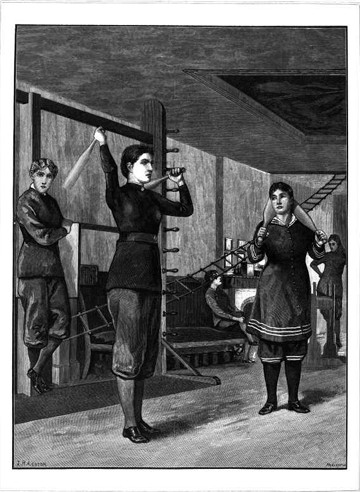
From the AUSTRALASIAN SKETCHER July 16th 1881. Harriet is demonstrating the Indian clubs while Alice stands behind her.
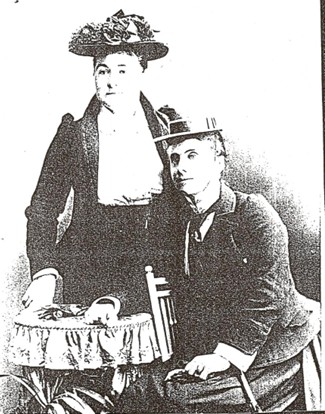
Harriet standing beside a Miss Montgomery. Photograph believed taken 1890’s in Sydney NSW. Miss Montgomery was the beneficiary of Harriet’s will.
On June 30, 1879, Harriet and Alice opened one of Australia's earliest gymnasiums specifically for women. Operating out of several prominent locations before settling into the Victoria Building on Swanston Street, they instructed independent career women and school pupils in calisthenics, Indian club swinging, dumbbells, and the Ling Swedish method of gymnastics.
In 1884, the couple purchased 20 acres in Upper Beaconsfield, naming their country property The Steyne (later known as Newstead Forest). While Alice ran an organic poultry farm on the land, Harriet commuted daily to Melbourne to run the gymnasium. Neighbors affectionately dubbed the independent, land-owning partners "the Amazons."
Beyond physical fitness, Harriet was a vocal advocate for women's health and clothing reform. In public lectures (such as one delivered at the South Melbourne Masonic Hall in September 1887), she heavily criticized restrictive Victorian fashions, metal stays, and tight corsets, urging women to wear comfortable clothing and wool garments next to the skin.
By 1888, the couple sold their country property, returned to suburban Melbourne, and briefly operated a city restaurant called The Central Luncheon and Tearooms.
However, by 1892, their personal and business partnership dissolved. Alice moved to Sydney to pursue a career as a journalist, where she tragically passed away in May 1894 at the age of 37. Harriet also eventually relocated to Sydney, operating ladies' gymnasiums in Liverpool Street and Castlereagh Street through the mid-1890s before returning to Victoria near the turn of the century.
Back in Melbourne, Harriet became a principal of the School of Physical Culture and Medical Gymnastics at 243 Collins Street. She passed away prematurely from heart failure on July 8, 1902, at the age of 50 in South Brighton, and was laid to rest in the old Cheltenham Cemetery.
Harriet Elphinstone-Dick and Alice C. Moon are recognized today as historical figures of profound significance to LGBTQ+ Australian history.
While formal written records from the 19th century detailing same-sex private lives were scarce due to social stigma, contemporary research—most notably by biographer Sue Ingleton in her biographical work and film script project—documents the depth of their multi-decade domestic, professional, and emotional partnership.
Living openly as professional, independent women sharing a rural estate (The Steyne) and business ventures, they navigated the strictures of Victorian society by projecting self-reliance. Though their relationship eventually ended amicably and separately in the 1890s, they stood as true pioneers of female autonomy, partnering in both life and groundbreaking physical culture.
References:
Support this project
This website is a passion project researched, developed, and funded entirely by me. If you find the content valuable and would like to help support the ongoing research and hosting costs, any contribution is deeply appreciated.
Thank you for keeping this independent resource alive!
My books on Amazon: Elisa Rolle's books