Queer Places:
Gilbert Clark, Inc., 11 W 56th St, New York, NY 10019, USA
 Gilbert Clark (December 4, 1883 - June 1942) was born Alfred Gilbert Clark on December 4, 1883, in Norwich, Norfolk, England, to Alfred James Clark and
Minna Jane Womersley. Before establishing his reputation in the motion picture industry, he began his career in high fashion. In the mid-1910s, he
relocated to the United States to work for the prestigious London-based couture house Lucile Ltd. under Lady
Lucy Duff-Gordon. By 1921, he had established his own dressmaking shop in Manhattan, operating as Gilbert
Clark, Inc., where he designed high-end garments for fashionable society and theatrical performers.
His work in New York couture transitioned into film costuming when he was hired by Famous Players-Lasky. By the late 1920s MGM hired Gilbert Clark as
part of an effort to build a premier studio wardrobe department and define the visual glamour of its rising stars. Joining MGM around 1927, he designed
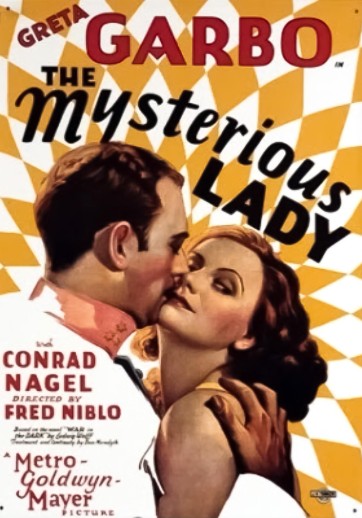
costumes for major silent and early talkie features, including West Point (1927), The Mysterious Lady (1928), and The Bellamy Trial (1929). Clark lasted
longer at the studio than early contemporaries such as Erté,
André-Ani, Max Rée, and René Hubert; however, his high-strung and temperamental personality created frequent
friction with studio stars, most notably Greta Garbo. His position as a primary designer at MGM began to wane
when director Cecil B. DeMille arrived at the studio alongside his preferred designer, Adrian. Adrian quickly took
over as head of MGM wardrobe and became Garbo’s exclusive designer, shifting Clark into secondary assignments before his departure from major studio
costuming in the mid-1930s.
Clark moved within prominent mid-century queer, artistic, and fashion networks in both London and Los Angeles. Throughout his life in the creative
arts, he maintained close ties with prominent gay cultural figures, including the art collector and gallery owner
Arthur Jeffress, sharing social circles that connected the worlds of high fashion, art, and film. After
stepping back from Hollywood film production, Clark returned to England, where he spent his remaining years until his death in June 1942 in Middlesex,
England.
References:
Other references:
- Goddesses in the Machine: Fashion in American Silent Film (Bard Graduate Center Exhibition Catalogue, includes a chapter on Gilbert Clark by Noah Dubay)
- Costume, Makeup, and Hair (Edited by Adrienne L. McLean, Rutgers University Press, detailing his work for Lucile Ltd. and MGM)
- Arthur Jeffress: A Life in Art (By Gill Hedley, Bloomsbury Publishing, detailing Gilbert Clark's social and artistic connections with Arthur Jeffress)
- Contemporary film periodicals and trade magazines, such as Motion Picture Magazine (1926)
Support this project
This website is a passion project researched, developed, and funded entirely by me. If you find the content valuable and would like to help support the ongoing research and hosting costs, any contribution is deeply appreciated.
Thank you for keeping this independent resource alive!
My books on Amazon: Elisa Rolle's books
BACK TO HOME PAGE