Queer Places:
University of Oxford, Oxford, Oxfordshire OX1 3PA
British Cemetery, Baghdad, Al-Rusafa District, Baghdad, Iraq
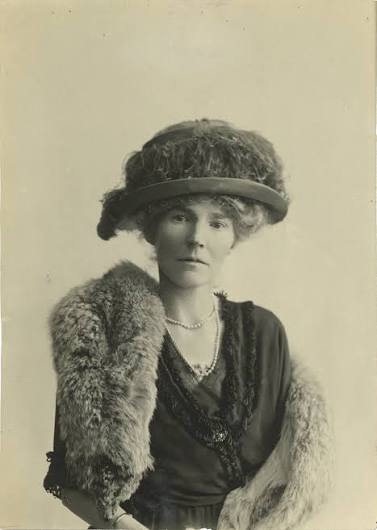 Gertrude Bell (July 14, 1868 - July 12, 1926) was an extraordinary English writer, traveler, political officer, administrator, and archaeologist who is
widely remembered as one of the most powerful women in the British Empire during her lifetime. Raised in a wealthy, progressive family in County Durham,
she attended Queen's College in London before entering Lady Margaret Hall at Oxford University. There, she achieved a first-class honours degree in
modern history in just two years, though she had to wait decades until Oxford retroactively awarded degrees to women.
Gertrude Bell (July 14, 1868 - July 12, 1926) was an extraordinary English writer, traveler, political officer, administrator, and archaeologist who is
widely remembered as one of the most powerful women in the British Empire during her lifetime. Raised in a wealthy, progressive family in County Durham,
she attended Queen's College in London before entering Lady Margaret Hall at Oxford University. There, she achieved a first-class honours degree in
modern history in just two years, though she had to wait decades until Oxford retroactively awarded degrees to women.
Bell spent the majority of her life exploring, mapping, and working within the Middle East. Fluent in multiple languages, she was an accomplished
mountaineer in her youth—even having a peak in the Bernese Alps named the Gertrudspitze after her—before shifting her profound intellect and passion
toward the region's geography and antiquities. She traveled extensively through Qajar Iran, Syria-Palestine, Asia Minor, and Arabia, famously becoming
one of the few Westerners to visit the volatile Ha'il region in 1913. Her numerous publications, including Persian Pictures, Syria: The Desert and the
Sown, and Amurath to Amurath, brought the contemporary Middle East to life for British readers and heavily influenced government thinking.
During World War I, Bell served with the Red Cross before joining the Arab Bureau in Cairo and later the British administration in Mesopotamia.
Operating as the Oriental Secretary to High Commissioner Percy Cox, she was the only female political officer in the British forces. Alongside figures
like T. E. Lawrence, she championed Arab nationalism and the establishment of independent Arab states. Her deep
knowledge of local tribal networks positioned her as a central architect of the post-war Middle East. She played a pivotal role at the 1921 Cairo
Conference, helping to establish the borders of modern Iraq and advocating successfully for the installation of Hashemite monarchies, becoming a close
confidante and adviser to Iraq's new King Faisal.
As a key advisor in Baghdad, Bell played the role of mediator between Faisal's government, British officials, and local notables. She took a special
interest in public relations: arranging receptions, parties, and meetings; discussing the state of affairs with both the British and Arab elite of
Baghdad; and transferring requests and complaints to the government. She also suggested designs for both the flag of Iraq and Faisal's personal flag. The
new Iraqi government had to mediate between the various groups of Iraq—Shias, Sunnis, Kurds, Jews, and Assyrian Christians—to maintain political balance
and British imperial interests. An important project for both the British and the new Iraqi government was creating a new national identity. Establishing
his legitimacy among the Shia population was one of the main challenges facing Faisal, especially given the lack of enthusiasm when he landed at the Shia
port of Basra. Faisal's administration, while reserving certain positions for Shiites as a token, was pan-Arabist and Sunni-dominated, a position that
Bell endorsed. Sunni elites made it clear that they would consider any reduction of their traditional Ottoman-era privileges a betrayal. Bell feared that
Shia leaders would not respect modernism or secularism if put in power, potentially moving toward a theocracy. Furthermore, Bell had difficulty making
close relationships with the most important Shia leaders, noting that her refusal to veil conflicted with their religious tenets. Working with the new
king was also not without strain; she wrote in a 1921 letter that creating kings was "too great a strain."
Later in life, as political shifts sidelined her from direct governance, Bell returned to her first love: archaeology. In October 1922, King Faisal
appointed her Honorary Director of Antiquities. Notable excavations took place during her tenure, including Leonard Woolley's extensive digs at Ur from
1922 to 1934 and personally inviting Assyriologist Edward Chiera in 1924 to excavate ancient Nuzi, yielding the famous Nuzi Tablets. To reform the loose
and unorganized Ottoman-era digging rules, Bell drafted the 1924 Antiquities legislation. Despite being slowed by education director Sati' al-Husri, the
hybrid law passed, reserving extensive power to the Director to judge whether antiquities went to the national museum or could be exported, successfully
curbing the black market trade in looted artifacts and establishing standard cataloguing and numbering procedures with her small staff of Abdulqadir
Pachachi and Salim Lawi.
Alongside her archaeological work, Bell energetically promoted cultural institutions. She advocated for the creation of a new library in Baghdad,
serving as president of the Baghdad Peace Library committee from 1921 to 1924, where she fundraised, solicited free books from British publishers, and
published articles. The library later transitioned into a public library under the Ministry of Education and eventually became the National Library of
Iraq. Additionally, after sustained lobbying, she secured a location for the Baghdad Archaeological Museum (later the Iraq Museum), which opened in June
1926 shortly before her death. Her will bequeathed £50,000 to the Iraq Museum and £6,000 to the British Museum to establish the "British School of
Archaeology in Iraq" in London.
The stress of her prodigious output, recurring bronchitis from heavy smoking, malaria, and Baghdad's summer heat took a heavy toll on her health,
leaving her emaciated by the 1920s alongside financial pressures from her family's declining coal fortunes. Her psychological well-being also suffered
between 1923 and 1926 due to being consulted less frequently by High Commissioner Henry Dobbs and King Faisal, the loss of close friends like Percy Cox,
the rejections of a romantic advance toward Kinahan Cornwallis, and the deaths of her beloved pets and younger half-brother Hugo.
On 12 July 1926, Bell was discovered dead of an overdose of allobarbital sleeping pills in her Baghdad home, just two days short of her 58th birthday.
It remains unknown whether the overdose was an intentional suicide or an accidental misdose. Her funeral was a major event attended by a large crowd,
with King Faisal reportedly watching the procession from his private balcony as her coffin was carried to the Anglican cemetery in the Bab al-Sharji
district.
Bell never married, and her personal life featured profound romantic tragedies, including the death of her beloved Henry Cadogan and Major Charles
Doughty-Wylie in World War I.
While Gertrude Bell never married and lived independently on her own terms—a lifestyle that defied Victorian and Edwardian societal expectations for
women—her life intersected with notable literary figures associated with same-sex desire and aesthetic circles, most notably the pioneering Anglo-Italian
writer and essayist Vernon Lee (the pen name of Violet Paget).
Vernon Lee was a prominent intellectual in late-19th and early-20th-century Europe who lived openly within lesbian networks, maintaining a long-term
domestic partnership with Kit Anstruther-Thomson and later
Irene Cooper Willis. Because Bell moved in elite, highly educated, and cosmopolitan European literary
circles, her path crossed with figures connected to Lee's aesthetic and intellectual milieu.
Both Bell and Lee rejected conventional marital expectations, carving out formidable, independent intellectual identities in male-dominated
professional spheres. Lee's radical approach to aesthetics, psychological travel writing, and gender non-conformity resonated with the broader pioneering
ethos embodied by travelers and scholars like Bell, who navigated the Near East unhindered by traditional domestic roles.
References:
- Gertrude Bell: Queen of the Desert, Shaper of Nations by Georgina Howell – A definitive, acclaimed biography exploring her political influence and personal life.
- Gertrude Bell by Susan Goodman – An analytical look at her roles as an orientalist and colonial administrator.
- A Life of Gertrude Bell by H. V. F. Winstone – A comprehensive historical study detailing her political, administrative, and archaeological contributions.
- The Gertrude Bell Archive (Newcastle University) – An extensive digital and physical repository containing thousands of her letters, diaries, photographs, and notebooks, which was added to the UNESCO Memory of the World Programme.
- The Arabian Diaries, 1913–1914 (edited by Rosemary O'Brien) – Published collections of her field notebooks detailing her hazardous and historic travels through the Arabian Peninsula.
- Persian Pictures (1894) – Her reflections and observations during her early travels in Qajar Iran.
- The Divan of Hafez (1897) – Her widely praised English verse translation of Persian poetry.
- The Desert and the Sown (1907) – An account of her extensive travels across Greater Syria.
- The Thousand and One Churches (1909) – Co-authored with archaeologist Sir William M. Ramsay, detailing excavations in Binbirkilise, Anatolia.
- Amurath to Amurath (1911) – A chronicle of her archaeological explorations and journeys across Mesopotamia and the Middle East.
- Review of the Civil Administration of Mesopotamia (1920) – Her influential official white paper assessing post-war governance and administration in the region.
Support this project
This website is a passion project researched, developed, and funded entirely by me. If you find the content valuable and would like to help support the ongoing research and hosting costs, any contribution is deeply appreciated.
Thank you for keeping this independent resource alive!
My books on Amazon: Elisa Rolle's books
BACK TO HOME PAGE