Queer Places:
2101 California St, San Francisco, CA 94115, USA
Cypress Lawn Memorial Park, 1701 Hillside Blvd, Colma, CA 94014, United States
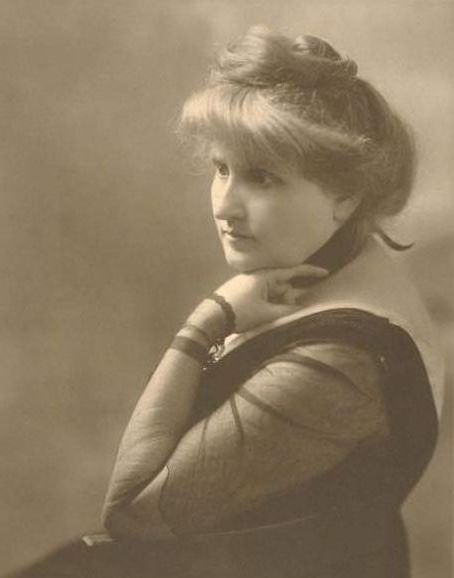 Gertrude Franklin Horn Atherton (October 30, 1857 – June 14, 1948) was born on October 30, 1857, in San Francisco, California, to Thomas Ludovich Horn and Gertrude Franklin.
Her parents separated when she was two years old, and she was raised primarily by her maternal grandfather, Stephen Franklin, a strict Presbyterian relative of Benjamin
Franklin. Her grandfather instilled in her an early, voracious love for reading, though her formal education took place across institutions like St. Mary's Hall in Benicia,
California, and the Sayre School in Lexington, Kentucky. In early 1876, at the age of nineteen, she eloped with George H. Bowen Atherton, a wealthy heir whose family owned a
massive estate in Fair Oaks, California, and who had originally been a suitor to Gertrude’s mother.
Gertrude Franklin Horn Atherton (October 30, 1857 – June 14, 1948) was born on October 30, 1857, in San Francisco, California, to Thomas Ludovich Horn and Gertrude Franklin.
Her parents separated when she was two years old, and she was raised primarily by her maternal grandfather, Stephen Franklin, a strict Presbyterian relative of Benjamin
Franklin. Her grandfather instilled in her an early, voracious love for reading, though her formal education took place across institutions like St. Mary's Hall in Benicia,
California, and the Sayre School in Lexington, Kentucky. In early 1876, at the age of nineteen, she eloped with George H. Bowen Atherton, a wealthy heir whose family owned a
massive estate in Fair Oaks, California, and who had originally been a suitor to Gertrude’s mother.
The marriage proved deeply suffocating for the independent-minded young woman. Resentful of her mother-in-law's rigid household dominance and her husband's strict
opposition to her intellectual ambitions—he actively forbade her from writing or reading freely—Atherton sought solace in her own imagination. Secretly and largely at night,
she began writing her first novel, The Randolphs of Redwood (later published as A Daughter of the Vine), which was serialized anonymously in 1882 and sparked an immediate
local scandal due to its suggestive themes. Her domestic constraints shifted dramatically in 1887 when her husband died suddenly of a kidney hemorrhage while traveling
aboard a Chilean warship. Widowed with two children—though her son George had died young and her daughter Muriel was largely raised by the paternal grandmother—Atherton
seized her freedom, abandoned conventional Victorian expectations, and relocated to New York City before embarking on a nomadic life centered in Europe and California.
Over the next several decades, Atherton established herself as an extraordinarily prolific author, publishing more than fifty novels alongside numerous short stories,
historical biographies, and journalism pieces. Her early solo works, such as Hermia Suydam (1889) and What Dreams May Come (1888), shocked conservative critics with their
frank, unfiltered examinations of female psychology, autonomy, and desire. Relocating frequently between London, Paris, Munich, and New York, she integrated herself into
elite literary circles, befriending notable figures like Ambrose Bierce, Jack London, and
Henry James. Her breakthrough international success came with the 1897 novel Patience Sparhawk and Her Times, which cemented her
reputation as a fierce advocate for female self-determination. She later wrote extensively on early feminism and women's suffrage, penning novels like Julia France and Her
Times (1912) and actively contributing to relief and writing efforts during World War I, service for which she was eventually named a Chevalier of the French Legion of
Honor. In 1923, she achieved her greatest commercial triumph with Black Oxen, a bestselling novel exploring rejuvenation, youth, and modern sexual politics that was quickly
adapted into a successful silent film. She spent her later years returning permanently to her native San Francisco, where she remained active as a historian and memoirist
until her death on June 14, 1948.
Regarding her LGBTQ links, Atherton’s life and work intersect with queer history primarily through her complex navigation of gender non-conformity, her close platonic and
intellectual alliances with prominent gay and bisexual literary men, and her bold literary depictions of unconventional women. While Atherton was heterosexual and married,
her rejection of traditional Victorian gender roles, her insistence on financial and personal independence, and her distinct masculine energy placed her firmly within the
broader network of early modern women who forged paths adjacent to emerging queer subcultures.
Most notably, Atherton maintained a profound, lifelong friendship and correspondence with the iconic English writer Hugh Walpole,
a man widely known within literary history for his hidden homosexuality and romantic relationships with men. Walpole deeply admired Atherton’s fearlessness, and the two
shared a mutual professional respect that bypassed the era's standard social taboos, with Atherton offering staunch loyalty to Walpole throughout his life. Furthermore, her
literary fixation on independent, self-reliant heroines who rejected domestic entrapment and romantic subordination resonated heavily with the early-20th-century “new woman”
archetype—a cultural figure closely tied to the foundational development of modern lesbian and feminist visibility. Through her unwavering defense of uninhibited female
expression and her intimate social circles spanning avant-garde European and American artistic communities, Atherton left a legacy that anticipates and bridges many of the
core themes central to subsequent feminist and queer literary historiography.
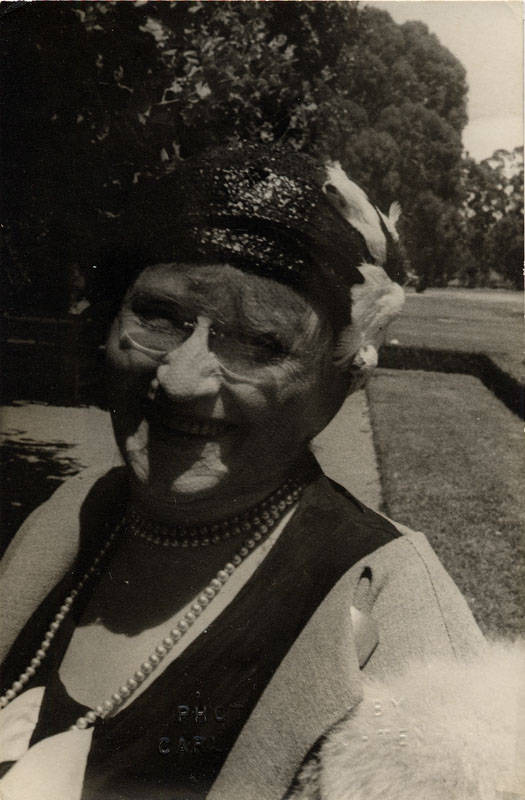
by Carl Van Vechten
References:
- Atherton, Gertrude. Adventures of a Novelist. New York: Liveright, 1932. (Atherton's own vibrant, highly egoistic, and detailed memoir of her long literary career and travels).
- Leider, Emily Wortis. California's Daughter: Gertrude Atherton and Her Times. Stanford: Stanford University Press, 1991. (The definitive, comprehensive full-length biography examining her life, non-conformity, and cultural impact).
- McClure, Charlotte S. Gertrude Atherton. Boise: Boise State University, 1976. (A concise critical monograph examining her literary themes and historical context).
- Champion, Laurie, and Emmanuel S. Nelson. American Women Writers, 1900–1945: A Bio-Bibliographical Critical Sourcebook. Westport: Greenwood Press, 2000. (Includes critical overviews of Atherton's output, "New Woman" themes, and sociopolitical commentary).
- Library of Congress, Manuscript Division. Gertrude Franklin Horn Atherton Papers. (Contains manuscripts, notes, and extensive personal correspondence).
- University of California, Berkeley, The Bancroft Library. Gertrude Franklin Horn Atherton Collection of Papers and Gertrude Atherton, Family, and Celebrated Friends: Oral History Transcript (1981).
- University of Pennsylvania, Rare Book & Manuscript Library. Boni & Liveright Correspondence Files (includes publishing history and letters related to her bestselling 1920s novels like Black Oxen).
Support this project
This website is a passion project researched, developed, and funded entirely by me. If you find the content valuable and would like to help support the ongoing research and hosting costs, any contribution is deeply appreciated.
Thank you for keeping this independent resource alive!
My books on Amazon: Elisa Rolle's books
BACK TO HOME PAGE