Queer Places:
Walnut Grove Cemetery, 817 Old Colony Rd, Meriden, CT 06451, United States
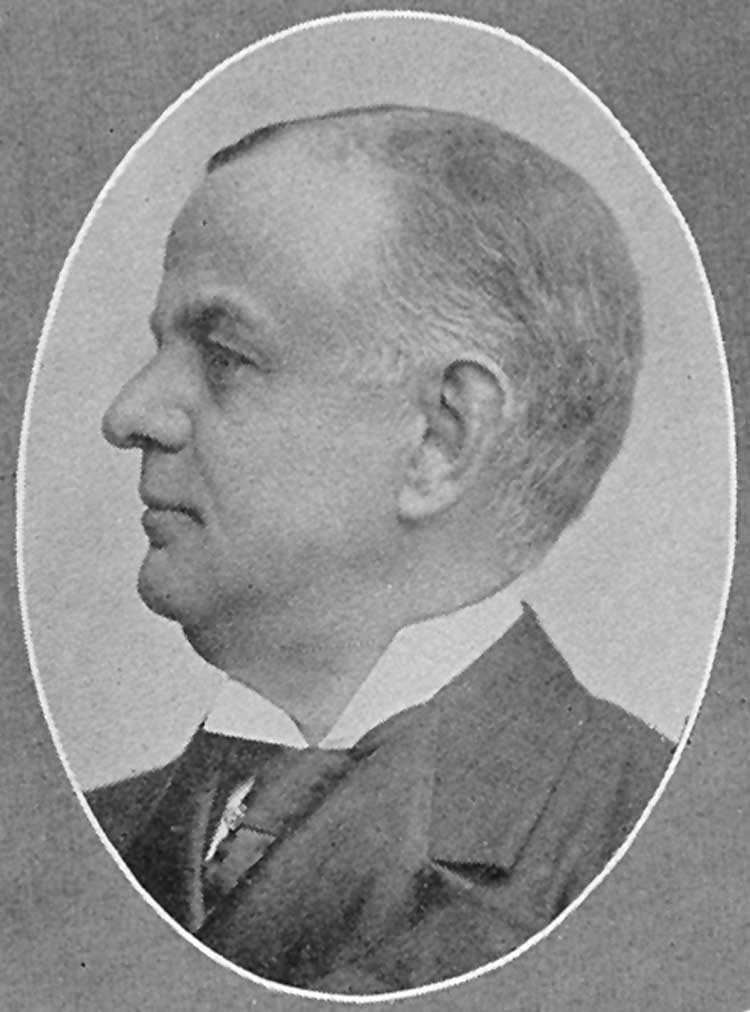 George Munson Curtis (May 27, 1857 - August 28, 1915) was born on May 27, 1857, in Meriden, New Haven County, Connecticut, as the son of George Redfield Curtis and Augusta
Munson Curtis. Deeply rooted in his hometown throughout his life, he established himself as a prominent corporate leader, civic figure, and historical scholar.
Professionally, he served as the treasurer of the International Silver Company, guiding financial operations for a major corporate entity that defined Meriden's industrial
landscape. Beyond his corporate career, Curtis dedicated significant time to local history and civic leadership, serving as an officer of St. Andrew's Episcopal Church, a
member of the John Couch branch of the Sons of the American Revolution, and chairman of the city's 1906 centennial celebration. His commitment to local preservation
culminated in his authorship of the "Early History of Meriden," published as Book I of the "Century of Meriden."
George Munson Curtis (May 27, 1857 - August 28, 1915) was born on May 27, 1857, in Meriden, New Haven County, Connecticut, as the son of George Redfield Curtis and Augusta
Munson Curtis. Deeply rooted in his hometown throughout his life, he established himself as a prominent corporate leader, civic figure, and historical scholar.
Professionally, he served as the treasurer of the International Silver Company, guiding financial operations for a major corporate entity that defined Meriden's industrial
landscape. Beyond his corporate career, Curtis dedicated significant time to local history and civic leadership, serving as an officer of St. Andrew's Episcopal Church, a
member of the John Couch branch of the Sons of the American Revolution, and chairman of the city's 1906 centennial celebration. His commitment to local preservation
culminated in his authorship of the "Early History of Meriden," published as Book I of the "Century of Meriden."
Expanding his historical pursuits into regional material culture, Curtis became a recognized authority on early American decorative arts. His research culminated in the
publication of the well-regarded volume Early Silver of Connecticut and Its Makers in 1913. Reflecting his national reputation as a serious antiquarian and collector, he was
elected as a member of the prestigious, invitation-only Horace Walpole Society in 1910, joining an elite intellectual circle of American scholars and collectors. In his
personal life, Curtis married Sophie Phillips Mansfield Curtis in 1886, with whom he had one daughter, Agnes Mansfield Curtis Church. He passed away at the age of 58 on
August 28, 1915, in Meriden, and was laid to rest in the family plot at Walnut Grove Cemetery.
Regarding LGBTQ links, George Munson Curtis is situated within queer historical research frameworks through his membership in the
Horace Walpole Society. The society formed a tight-knit homosocial network of unmarried and married elite men who shared
domestic, artistic, and antiquarian interests, providing a context for homosocial-adjacent kinship and homosocial community structures among early twentieth-century American
collectors and scholars.
References:
- Curtis, George Munson. Early Silver of Connecticut and Its Makers. Meriden, CT: International Silver Company, 1913. (A foundational regional study featuring historical essays, craftsman biographies, and photographic plates of early American silver).
- The Horace Walpole Society. The Walpole Society Publications / Proceedings. (Private membership records and society papers documenting Curtis's election and participation starting in 1910, alongside contemporaries such as Francis Hill Bigelow, George S. Palmer, and Luke Vincent Lockwood).
- French, Hollis. A List of Early American Silversmiths and Their Marks. New York: The Walpole Society, 1917. (Includes direct historical acknowledgments and citation of George Munson Curtis's research contributions by fellow Walpole Society members).
- Find a Grave & Local Monument Records. Tiffany Census: St. Andrew's Episcopal Church, Meriden, Connecticut. Documentation regarding his life span (May 27, 1857 – August 28, 1915), family memorials, and commemorative plaques donated by his wife Sophie Phillips Mansfield Curtis and daughter Agnes Mansfield Curtis.
Support this project
This website is a passion project researched, developed, and funded entirely by me. If you find the content valuable and would like to help support the ongoing research and hosting costs, any contribution is deeply appreciated.
Thank you for keeping this independent resource alive!
My books on Amazon: Elisa Rolle's books
BACK TO HOME PAGE